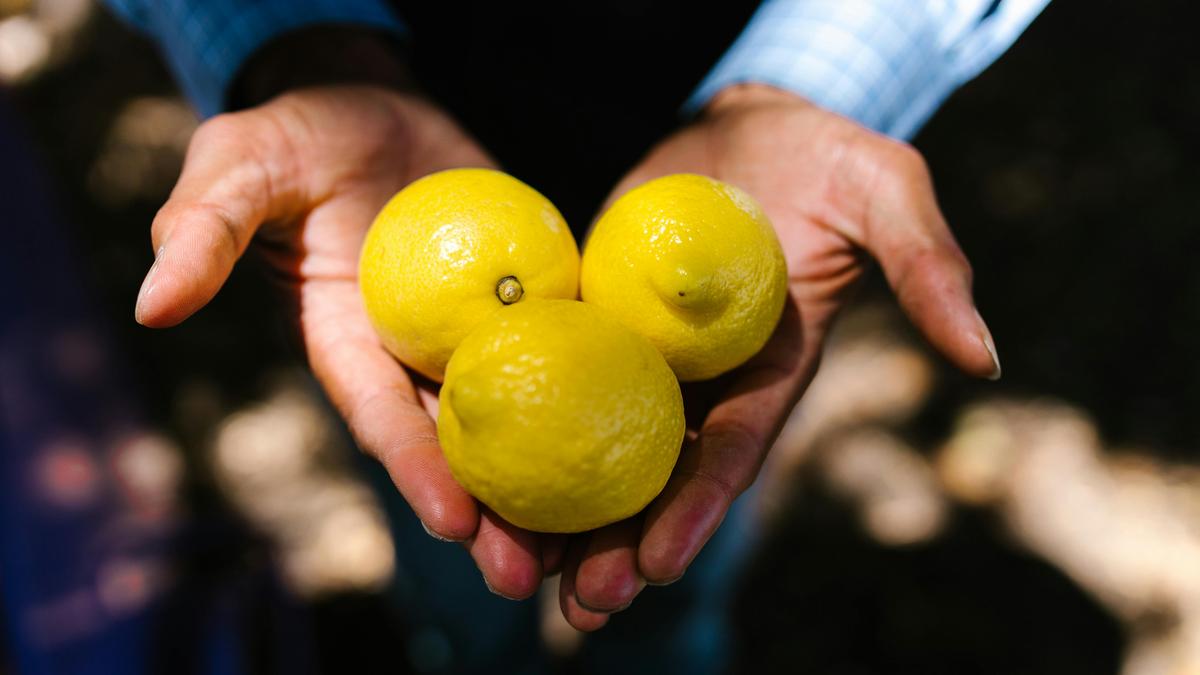
Historically, did life really just give us lemons?
The Hindu
Discover the fascinating journey of lemons from their origins in Southeast Asia to becoming a global culinary and medicinal staple.
Lemons, with their bright yellow hue and tart flavour, are a staple of cuisines and households around the world. From culinary dishes and refreshing beverages to cleaning products and medicinal uses, lemons have definitely earned a special place in human history. From continents to centuries to civilisations, the journey of the lemon is much more elaborate than we think!
The story of the lemon begins not with lemons themselves but with the broader citrus family. According to studies, citrus fruits are believed to have originated in the tropical and subtropical regions of Southeast Asia, particularly in the area stretching from northeastern India and northern Myanmar to China’s Yunnan province.
The modern lemons are not a wild species but, in fact, a hybrid. They are the result of a natural cross between the bitter orange and the citron. Possibly created through natural hybridisation centuries ago, with time, lemons have had human interventions. This hybridisation likely occurred in the region that today includes northeast India or northern Myanmar, though exact details remain uncertain.
Although the lemon likely originated in Southeast Asia, its spread across the world was driven by trade, conquest, and cultural exchange. The earliest written records of lemons are relatively scarce, but archaeological evidence suggests that lemons were known to people in the Middle East and Mediterranean by around the first century CE.
A major turning point came with the Islamic expansion in the 7th and 8th centuries. The Arabs, skilled horticulturists and traders, played a key role in spreading citrus fruits, including lemons, throughout the Mediterranean, North Africa, and into southern Europe. They cultivated lemons in places like Egypt, Persia (modern-day Iran), and what is now Spain and Sicily. Arabic agricultural manuals from the mediaeval period contain some of the first precise descriptions of lemon cultivation.
During the Middle Ages, lemons were more and more popular throughout Mediterranean Europe. They were initially grown as ornamental plants in the gardens of Islamic palaces but soon gained favour for their culinary and medicinal value.
By the eleventh century, Sicily and southern Italy—regions with climates conducive to citrus cultivation—were growing lemons. As mediaeval physicians recommended lemons for treating a variety of ailments, from indigestion to fever, their role in medicine is also notable. They were also used to preserve food due to their high acidity, which inhibits bacterial growth.


Kamal Haasan emphasizes promoting sports culture as essential for India's health and global superpower status at a recent event.

HDK requests Railway Minister to launch Vande Bharat Express between Bengaluru and Madgaon, boosting trade and tourism in coastal Karnataka.

A.P. government's welfare schemes focus on job creation and skill development to enhance livelihoods for the state's youth.

M.K. Stalin highlights DMK's commitment to minority welfare and opposing authoritarianism during a Christmas event in Perambur.

Over 24 lakh voters in Kerala excluded from the draft electoral roll, raising concerns about representation ahead of elections.

Frost in Munnar causes significant tea crop loss, impacting the industry while boosting local tourism amidst sub-zero temperatures.

CUK Kalaburagi urges final-year degree students to apply for CUET (PG)-2026 for postgraduate admissions before January 15, 2026.

Congress selects V.K. Minimol and Shiny Mathew for Kochi's split mayoral term, emphasizing experience and community support.


BJP MP Basavaraj Bommai criticizes Congress' hate speech Bill, calling it draconian and a threat to free expression.

104 MMU employees in Ongole protest for salary hikes and better working conditions, threatening escalation if demands aren't met.

Telangana government conducted its first State-level mock exercise on disaster response on Monday in coordination with the National Disaster Management Authority, focusing on preparedness for floods and industrial accidents.

AINU in Visakhapatnam launches advanced robotic surgery, enhancing precision and patient care for complex urological procedures.