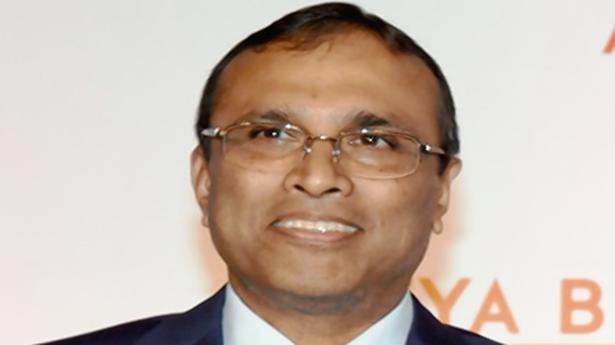
Hindalco signs MoU with Israeli firm, IOC joint venture to work towards decarbonising mobility
The Hindu
Firms will develop Aluminium-air batteries for EVs and for energy storage
Hindalco Industries Ltd. of the Aditya Birla Group said it has signed an MoU with Phinergy, an Israel-based metal-air battery technology company, and IOC Phinergy Private Ltd. (IOP), a joint venture between Phinergy and Indian Oil Corporation for development of Aluminium-air batteries for electric vehicles (EVs) and for energy storage.
As per the MOU, Phinergy and IOP will partner exclusively with Hindalco in India, on R&D and pilot production of aluminium plates for Aluminium-air batteries, and recycling of aluminium, after usage in these batteries, Hindalco said in a statement.
In the Aluminium-air battery, developed by Phinergy, energy is released when aluminium reacts with oxygen in ambient air to produce aluminium hydroxide.
Due to its light weight and high energy density, an Aluminium-Air battery significantly increases the driving range of electric vehicles.
It also enables quick ‘refuelling’ and eliminates the need for expensive nationwide charging networks.
“Aluminium-air batteries are expected to make EV adoption more convenient, and accelerate the transition to zero emission mobility,” Hindalco said.
An added benefit is that aluminium hydroxide in the battery can be recycled to recover aluminium. The leading automobile manufacturers in India are currently testing the technology, it added.


Meta Chief Executive Mark Zuckerberg is building a CEO agent to help him do his job, the Wall Street Journal reported

Insurance penetration and density are often misunderstood and do not reveal how many families are insured or whether they would be financially secure if the main earning member were to die. The real issue is not reach but adequacy, as households may have life insurance but not enough cover to replace lost income, leaving them financially vulnerable.

Five top firms lose ₹1 lakh crore in market value, with HDFC Bank experiencing the largest decline of ₹56,124.48 crore.

L&T confirms 95% of its West Asia project sites are safe, while addressing logistics challenges amid ongoing regional conflicts.

Mines Ministry to auction 19 critical mineral blocks on March 23, expanding strategic resources for clean energy and technology sectors.

Mines Ministry to auction 19 critical mineral blocks on March 23, expanding strategic resources for clean energy and technology sectors.

Five top firms lose ₹1 lakh crore in market value, with HDFC Bank experiencing the largest decline of ₹56,124.48 crore.

HDFC Bank terminates three senior officials over client onboarding issues at its DIFC branch amid ethical concerns following chairman's resignation.

Air India CEO warns of potential flight cuts and reduced travel demand due to rising fuel costs amid ongoing Gulf conflict.

Options are widely used by retail traders to speculate on the value of the stock for immediate gains and such behaviour in large scale can distort the market

India achieves 1 billion tonne coal production for the second consecutive year, ensuring stable energy supply and economic growth.

Generic drugmakers in India launch affordable Semaglutide versions, targeting a $1 billion diabetes and weight loss market.

Indian and Asian refiners eye Iranian oil purchases as U.S. waives sanctions amid energy crisis linked to the Iran-Israel war.