Highlights from the Nilgiris Earth Festival 2024: A celebration of biodiversity and heritage
The Hindu
Highlights from the Nilgiris Earth Festival 2024: A celebration of biodiversity and heritage
When it comes to conservation messaging, two distinct approaches often emerge. The first is a celebration — showcasing the planet’s wonders, like the comforting bird songs at dawn or the life-giving shade of an ancient forest. It gently reminds us of what stands to be lost. The second approach, stark and urgent, holds up a mirror to humanity’s ecological footprint. It confronts us with polluted rivers, vanishing species, and the smog-filled skies of our own making.
The Nilgiris Earth Festival takes the first approach. It’s a celebration of the wildlife, food, culture, and community that the Nilgiris Biosphere Reserve offers, balanced with the understanding that it comes with a responsibility to protect it.
Spanning over 5,000 square kilometres across Tamil Nadu, Karnataka, and Kerala, the biosphere reserve is home to a network of five national parks and four wildlife sanctuaries teeming with diverse flora and fauna.
Organised by The Nilgiris Foundation, an offshoot of Keystone Foundation with three decades of experience in sustainable living, the festival has grown into a space where ecology meets culture. Now in its third year, this four-day celebration (from December 19 to 22) is as much about the Nilgiris’ food and heritage as it is about sustainability and climate action conversations.
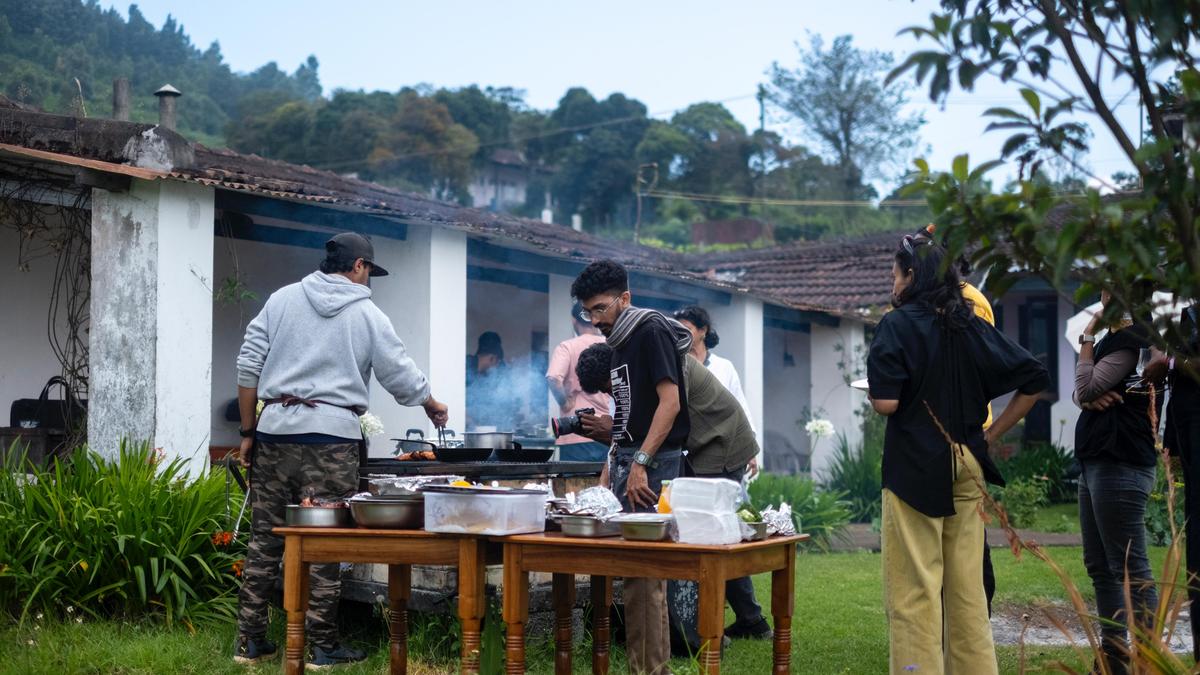
On the third afternoon of the Nilgiris Earth Festival, we arrive at Kikui Farms in Ooty to experience the flavours of high-elevation organic produce and farm-to-table cooking with organic farmer and chef Vishanth Kumar. He greets us with a fermented Rhubarb Soda kombucha — salmon pink, fizzy, and frothing as it’s poured. Misty mountains frame the scene, mingling with smoke from barbecue grills manned by Vishanth’s chef friends.
The spread is unforgettable: sourdough pizza made with 90% whole grain wheat, live tacos, and a Badaga buffet with kale greens poriyal, gaasu gose (cabbage mashed with potatoes and peas), red rice, thupadhittu (lentil fritters), and berry tarts — all made with produce from Vishanth’s farm.
A Badaga farmer by heritage, Vishanth’s family has owned a 150-year-old tea estate since the 1930s. After working as a chef in the UK, he returned to India to promote organic farming but struggled to change local mindsets. He began growing vegetables commercially, creating veggie boxes, and processing surplus into jams and hot sauces. Today, he has a steadily increasing supply network in Bengaluru.


Three doctors were arrested by the Mico Layout traffic police on Monday (March 23) after a video allegedly showing them triple-riding without helmets with one of the pillion riders seen drinking from a bottle went viral on social media.

Assembly protest ends in arrests as BJP targets Government over guarantees

Andhra Pradesh accelerates city gas distribution with streamlined approvals, enhancing access to cleaner energy and supporting sustainable urban development.

Sattankulam father-son custodial deaths case: Trial court convicts all nine accused police personnel
Nine police personnel convicted in Sattankulam custodial deaths; sentencing to be announced on March 30.

Minister Laxmi Hebbalkar supports local protests against a solid waste management plant in Turmuri, addressing residents' concerns.

Sattankulam father-son custodial deaths case: Trial court convicts all nine accused police personnel
Nine police personnel convicted in Sattankulam custodial deaths; sentencing to be announced on March 30.

Erode district conducts first EVM randomisation for April 23 Assembly elections, ensuring transparency and fairness in allocation.

TNCC conducts public consultation in Erode to gather community input for its upcoming election manifesto.

CID to investigate sexual assault allegations against suspended Moodbidri Police Inspector P.G. Sandesh, reveals Home Minister Parameshwara.

A 50-year-old woman was found dead in southwest Bengaluru’s Kengeri in the early hours of Monday, the police said.

Papanasam dam's water level reaches 66.15 feet, with inflow at 76 cusecs and discharge at 300 cusecs.

Development without impact: Coastal residents of Kanniyakumari and Nagercoil constituencies voice discontent

Rampant encroachments in Tiruchi threaten pedestrian safety and traffic flow, undermining smart pavement initiatives and exacerbating congestion.