Herculaneum scrolls breakthrough: Scientists digitally "unroll" 2,000-year-old scroll scorched by Mount Vesuvius
CBSN
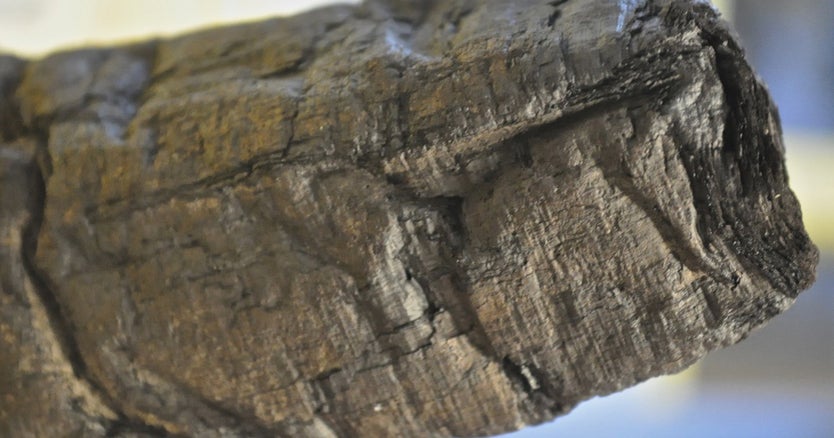
London — The Herculaneum scrolls have remained one of the many tantalizing mysteries of the ancient world for almost 2,000 years. Burnt to a crisp by lava from Mount Vesuvius in A.D. 79, the reams of rolled-up papyrus were discovered in a mansion in Herculaneum — an ancient Roman town near Pompeii — in the mid-18th century. Both towns were decimated by the Vesuvius eruption, and most of the scrolls were so badly charred they were impossible to open.
Over the next two and a half centuries, attempts were made to unfurl some of the hundreds of scrolls using everything from rose water and mercury to vegetable gas and papyrus juice, according to the New Yorker.
The few that could be opened were philosophical texts written in ancient Greek. But most of the scrolls were so badly damaged, they were considered illegible. More recently, researchers managed to decipher some select words using artificial intelligence, X-ray and CT scans to distinguish ink from the papyrus it was printed on.


Mexico's President Claudia Sheinbaum on Friday condemned the deaths of three Mexican nationals after they were taken into custody by U.S. immigration authorities this year. In:

Norway's crown princess said she felt unsafe during a 2013 encounter with the late sex offender Jeffrey Epstein at his Palm Beach, Florida, mansion and that he manipulated and deceived her. In:


Iran executed three men on Thursday who were accused of killing police officers during protests in January, with activists warning of the risk of a new surge in hangings as war rages with Israel and the United States. In:

Finland has been crowned the happiest country in the world, according to the 2026 World Happiness Report. Nordic countries have topped the happiness list for decades, and Denmark has consistently ranked in the top three. In:

A man who is wanted in Colombia and Ecuador for the assassination of Ecuadorian presidential candidate Fernando Villavicencio in Quito in 2023 was arrested in Mexico and transferred to Colombia, authorities said Wednesday. Agence France-Presse contributed to this report. In:

Costa Rica on Wednesday closed its embassy in Havana and told Cuba's communist government to pull its diplomats from San José. Joe Walsh contributed to this report. In:

Washington — The Senate defeated a war powers resolution on Wednesday that aimed to block President Trump from ramping up the war with Iran, as the operation approaches a fourth week. In:

A Ukrainian drone technology startup saw the most explosive U.S. stock market debut in the last year during its first day trading on Nasdaq. Shares in Swarmer, whose software enables single pilots to control hundreds of drones at once, soared over 700% before closing at $31 on Tuesday. In:

Rome — Outside the Great Synagogue, in the narrow streets of Rome's historic Jewish quarter, Italian soldiers patrol with automatic weapons slung across their chests. It is part of a visible surge in security following a wave of antisemitic incidents across Europe. In:


Top Iranian security official Ali Larijani was killed in overnight strikes, Israel said Tuesday, marking a significant moment for the Islamic Republic in the conflict. In:

Shigeaki Mori, a Japanese atomic bomb survivor in Hiroshima and a historian but best known for a big hug he was given by then U.S. President Barack Obama during his historic visit to the city a decade ago, has died. He was 88. Agence France-Presse contributed to this report. In: