Hema Committee followed ‘rule of exclusion,’ failed to reach out to women other than WCC members, accuses FEFKA
The Hindu
FEFKA criticizes Hema Committee for excluding women in Malayalam cinema, questioning selection process and lack of interaction with industry members.
The Film Employees Federation of Kerala (FEFKA) has accused the Hema Committee of having followed a ‘rule of exclusion’ in that it failed to reach out to women other than the members of the Women in Cinema Collective.
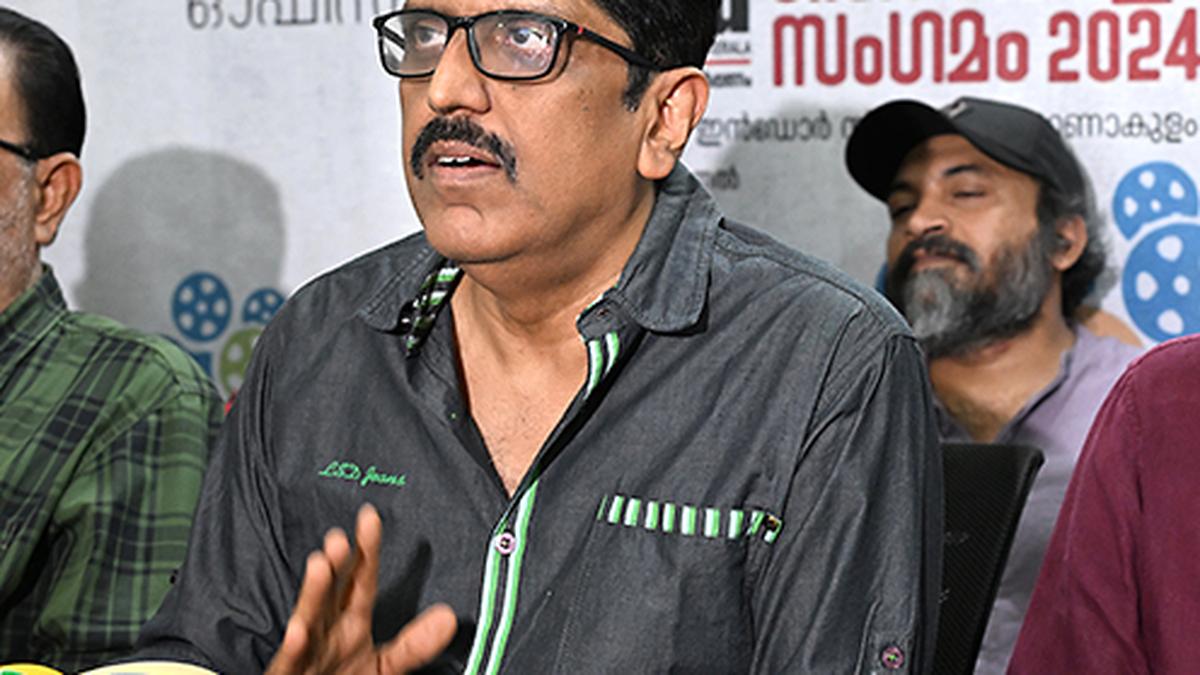
FEFKA general secretary B. Unnikrishnan levelled the criticism against the committee at a press conference organised by the organisation to air its first official response since the release of the Hema Committee report. He reminded that FEFKA has been the only organisation to demand that the names mentioned in the report be made public.
Justice Hema Committee report: The complete coverage
“We view the Hema Committee report as a very critical document in the history of Malayalam cinema. But being a trade union, we have precise criticism and opinion especially about the way the committee selected the people they wanted to interact with. While the committee claims to have issued a newspaper advertisement about its functioning, the possibility of such an advertisement getting noticed or even people coming forward to interact with the committee without persuasion can only be imagined,” Mr. Unnikrishnan said.
Quoting paragraph 14 of the Hema Committee report, he said that the committee contacted both men and women they proposed to interact with. What was the basis for the selection of individuals to be contacted and how the committee reached the conclusion that those were the only ones to be contacted in Malayalam cinema. Why were at least even the general secretaries of the 21 member organisations of FEFKA, the biggest trade union federation in Malayalam cinema with nearly 800 women, were left out, Mr. Unnikrishnan sought to know.
The committee discloses in page 12 of the report that the terms of reference was sent as a questionnaire to the members of WCC. Why such a procedure was not followed in the case of FEFKA. We would have sent it to all our 21 members and would have presented their written submissions before the committee. Why the process was not followed in the case of the associations of producers and actors as well, Mr. Unnikrishnan said.
The committee held two group meetings with the members of WCC who responded to questions about different categories of women in cinema. Why were women outside the WCC were left out from such a group meeting. Even in the WhatsApp group formed by the committee for enabling women to raise their issues, there was no women from FEFKA.


The government plans to amend the FCRA, introducing new regulations for NGO asset management and accountability for key functionaries.

The draft policy for “Responsible Digital Use Among Students”, released on Monday by the Department of Health and Family Welfare, has recommended that parents set structured routines with clear screen-time rules and prioritise privacy, safety, and open conversation with children on digital well-being.

Police Observer Sushant Kumar Saxena conducts surprise inspection at Shencottai police station, reviewing warrants and security arrangements ahead of elections.

Andhra Pradesh government to launch key projects in April, focusing on industrial growth and infrastructure development, says Nara Lokesh.

Lok Sabha refers the Corporate Laws (Amendment) Bill to a JPC amid opposition concerns over CSR provisions dilution.

SHG members in Kanniyakumari use snakes and ladders to raise election awareness and boost voter turnout.

Government accelerates consultations for early implementation of the Women’s Reservation Act to ensure women’s representation in 2029 elections.

CM A. Revanth Reddy distributes ₹1 crore insurance cheques to families of deceased Electricity department employees, enhancing financial security for workers.

The Bengaluru Traffic Police (BTP) registered 634 cases of drunk driving during a week-long special enforcement drive conducted across the city between March 16 and March 22.

GHMC intensifies action against property tax defaulters, seizing properties and offering a One Time Settlement scheme for payments.

CCB arrests three drug peddlers in Mangaluru, seizing ₹2.5 lakh worth of MDMA and other valuables.

TVK's 28 candidates in Puducherry include former BJP MLAs, a sitting Independent, and a retired police IG.

BRS submits notice on private member bill to Speaker