He spent years shadowing smugglers in Mexico. This is what he learned
CNN
Jason De León spent seven years shadowing smugglers who guide migrants through Mexico to the US. Their work, he argues, is dangerous and far more complicated than typical media portrayals suggest.
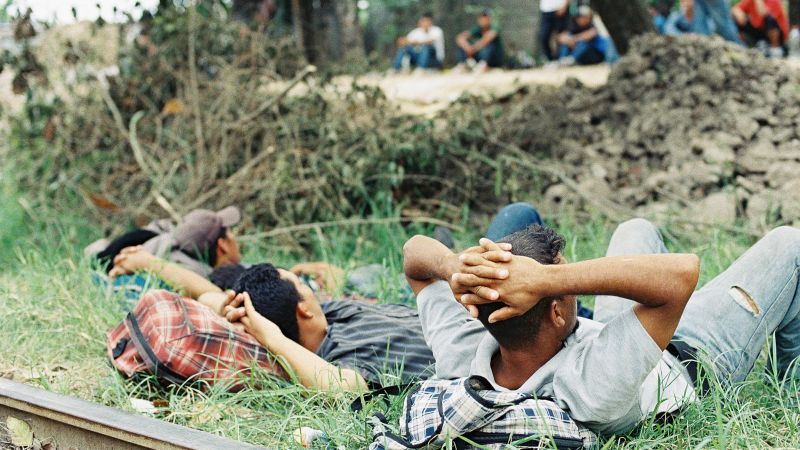
The nuns inside a migrant shelter in southern Mexico gave Jason De León an ominous warning: “Whatever you do, don’t go outside. That’s where all the bad people are.” De León sensed there was more to the story. “Of course, the first thing that I did was go outside and find the ‘bad people,’” De León recalls. “You know, the ‘bad people’ were just a bunch of young men hanging out on the train tracks.” The men asked De León what he did for a living. He told them he was an anthropologist — “like a journalist, but I’m more annoying, because I stick around longer and I keep asking the same question for years.” The professor soon learned what the young men did for a living, too. They were human smugglers — or, as they put it, guías (guides) for migrants traveling through Mexico and trying to reach the US. De León had thought he was done writing about migration. He’d documented deaths along the US-Mexico border in his first book, and it was devastating. But that conversation along the train tracks in southern Mexico in 2015 led him in a direction he hadn’t been planning to go. One of the young men asked a simple question: “Why don’t you write about us?”


Approximately 1,000 US soldiers with the Army’s 82nd Airborne Division are expecting to deploy in coming days to the Middle East, according to two sources familiar with the matter, adding to the growing military firepower in the region as the Trump administration says it is in talks with Iran to end the conflict.

CNN’s 5 Things AM brings you the news you need to know every morning.

When the historic East Wing of the White House was suddenly demolished to make way for President Donald Trump’s new ballroom construction last year, another piece of history was taken down with it.

The high-profile deployment of Immigration and Customs Enforcement agents to airports has renewed support on the right and fear on the left about the possibility of ICE going to the polls in November.

The House Oversight Committee released videos Tuesday of closed-door depositions with two men in Jeffrey Epstein’s inner circle as part of its probe into the late convicted sex offender.

The House Intelligence Committee voted Tuesday to give federal prosecutors classified records related to John Brennan, according to a committee spokesperson, signaling the Justice Department’s investigation into the former CIA director may be heading towards possible charges.

North Carolina State Senate leader Phil Berger on Tuesday conceded his primary race to Rockingham County Sheriff Sam Page, a political earthquake that took down arguably the most powerful politician in a pivotal swing state.

It’s looking like the Department of Homeland Security shutdown could soon be over. The two sides seem to have made serious progress, and President Donald Trump hasn’t rejected anything, even if he’s a little sour. But it’s likely the resolution will disappoint many Democrats.

California Gov. Gavin Newsom said that he regretted using the word “apartheid” to describe the Israeli government’s treatment of Palestinians, though he warned “that’s a word you may hear others use” if Prime Minister Benjamin Netanyahu pushes for territorial gains.

Haiti is about to get a new set of foreign boots on the ground. The goal sounds simple: fight the gangs that have brought life to a standstill.

Oklahoma’s governor picks energy executive Alan Armstrong to fill US Senate seat through end of year
Oklahoma’s governor on Tuesday appointed energy executive Alan Armstrong to serve in the US Senate through the end of the year and finish the term of Republican Markwayne Mullin, the new homeland security secretary.

Newly confirmed Homeland Security Secretary Markwayne Mullin told senators during his confirmation hearing that he wanted to keep the department out of the headlines. That won’t be easy.

A trader made nearly $1 million since 2024 from dozens of well-timed Polymarket bets that correctly predicted US and Israeli military actions against Iran, according to an analysis shared with CNN.