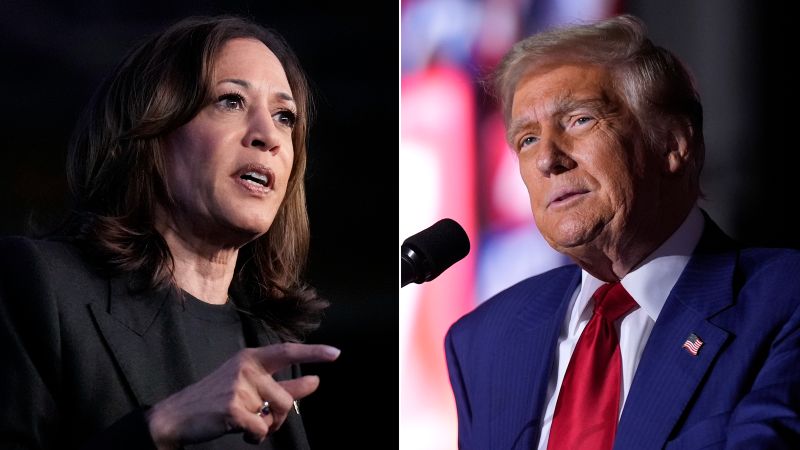
Harris wants to upgrade America’s economy. Trump wants to tear it down and start over
CNN
Vice President Kamala Harris wants to renovate the American economy. Former President Donald Trump’s economic vision amounts to knocking it down and rebuilding it from the ground up.
Vice President Kamala Harris wants to renovate the American economy. Former President Donald Trump’s economic vision amounts to knocking it down and rebuilding it from the ground up. The Harris economic agenda calls for modest improvements designed to make life more affordable. Bigger tax credits for parents. Boosting the minimum wage. Building more homes. And more small business loans. There’s nothing subtle about the Trump agenda. He’s calling for dramatic changes that could upend daily life. Mass deportations. Unthinkably high tariffs. And enough tax giveaways to give Oprah a run for her money. The campaigns are fiercely divided over which approach is best for this moment. But what’s clear is that voters are not being forced to choose between two similar visions. They have a real contrast: Measured changes to the economy or drastic ones. “Trump is proposing radical change – with an emphasis on radical,” Joe Brusuelas, chief economist at RSM, told CNN in a phone interview. “When you’re talking about forced deportations and 1930s-style tariffs, you’re talking about significant disruptions.” Yet it’s far from clear that the US economy requires the complete overhaul Trump wants.


The United States is considering whether to strike Iran as turmoil intensifies for the country’s authoritarian regime.

The US has completed its first sale of Venezuelan oil since the US attached Venezuela and captured its president, Nicolás Maduro, earlier this month, according to an administration official.

President Donald Trump enacted a new 25% tariff on “certain advanced computing chips” on Wednesday, according to a White House fact sheet. That includes Nvidia’s H200 chip and AMD’s MI325X. However, chips imported to support building up the US technological supply chain would be exempt.

Verizon said some of its wireless services were down Wednesday, leaving many customers without access to voice and data services.

YouTube will now let parents limit the amount of time their teens can spend scrolling through its short-form video feature, Shorts, or block them all together.

Last month, Washington Post reporter Hannah Natanson penned a first-person piece about her long year as “the federal government whisperer,” receiving tips from hundreds of federal workers. On Wednesday, the FBI searched her home, a source familiar with the situation told CNN.

Price hikes picked up speed for US-based businesses toward the end of last year, a potential signal that inflation has yet to peak and prices could soon rise faster for consumers.

Trump is threatening to take “strong action” against Iran just after capturing the leader of Venezuela. His administration is criminally investigating the chair of the Federal Reserve and is taking a scorched-earth approach on affordability by threatening key profit drivers for banks and institutional investors.

Perhaps no data point better encapsulates the American economy right now than this nugget from Delta’s quarterly earnings:

China recorded the world’s biggest ever trade surplus in 2025, as well as a 20% jump from 2024, capping off a year in which the world’s largest manufacturer defied US trade pressure by ramping up exports to other global markets.

Saks Global, the parent company of luxury retailer Saks Fifth Avenue, filed for bankruptcy protection late Tuesday, according to court documents filed in US Bankruptcy Court in Houston, Texas.

China on Wednesday reported a strong export run in 2025 with a record surplus of nearly $1.2 trillion, as producers braced for three more years of a Trump administration set on slowing the production powerhouse by shifting US orders to other markets.

Microsoft says it will ask to pay higher electricity bills in areas where it’s building data centers, in an effort to prevent electricity prices for local residents from rising in those areas. The move is part of a broader plan to address rising prices and other concerns sparked by the tech industry’s massive buildout of artificial intelligence infrastructure across the United States.