Haiti at risk of famine as gangs overtake country
Global News
``This is not the usual chronic food crisis in Haiti. This is extremely bad,'' said Jean-Martin Bauer, the World Food Programme's country director for the Caribbean state.
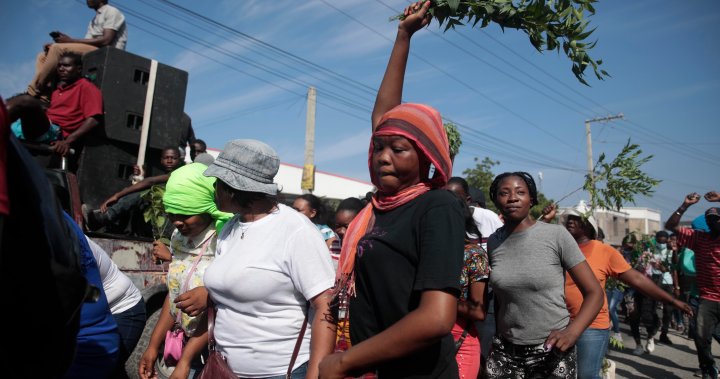
Even as Canadian aid feeds thousands, the United Nations is warning that Haiti’s political chaos is putting the country at risk of famine, as farmers get kidnapped and the desperate turn to vigilante justice against gangsters.
“This is not the usual chronic food crisis in Haiti. This is extremely bad,” said Jean-Martin Bauer, the World Food Programme’s country director for the Caribbean state.
“It’s very difficult to organize a peaceful election with a starving population.”
In an assessment last October, some 20,000 people in Haiti were classified as being in catastrophic food insecurity, which Bauer says is the first time that people in the Americas have been characterized as being at risk of famine.
Bauer said the hardest-hit demographic live in Cite Soleil, a gang-controlled area of the capital, Port-au-Prince, where residents face conditions more often found in parts of Somalia and Afghanistan.
Some five million people — half the country’s population — are now at the “crisis” stage of food insecurity, the third level of five within the Integrated Food Security Phase Classification. They face above-average levels of malnutrition.
Those who are at “catastrophic” risk are at level five. As soon as 20 per cent of a population reaches that stage, it is considered to be suffering famine.
Bauer said the hunger is fuelling gangs — and is being exacerbated by the armed groups. Haiti entered a political crisis in mid-2021 with the assassination of its president, and has since been ruled by de facto President Ariel Henry, under whose leadership gangs have filled a power vacuum.


Canada finished eighth in the gold-medal standings with just three. As for total medals, Canada placed sixth, with four silver and eight bronze.

Canada produced on average 5.3 million barrels per day of crude oil in 2025, according to the Canada Energy Regulator, making the upcoming production jump a 2.6 per cent increase.

Iran's foreign minister said the U.S. attacked Kharg and Abu Musa islands from locations in the United Arab Emirates, a claim the UAE rejected.

Citing "a more contested environment", British Prime Minister Keir Starmer and his Irish counterpart Micheal Martin said the exercises would begin in September.

Only one in four (23 per cent) Canadians approve while, 16 per cent are unsure either way. Forty-two per cent were found to strongly disapprove.

Countries around the world are grappling with skyrocketing costs for key commodities like oil and fertilizer as the war with Iran continues to upend global trade.

The U.S. Central Command said the crash followed an unspecified incident involving two aircraft in “friendly airspace,” and that the other plane landed safely.

Water treatment centres in the Persian Gulf region are under threat amid the Iran war, with desalination plants in areas like Bahrain taking damage from strikes.

John Gradek said that the price of jet fuel is up about 30 per cent and the cost of fuel represents about 30 per cent of an airline's operating costs.

Iran's unrelenting attacks on shipping traffic and energy infrastructure in the Persian Gulf pushed oil back above $100 a barrel on Thursday.

Concerns were raised in a document sent to British Prime Minster Keir Starmer in December 2024 when he was considering appointing Peter Mandelson.

Canada and a group of dozens of other countries have agreed to release 400 million barrels of oil from their strategic reserves as the Iran war threatens the global supply.

Iran's military command said on Wednesday the world should be prepared for oil to hit US$200 a barrel, as three more ships came under attack in the blockaded Gulf.