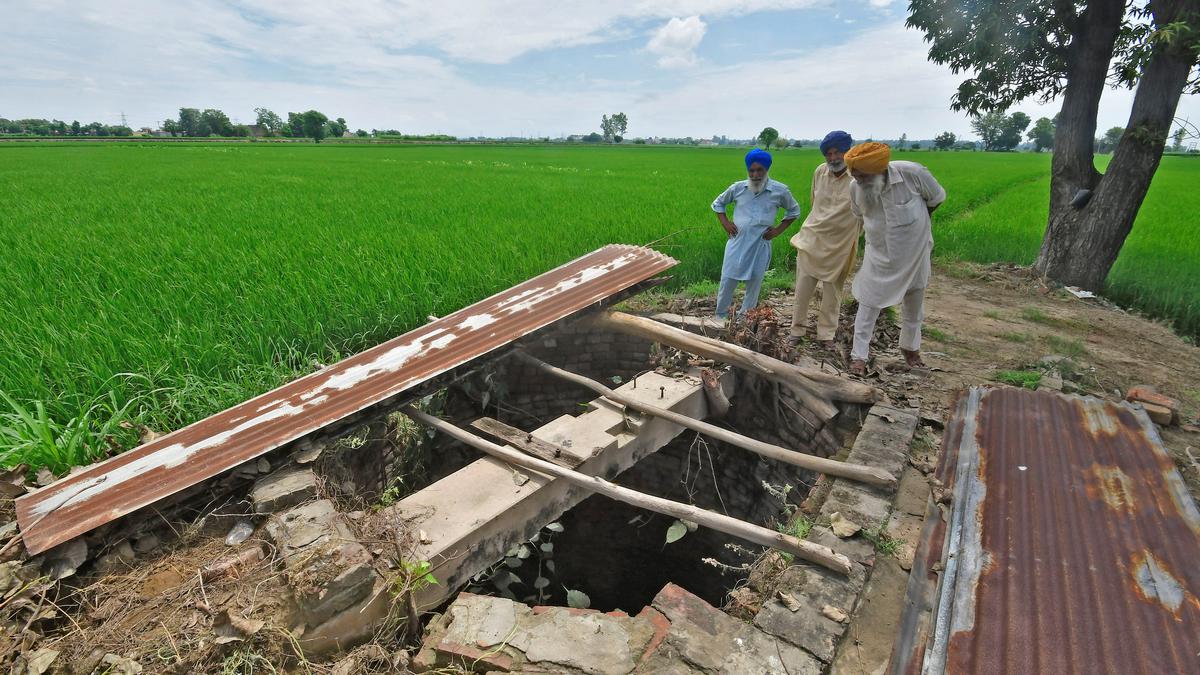
Groundwater exploitation is silently sinking the ground beneath India’s feet
The Hindu
Agricultural practices in northwest India are heavily dependent on groundwater withdrawal. With limited monsoon rain, the groundwater table is precariously low, show data gathered for years by the Central Ground Water Board (CGWB).
Cracks in buildings and ‘sinking’ land in Joshimath, a hill town in Uttarakhand, made the headlines earlier this year. A similar phenomenon has been playing out for years in the plains of Punjab, Haryana, Delhi and Faridabad. The unlikely culprit is excessive groundwater extraction.
Agricultural practices in northwest India are heavily dependent on groundwater withdrawal. With limited monsoon rain, the groundwater table is precariously low, show data gathered for years by the Central Ground Water Board (CGWB).
In Punjab, for instance, 76% of the groundwater blocks are ‘over exploited’. In Chandigarh it is 64% and about 50% in Delhi. This means that more groundwater than can be recharged is extracted.
“Over time, when the underlying aquifers (deep water channels that are stores of percolated water) aren’t recharged, they run dry and the layers of soil and rock above them start to sink,” Prof. Dheeraj Kumar Jain of the Indian Institute of Technology (Indian School of Mines), Dhanbad, said.
Mr. Jain, whose core research interests lie in mining and minerals, said digging operations that were carried out hundreds of metres below the ground for coal, oil and gas through the years had shown examples of ‘soil settlement,’ or the soil sinking in to fill voids created from mining.
“From here we surmised that if oil and gas extraction cause subduction (sinking), then surely groundwater also ought to be playing some role. We found such instances in several parts of the world and that motivated some of my students to assess the situation in India, particularly the National Capital Territory.”
The CGWB, a subsidiary body of the Jal Shakti Ministry, is tasked with assessing the state of India’s groundwater resources. It has a system of groundwater observation-wells and monitors water levels four times a year. It, however, does not analyse the consequences of ‘over exploitation.’


Rwanda's Fanny Utagushimaninde, at 15, becomes the youngest player to score a T20 international century.

Assembly polls 2026: Follow updates from The Hindu on the upcoming elections in five States, on March 22, 2026

Currently, only the services in the 32 series stop at the section of the road adjacent to the Broadway terminus, temporarily closed on account of reconstruction work. Small traders association tells R. Ragu that ensuring the services now accommodated at the temporary terminus at Island Grounds stop at NSC Bose road would benefit visitors to the markets in Parrys

The Hindu photo feature on Aragam which is now known as book village. Photos and text by Imran Nissar

The silent reading movement in the Mylapore-Mandaveli-RA Puram area showed up first at Nageswara Rao Park around two years ago, with modest ambitions, when Balaji launched it along with other reading enthusiasts from the region. This initiative has now moved parks, and seems to set to get entrenched in one. Due to renovation work at Nageswara Park, the reading session became irregular. With the Nageswara Rao park work gaining more surface area, it had to be shifted elsewhere. And it seems set to continue with a newly discovered green patch in RK Nagar in the Sundays to follow.

Explore Tamil Nadu's upcoming four-cornered election contest, featuring key players DMK, AIADMK, TVK, and Naam Tamizhar Katchi.

Trump plans to deploy ICE officers for airport security unless Democrats fund the Department of Homeland Security amid ongoing shutdown.

Cuba experiences its second nationwide blackout in a week, exacerbated by an ongoing U.S. oil blockade and energy crisis.

Kamal Haasan urges Tamil media to avoid the term "censorship" in films, advocating for artistic freedom and recognition of certification.

Pottalurani residents boycott elections again, demanding closure of fish waste processing units impacting health and environment.

VCK leader Thirumavalavan emphasizes the need for local candidates amid concerns over past electoral losses due to outsiders.

Women teachers over 50 express discontent after Revenue Department denies blanket exemption from SIR and census duties in Karnataka.

Union Minister skips crucial NCTP meeting amid backlash over controversial Transgender Rights Bill, raising concerns within the community.