Greta Gerwig’s ‘Barbie’ caused an international shortage of pink paint
The Hindu
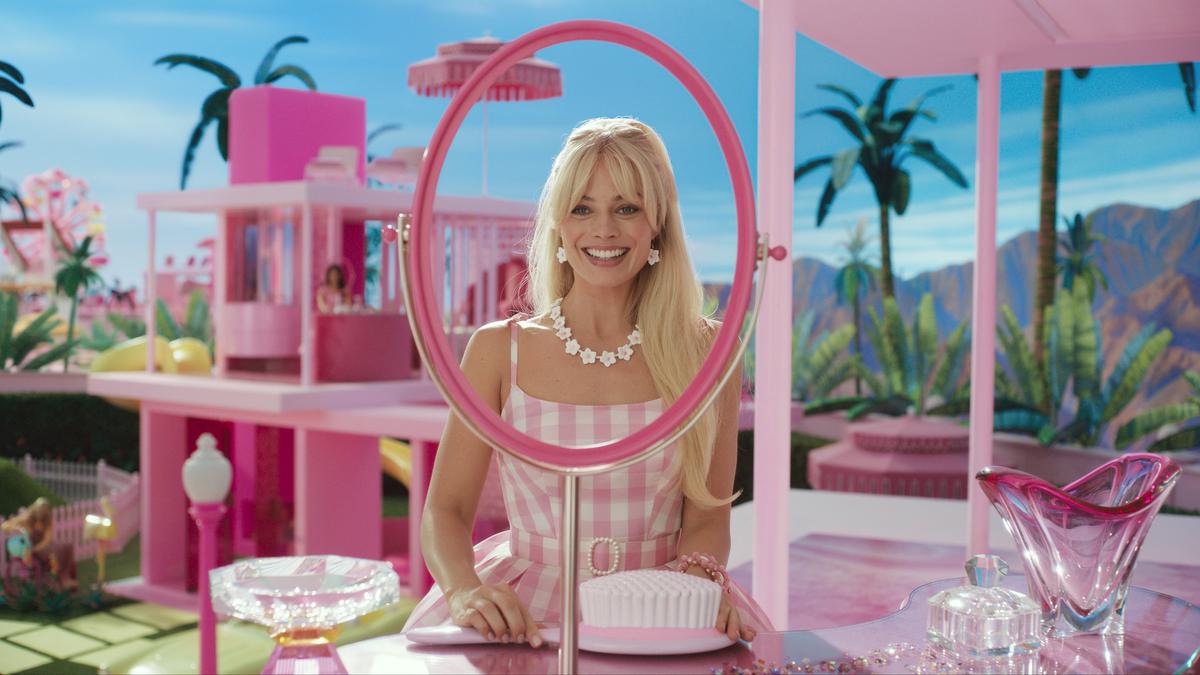
‘Barbie’ production designer Sarah Greenwood confirmed the set constructions caused a shortage of the pink fluorescent shade of Rosco paint
The production of Greta Gerwig’s Barbie used up so much pink it caused a shortage in the international paint market.
For the film — a live-action take on the renowned Mattel doll and media franchise — Gerwig wanted to maintain the ‘kid-ness’ that was ‘paramount’ to shaping the Barbie universe, the 39-year-old filmmaker said in an interview with Architectural Digest.
“I wanted the pinks to be very bright, and everything to be almost too much,” Gerwig was quoted as saying.
The makers took inspiration from Palm Springs midcentury modernism to build the Barbie Dreamhouse. Production designer Sarah Greenwood confirmed the set constructions caused a shortage of the pink fluorescent shade of Rosco paint. “The world ran out of pink,” Greenwood said.
Gerwig explained she was going for “authentic artificiality” with the film’s design, which also meant hand-painting the backdrops of Barbie’s world instead of using CGI. “Everything needed to be tactile, because toys are, above all, things you touch,” the filmmaker said.
Barbie stars Margot Robbie in the title role and Ryan Gosling as Ken. The film is set to release in theatres on July 21, 2023.


South African naturalist Steve Boyes speaks on ghost elephants, ancestral tracking, and Werner Herzog’s documentary exploring Angola’s elusive highland giants

Actor-director Amol Palekar will receive META's Lifetime Achievement award for 2026 on March 25 in New Delhi.

India's artists unite against rising censorship, advocating for creative freedom and support for marginalized voices in the arts.

Written and directed by Kunal, the film also stars Sparsh Shrivastava and Vanshika Dhir

This year, Bharatnatyam artistes will present the Tyagaraja Aradhane as a dance performance

This year, Bharatnatyam artistes will present the Tyagaraja Aradhane as a dance performance

The actor, along with director Sushant Shah, speak about their upcoming series ‘Chiraiya’, Divya’s process of working on the dialect, Sushant’s approach to telling a story about women, and more

An independent video, ‘Feel the Spark’ by Raleigh Rajan with vocals by Ciera Dumas that celebrates Tamil literary giants, garnered 1.4 million views in less than 36 hours.

In ‘Jack Ryan: Ghost War’, John Krasinski is back as the savvy CIA analyst, diving headfirst into a high-stakes mission that unravels a deadly conspiracy and pits him against a rogue black-ops unit

Shriram Bharatiya Kala Kendra’s Shankarlal festival showcased rare ragas, radiant artistry, and inclusive performances, from Pt Madhup Mudgal’s serene morning ragas to Ramana Balachandran’s Saraswati veena.

Explore "Threads that Bind: The Kantha Project," an exhibition in Delhi reimagining kantha as a medium of repair and renewal.

Sean Penn skips the Oscars to meet Ukraine's Zelenskyy, who praises him as a "true friend" amid the war.

The teaser of Tamil star Suriya’s much-awaited film with director Venky Atluri, titled Vishwanath and Sons, was unveiled by the makers on Monday