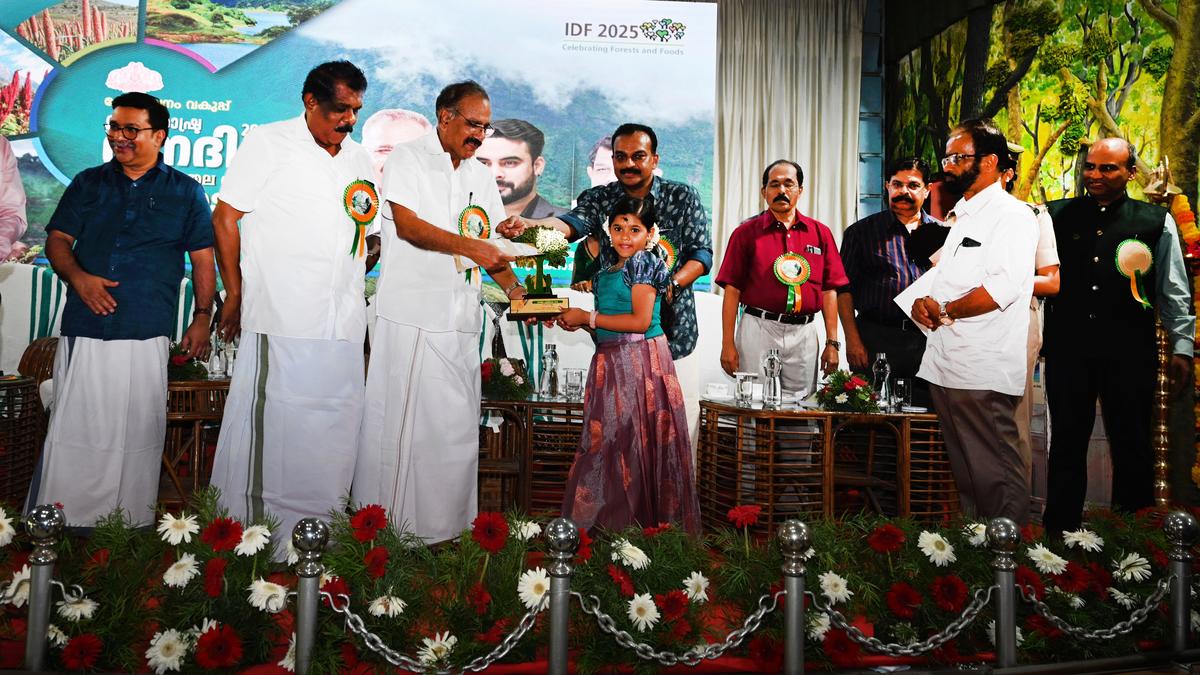
Govt committed to bring down casualties due to wildlife conflicts: Forest Minister
The Hindu
969 people lost their lives due to wildlife-related incidents since 2016, the Minister reveals
Forest Minister A.K. Saseendran has said the government is committed to bring down snakebite-related deaths to zero within the next two to three years. He also reiterated the need to minimise all forms of wildlife attacks to ensure human safety while maintaining ecological balance.
Inaugurating the State-level International Day of Forests observance here on Friday, Mr. Saseendran said that 969 people have lost their lives due to wildlife-related incidents since 2016. Among these, a staggering 593 of these deaths were attributed to snakebites.
While human-wildlife conflicts pose a major challenge, the State government is committed to reducing casualties through targeted intervention strategies. The government is focused on implementing scientific solutions including early warning systems and habitat conservation to address the issue. Efforts are also being made for legal reforms to update wildlife protection laws to better address contemporary challenges.
Deforestation and habitat encroachment continue to be major drivers of these conflicts, the Minister pointed out. Lauding Kerala’s forest conservation efforts, he observed that nearly 30% of the State’s land remains under forest cover, surpassing the national average.
Delivering the keynote address, Kerala State Biodiversity Board chairperson N. Anil Kumar emphasised the role of forests in mitigating climate change. Forests and biodiversity serve as the most effective solutions to global warming, he said.
Dr. Kumar also highlighted the importance of the Western Ghats, particularly Kerala, which houses about 51% of its biodiversity-rich areas. He pointed out that the State accounts for nearly 25% of India’s plant diversity and 75% of its amphibian species, making conservation efforts in the region crucial.
Discussing the interconnectedness of forests, soil, water, and food security, he stressed that forests play a pivotal role in soil enrichment, water conservation and pollination. He added that without natural pollinators such as bees and insects, food production would decline significantly.


Thirumavalavan defends VCK's electoral strategy, emphasizing long-term goals as applications for Assembly election candidacy open March 21-24.

Officials review counting arrangements in Gobichettipalayam, ensuring facilities and infrastructure are ready for the election process.

DG Prisons inspects Siddipet jail ahead of inauguration

Reformative initiatives at Hubballi's sub-jail show positive outcomes, reducing habitual offender recidivism through various programs and activities.

Twenty-five police officers recognized for their swift actions in the arrest of a suspect in a teenage girl's murder case.

Indore's biogas plant converts urban wet waste into fuel for 400 buses, promoting sustainability and reducing fossil fuel dependence.

Thousand Lights faces parking chaos and traffic congestion despite its political significance and ongoing development efforts.

Bengaluru's BWSSB launches OTS scheme, waiving interest on water bill arrears to assist residents in clearing dues.

A lorry carrying firecrackers caught fire after hitting a high-tension wire in Hyderabad, but drivers escaped unharmed.

A Q and A career counselling column for students

Senior Yakshagana artist Surikumeri K. Govinda Bhat, aged 88, has passed away, leaving behind a legacy of performance and teaching.

Meet Nivrritii Mahesh, a Bharatanatyam dancer who dances with Cochlear implants

A Lamborghini driver has been booked for performing dangerous stunts at Anil Kumble Circle, raising road safety concerns in Bengaluru.