Global order in peril from lack of cooperation, says Merkel; slams China, U.S. for resisting AI regulation
The Hindu
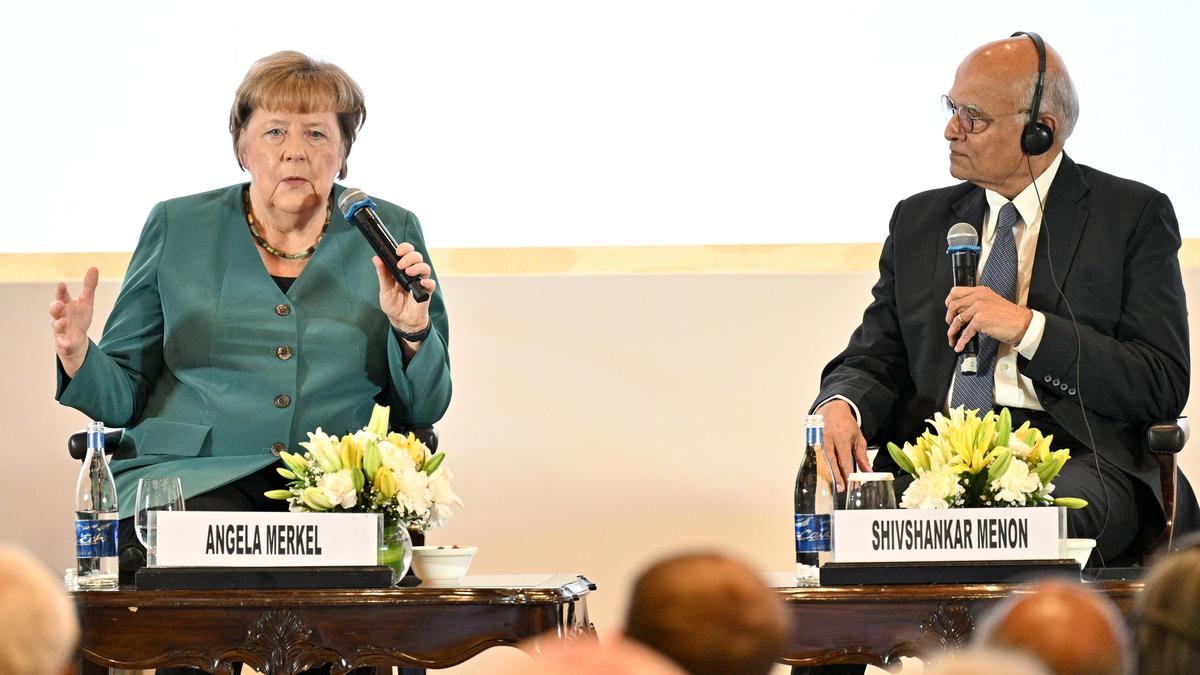
Merkel warns global cooperation is at risk, criticizing China and the U.S. for resisting AI regulation during her lecture in India.
The global “order of cooperation” has been supplanted by “might makes right”, former German Chancellor Angela Merkel said on Thursday (February 26, 2026), blaming Russia for overturning territorial principles in its invasion of Ukraine, and the United States for weakening the United Nations and multilateralism.
Delivering the inaugural Dr. Manmohan Singh Memorial Lecture, Ms. Merkel said many of the issues facing the world today could benefit from Singh’s “works and beliefs”. Her term as Chancellor of Germany (2005-2021) overlapped with his tenure as Prime Minister of India (2004-2014). Ms. Merkel welcomed the finalisation of the India-European Union Free Trade Agreement (FTA) that they had initiated in 2006, after “a marathon of negotiations”, in January this year.
“After the global financial crisis (2008) and its impact — recession in industrialised nations and the developing world —[Dr. Singh] made it clear that these difficulties needed cooperation, not confrontation,” Ms. Merkel told former National Security Advisor and author Shiv Shankar Menon in a conversation following the speech, which was entitled, “Germany and India in times of global change”.
“Dr. Singh’s warnings are of prime importance today as protectionism is stifling growth. This is why the India-EU FTA is so important,” she added, pointing out that the agreement could only move forward after European countries agreed to keep the sensitive agricultural sector out of the negotiations.
The event was organised by the Manmohan Singh Trust, which was established by his family and supported by the government, after his death in 2024. It was attended by several Opposition leaders including former Congress president Sonia Gandhi, former Finance Minister P. Chidambaram, and former External Affairs Minister Salman Khurshid, along with government officials, diplomats, and academics.
Recounting her interactions with the former Indian PM, Ms. Merkel — who credited him with the economic liberalisation of 1991 that “set the path for India’s economic growth for the next 30 years” — said he had never forced his opinions on her, but made her think about the conditions of the developing world, not just Europe and industrialised nations. She said she was disappointed that India did not initially support her objectives on climate change, as Singh said the Indian Parliament would never allow binding commitments on carbon reduction. The resultant compromises eventually led to the adoption of the Paris climate accord, she said.


Saudi Arabia expels Iranian military staff amid escalating tensions and ongoing missile attacks during the U.S.-Israeli war on Iran.

Russia claims control of Potapivka village in Ukraine's Sumy region amid ongoing military efforts to establish a buffer zone.

Iranian missile strikes on Israeli towns cause widespread damage and injuries, marking a significant escalation in the ongoing conflict.

As Gor makes first trip as U.S. Special envoy to South Asia, Delhi watches strategic signals closely
Sergio Gor's inaugural trip as U.S. Special Envoy to South Asia signals strategic U.S. engagement amid regional tensions.

Slovenians vote in a tight election between liberal and populist candidates, impacting the country's future domestic and foreign policies.

Netanyahu asserts U.S.-Israel alliance fights Iranian threats, emphasizing global security after missile strikes on Israeli and European targets.

Israeli settlers attack Palestinian villages in the West Bank, causing injuries and destruction amid ongoing settlement expansion.

Britain asserts no evidence of Iran planning missile strikes on Europe, despite Israeli claims of missile capabilities.

UNESCO reports over half of countries have banned phones in schools due to concerns about attention, cyberbullying, and social media impact.

Analysis reveals a U.S.-operated Patriot missile likely caused a pre-dawn explosion in Bahrain, injuring numerous civilians.

Sri Lanka raises fuel prices by 25% amid ongoing West Asia conflict, impacting petrol and diesel costs significantly.

Iran strikes near Israeli nuclear research center as Trump threatens attacks on Iranian power plants
Iran's missile strikes near Israel's nuclear site escalate tensions as Trump threatens retaliation against Iranian power plants.

Saudi Arabia intercepts one of three ballistic missiles targeting Riyadh amid ongoing regional tensions and threats from Iran.