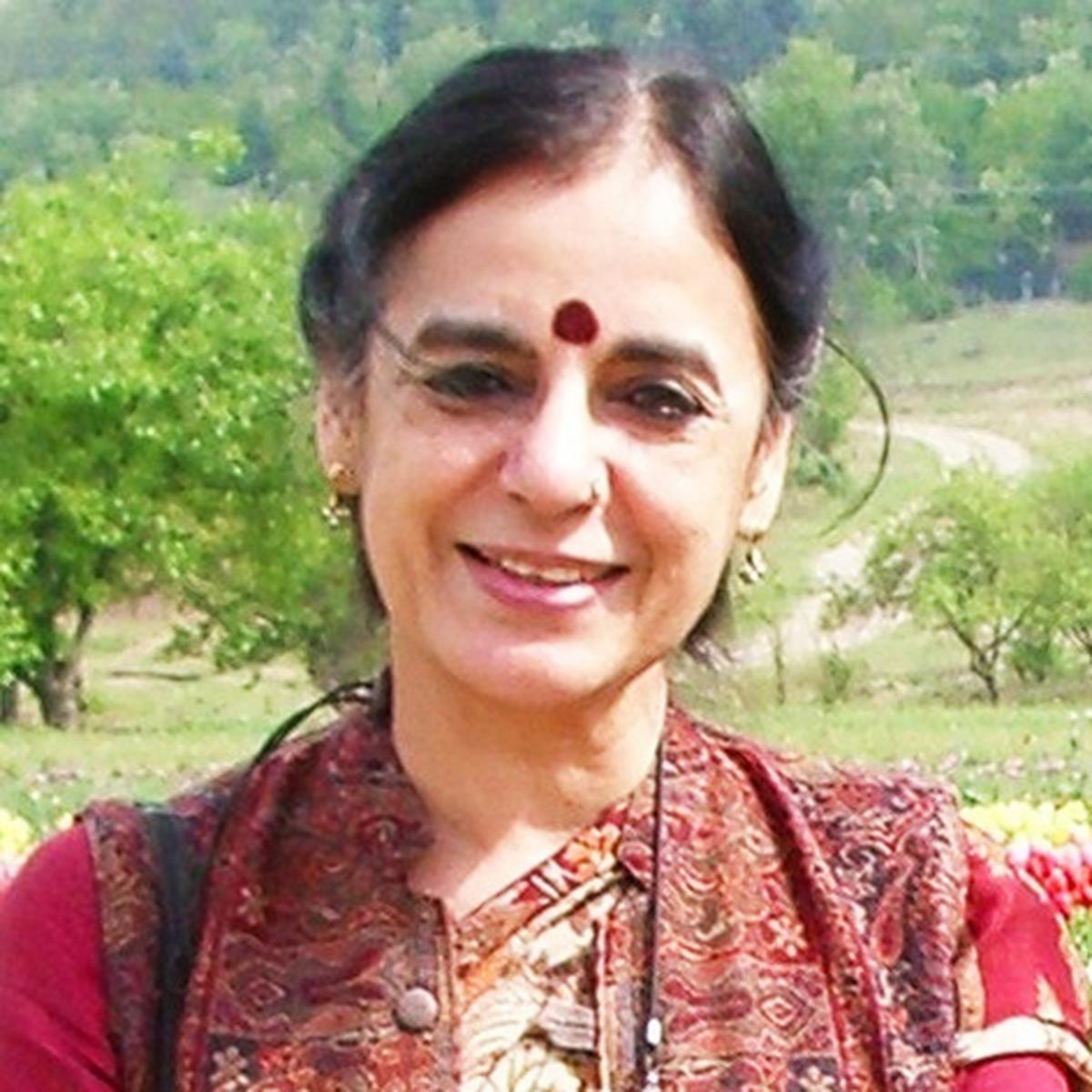
Gender audit framework should be participatory: Anita Rampal
The Hindu
As multi-tiered public discussions on revision of school curriculum and the State Curriculum Framewo
As multi-tiered public discussions on revision of school curriculum and the State Curriculum Framework pick up pace in Kerala, no area more than gender has sparked heated debates on equity, justice, and values. How these issues will be approached remains critical to the process of restructuring the curriculum as the State embraces the idea of a knowledge society.
Anita Rampal, former Dean, Faculty of Education, University of Delhi, who is a member of the core committee for curriculum revision, shares her thoughts on gender, gender audit framework for school education, and what gender justice signifies. Edited excerpts from a conversation:
What is a gender audit framework for school education?
Broadly, it looks at how gender is understood in education. Curriculum and textbooks are just one aspect of it. Gender is not about female or male, but is a relational concept, about what is constructed as the relation between masculine or feminine; we also have to look at it in an intersectional way, to see the connections between gender and say caste, or gender and poverty...what relationship hierarchies exist, in work, behaviour, attire, decision-making, position, voice, and so on. How are each of these looked at in terms of masculinities or femininities? If we look at different disciplines, say in sciences or mathematics, or languages, we have to look if construction of knowledge in them has been inclusive, if there is equity. We look at spaces from a gender lens, within a school or in the neighbourhood – what do children find safe, to interact in, with each other, with adults? Also how gender justice is understood and supported in schools, in the school management committees, local bodies, child helpline, and so on.
So, the gender audit framework is not just about girls or women - it is an approach where equity, representation, and diversity are important for everyone. What pressures exist on boys, constraining them to act or emote in certain ways, not always in holistic, humanistic, and empathetic ways? Without looking at and discussing these issues, it becomes a very simplistic approach.
Why is student participation important?
The framework and the audit process should be should be participatory; we also want students to do this, as much as teachers or faculty members of a teacher education institute. At the inauguration of the public consultation on the curriculum revision, a student asked why they did not have sports for girls in class 12, when they need it most to help deal with the pressures of the board exams.


The government plans to amend the FCRA, introducing new regulations for NGO asset management and accountability for key functionaries.

The draft policy for “Responsible Digital Use Among Students”, released on Monday by the Department of Health and Family Welfare, has recommended that parents set structured routines with clear screen-time rules and prioritise privacy, safety, and open conversation with children on digital well-being.

Police Observer Sushant Kumar Saxena conducts surprise inspection at Shencottai police station, reviewing warrants and security arrangements ahead of elections.

Andhra Pradesh government to launch key projects in April, focusing on industrial growth and infrastructure development, says Nara Lokesh.

Lok Sabha refers the Corporate Laws (Amendment) Bill to a JPC amid opposition concerns over CSR provisions dilution.

SHG members in Kanniyakumari use snakes and ladders to raise election awareness and boost voter turnout.

Government accelerates consultations for early implementation of the Women’s Reservation Act to ensure women’s representation in 2029 elections.

CM A. Revanth Reddy distributes ₹1 crore insurance cheques to families of deceased Electricity department employees, enhancing financial security for workers.

The Bengaluru Traffic Police (BTP) registered 634 cases of drunk driving during a week-long special enforcement drive conducted across the city between March 16 and March 22.

GHMC intensifies action against property tax defaulters, seizing properties and offering a One Time Settlement scheme for payments.

CCB arrests three drug peddlers in Mangaluru, seizing ₹2.5 lakh worth of MDMA and other valuables.

TVK's 28 candidates in Puducherry include former BJP MLAs, a sitting Independent, and a retired police IG.

BRS submits notice on private member bill to Speaker