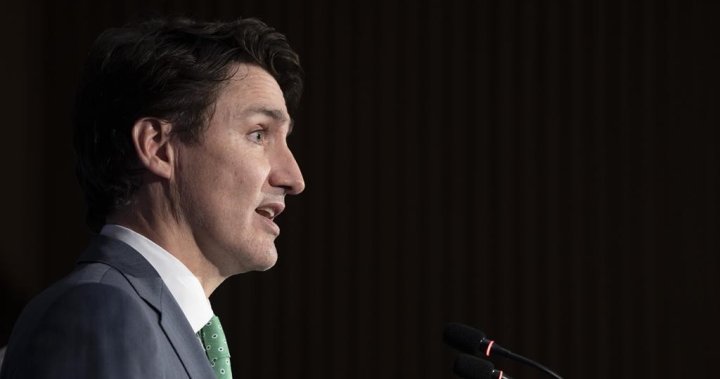
G7 Summit: Climate goals may be in conflict with fallout from Russian invasion
Global News
The impact of Russia's invasion is expected to be the biggest topic during both the G7 discussions and the upcoming NATO Summit in Spain.
G7 leaders opened their summit Sunday with a discussion about shaping the global economy at a time when conflict and unrest are driving up prices and access to key goods around the world.
Trudeau arrived in Germany Sunday after spending four days at the Commonwealth Heads of Government Meeting in Kigali, Rwanda.
He was greeted at the airport in Munich by a musical Germany welcome party, including former Liberal leader and Canadian Ambassador to Germany Stephan Dion.
From there he boarded a helicopter to take him to Schloss Elmau, a luxurious secluded mountaintop retreat in the Bavarian Alps to meet with his G7 counterparts.
The fallout of Russia‘s invasion was at the top of Canada’s agenda at the Commonwealth meeting and is expected to dominate both the G7 discussions and the upcoming NATO Summit in Madrid, Spain on Wednesday.
G7 and other nations have closed ranks and issued sanctions against Russia since the invasion of Ukraine in February and have collectively spent billions to send aid and arms to the embattled country.
But Russian President Vladimir Putin has retaliated by reducing access to its natural gas supply in some European nations, including Germany, Europe’s largest economy.
“How we get there in the short term, how we build for the medium term, how we ensure that the long term is covered is exactly what we’re going to be talking about over the next couple of days. Not just with our fellow G7 leaders, but with leaders from around the world who will be joining us in Germany to tackle this very issue,” Trudeau said at a press conference in Kigali, Rwanda Saturday at the conclusion of the Commonwealth meeting.


The institution cancelled all in-person exams on Monday, and the students' union called off events and shut down venues in response to the outbreak.

The Ministry of Energy and Mines announced a 'complete disconnection' of the country’s fuel-powered electrical system, plunging nearly 11 million people into darkness.

Abbas Omidi is one of 32 'senior officials' of Iran’s regime located in Canada.

About a fifth of global oil and liquefied natural gas normally passes through the Strait of Hormuz, a narrow passage of water between Iran and Oman.

Canada finished eighth in the gold-medal standings with just three. As for total medals, Canada placed sixth, with four silver and eight bronze.

Canada produced on average 5.3 million barrels per day of crude oil in 2025, according to the Canada Energy Regulator, making the upcoming production jump a 2.6 per cent increase.

Iran's foreign minister said the U.S. attacked Kharg and Abu Musa islands from locations in the United Arab Emirates, a claim the UAE rejected.

Citing "a more contested environment", British Prime Minister Keir Starmer and his Irish counterpart Micheal Martin said the exercises would begin in September.

Only one in four (23 per cent) Canadians approve while, 16 per cent are unsure either way. Forty-two per cent were found to strongly disapprove.

Countries around the world are grappling with skyrocketing costs for key commodities like oil and fertilizer as the war with Iran continues to upend global trade.

The U.S. Central Command said the crash followed an unspecified incident involving two aircraft in “friendly airspace,” and that the other plane landed safely.

Water treatment centres in the Persian Gulf region are under threat amid the Iran war, with desalination plants in areas like Bahrain taking damage from strikes.

John Gradek said that the price of jet fuel is up about 30 per cent and the cost of fuel represents about 30 per cent of an airline's operating costs.