G7 should adopt 'risk-based' AI regulation, ministers say
The Hindu
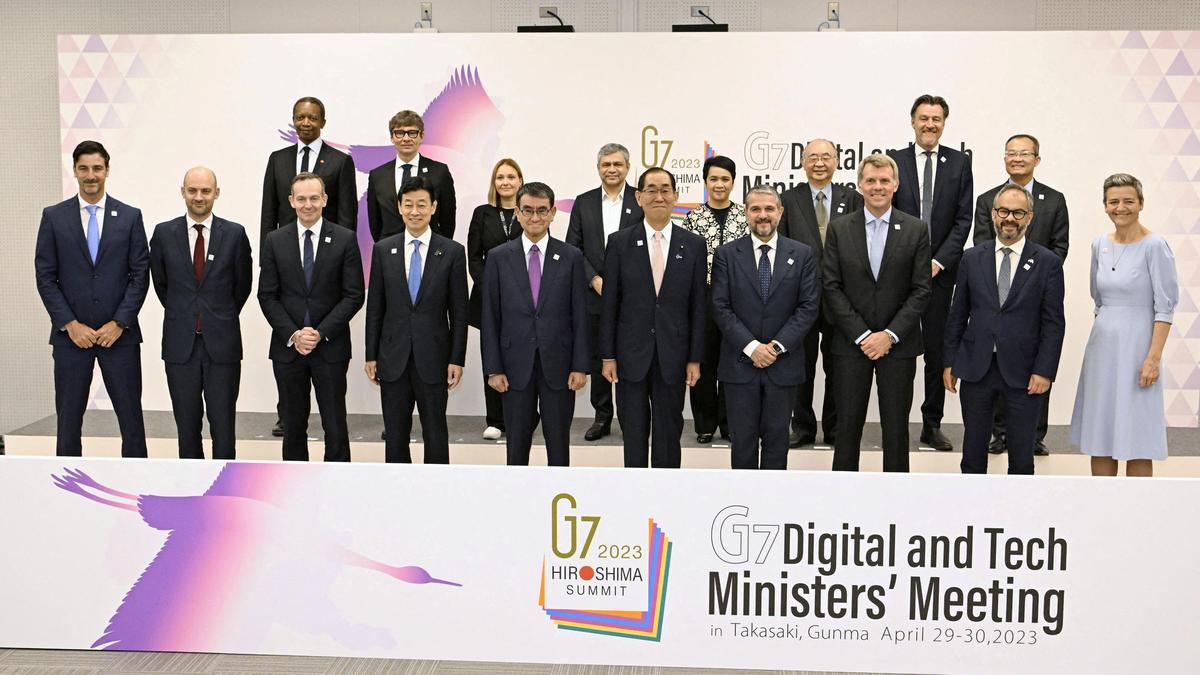
Any regulation should also “preserve an open and enabling environment” for the development of AI technologies and be based on democratic values, G-7 ministers said in a joint statement after a two-day meet in Japan.
Group of Seven advanced nations should adopt "risk-based" regulation on artificial intelligence, their digital ministers agreed on Sunday, as European lawmakers hurry to introduce an AI Act to enforce rules on emerging tools such as ChatGPT.
But such regulation should also "preserve an open and enabling environment" for the development of AI technologies and be based on democratic values, G7 ministers said in a joint statement issued at the end of a two-day meeting in Japan.
While the ministers recognised that "policy instruments to achieve the common vision and goal of trustworthy AI may vary across G7 members", the agreement sets a landmark for how major countries govern AI amid privacy concerns and security risks.
"The conclusions of this G7 meeting show that we are definitely not alone in this," European Commission Executive Vice President Margrethe Vestager told Reuters ahead of the agreement.
Governments have especially paid attention to the popularity of generative AI tools such as ChatGPT, a chatbot developed by Microsoft Corp-backed OpenAI that has become the fastest-growing app in history since its November launch.
"We plan to convene future G7 discussions on generative AI which could include topics such as governance, how to safeguard intellectual property rights including copyright, promote transparency, address disinformation" including information manipulation by foreign forces, the ministerial statement said.
ALSO READ | No plan to regulate AI, IT Ministry tells Parliament


Saudi Arabia expels Iranian military staff amid escalating tensions and ongoing missile attacks during the U.S.-Israeli war on Iran.

Russia claims control of Potapivka village in Ukraine's Sumy region amid ongoing military efforts to establish a buffer zone.

Iranian missile strikes on Israeli towns cause widespread damage and injuries, marking a significant escalation in the ongoing conflict.

As Gor makes first trip as U.S. Special envoy to South Asia, Delhi watches strategic signals closely
Sergio Gor's inaugural trip as U.S. Special Envoy to South Asia signals strategic U.S. engagement amid regional tensions.

Slovenians vote in a tight election between liberal and populist candidates, impacting the country's future domestic and foreign policies.

Netanyahu asserts U.S.-Israel alliance fights Iranian threats, emphasizing global security after missile strikes on Israeli and European targets.

Israeli settlers attack Palestinian villages in the West Bank, causing injuries and destruction amid ongoing settlement expansion.

Britain asserts no evidence of Iran planning missile strikes on Europe, despite Israeli claims of missile capabilities.

UNESCO reports over half of countries have banned phones in schools due to concerns about attention, cyberbullying, and social media impact.

Analysis reveals a U.S.-operated Patriot missile likely caused a pre-dawn explosion in Bahrain, injuring numerous civilians.

Sri Lanka raises fuel prices by 25% amid ongoing West Asia conflict, impacting petrol and diesel costs significantly.

Iran strikes near Israeli nuclear research center as Trump threatens attacks on Iranian power plants
Iran's missile strikes near Israel's nuclear site escalate tensions as Trump threatens retaliation against Iranian power plants.

Saudi Arabia intercepts one of three ballistic missiles targeting Riyadh amid ongoing regional tensions and threats from Iran.