From silver screen to Parliament: journey of Tamil actors to Rajya Sabha Premium
The Hindu
From silver screen to Parliament: journey of Tamil actors to Rajya Sabha. KamalHaasan Rajya Sabha
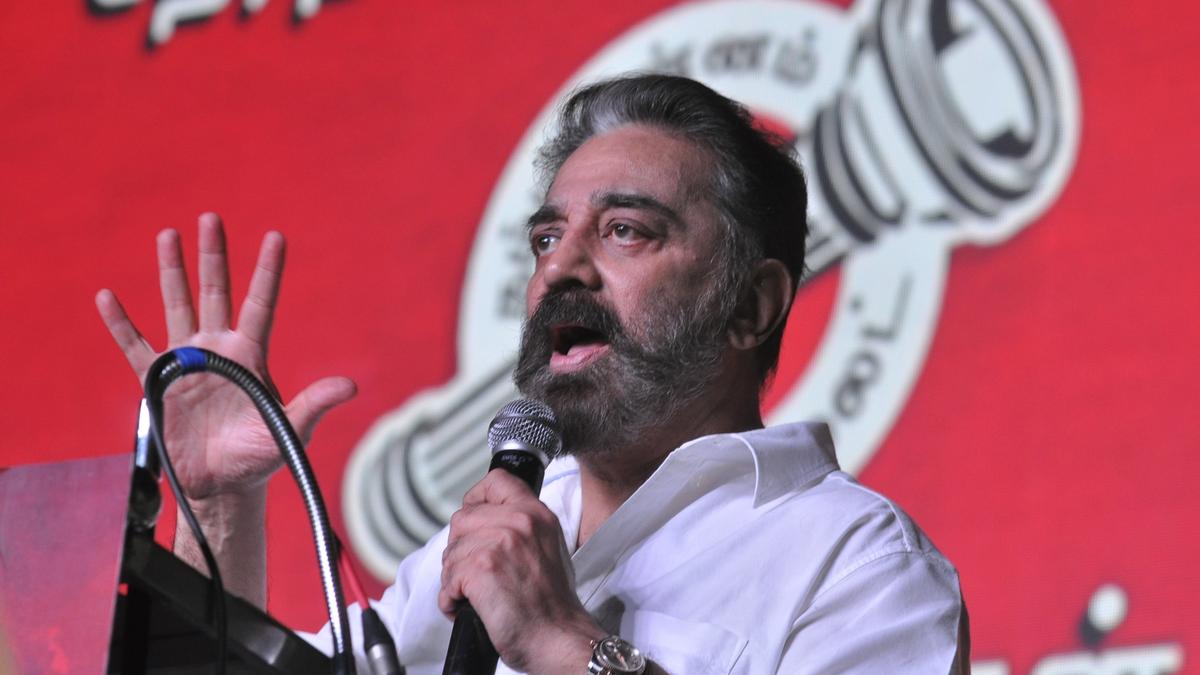
Kamal Haasan, one of Indian cinema’s most versatile and multi-faceted actors, is set to enter the Rajya Sabha — seven years after making his political debut with the launch of Makkal Needhi Maiam (MNM). Though his party has no representation in the Tamil Nadu Assembly, his path to the Upper House has been paved by the ruling Dravida Munnetra Kazhagam (DMK). This move is the result of an electoral pact struck last year, in which the actor-politician agreed to campaign for the DMK-led alliance without contesting a seat, in exchange for a nomination to the Rajya Sabha.
With this, Mr. Haasan becomes the eighth Tamil film actor to make the transition from the silver screen to the House of Elders. Here’s a look at other Kollywood stars who have served in the Rajya Sabha over the decades.
Sedapatti Suryanarayana Thevar Rajendran — better known as S.S. Rajendran or S.S.R. — holds the distinction of being the first Tamil actor to enter the Rajya Sabha, elected on a DMK ticket in 1970. A key figure in Tamil cinema, the Latchiya Nadigar (Principled Actor) was known for his rationalist leanings, and consciously avoided playing mythological roles.
S.S.R. had earlier made history in 1957 as the first actor in the world to win an election. Contesting as one of 15 ‘Independent’ candidates of the then-nascent DMK — which lacked a formal election symbol at the time — he was elected to the Tamil Nadu Assembly from the Theni constituency, a seat he successfully retained in 1962.
His Rajya Sabha tenure, however, saw a dramatic moment that brought him national attention. Just months after entering the Upper House, S.S.R. missed a crucial vote on the 24th Constitution Amendment Bill to abolish privy purses on September 5, 1970. As reported in The Hindu under the headline ‘Rajendran was late by a few seconds’, the actor-politician had been ill with a stomach upset but rushed to Parliament after being told his vote was vital. Tragically, he reached the Rajya Sabha lobby just as the doors were closing — missing the vote by mere seconds. The Bill, which was defeated by just one vote, marked a significant embarrassment for the Indira Gandhi government. At the time, the DMK had seven MPs in the Rajya Sabha; while five voted in favour, one, G.P. Somasundaram, was absent with the party’s permission.
S.S.R. began his career in cinema as a playback singer before moving to acting and then politics. Later, he joined the AIADMK and returned to the Assembly in 1980, winning from Andipatti — a constituency that would go on to elect M.G. Ramachandran (MGR) in 1984 while he was hospitalised in Brooklyn, New York. In 2002, the same seat sent another star-turned-politician, Jayalalithaa, to the Assembly through a byelection.
S.S.R. passed away in October 2014, leaving behind a unique legacy at the intersection of cinema and politics.


Perundurai's industrial growth faces challenges of pollution, water scarcity, and healthcare, impacting residents ahead of the 2026 elections.

The Travancore Devaswom Board asserts that courts should respect community beliefs in its Supreme Court submission on Sabarimala's entry issue.

Karnataka cancels Deendayal Upadhyay event at KSOU due to protocol violations, citing inconsistency with university objectives.

Illegal pickle unit busted in Hyderabad, one arrested; unhygienic stock worth ₹3 lakh seized

Karnataka has entered a state of demographic transition where a large working-age population will no longer be enough to drive economic growth, and future gains will depend on how productively people are employed, the ‘State of Working India 2026’ report said.

Key demands in Sulur Assembly constituency include reviving the powerloom sector, addressing farmers' needs, and protecting River Noyyal.

Kodihalli urges Karnataka CM to allocate ₹10,000 crore revolving fund for seamless procurement of farm products under MSP scheme.

Kerala's political parties continue to marginalize women candidates, highlighting a troubling disconnect between gender demographics and representation.

The High Court of Karnataka on Tuesday ordered the issue of a notice to the State government on a PIL petition, which had complained about disturbances caused to people residing in the localities around the National Public School situated in Rajajinagar 5th block due to use of loudspeakers with high volume in the school and parking of school buses in residential areas.

China is extensively mapping ocean floors to enhance submarine warfare capabilities against the U.S. and allies across key oceans.

AIADMK's 2026 manifesto promises free rations, women's benefits, education reforms, and economic growth initiatives for Tamil Nadu.

The vehicle towing drive will soon resume in the city to ease traffic congestion. The Bengaluru Traffic Police (BTP), in coordination with the Greater Bengaluru Authority (GBA), is set to relaunch the vehicle towing drive across the city shortly to tackle traffic congestion and illegal parking.

Panic buying, not shortage, is leading to long queues at Hyderabad petrol pumps.