From page to screen: film adaptations that surpassed their source material
The Hindu
A dive into the world of films adapted from novels and how, rarely, screen adaptations have surpassed their book source in transporting us to their worlds
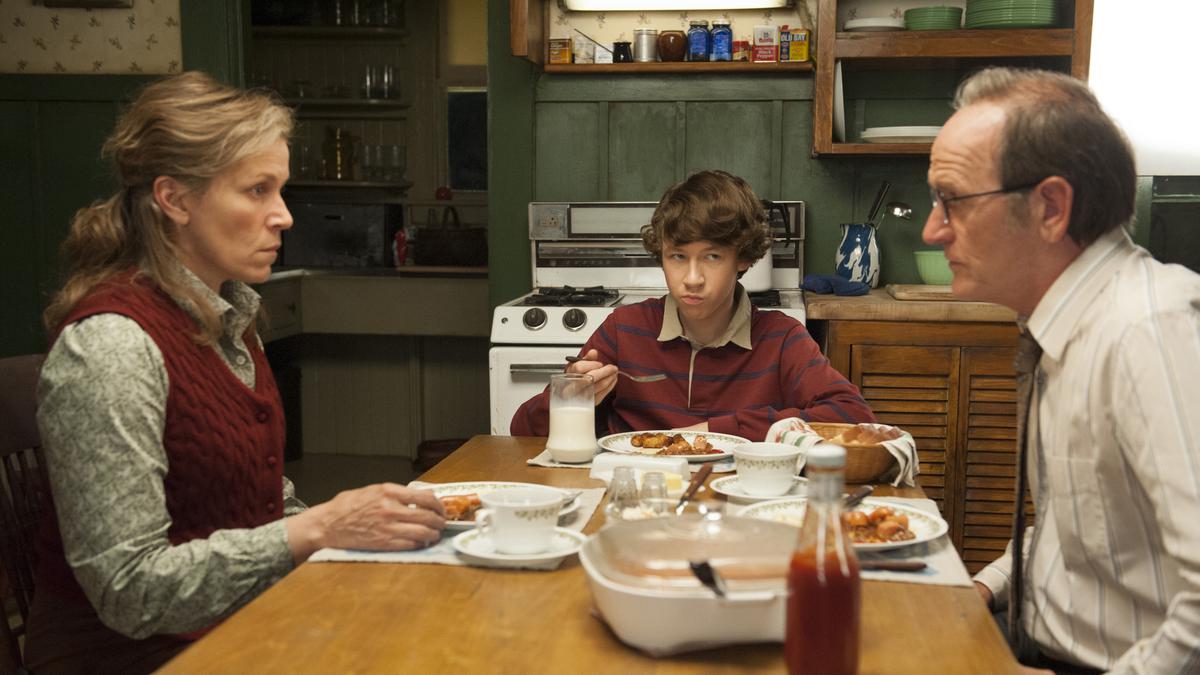
Olive Kitteridge, an adaptation by director Lisa Cholodenko of the eponymous novel by Elizabeth Strout, is a gentle, profound mini-series about a dysfunctional family set in a beautiful, idyllic seaside town in Maine. Frances McDormand plays Olive, a stern school teacher married to cheerful pharmacist Henry ( Richard Jenkins) and the pair are like two peas wrongly squashed into a pod. The dinner table conversations at the Kitteridge residence are clipped, while Henry tries to keep it light for his teen son; Olive doesn’t hesitate to speak about depression that runs rampant in the family and how her father shot himself in the head. There are deaths, tulips, boats, sunsets, suicides and Henry and Olive in the midst of it all growing old together.
The show begins with Olive getting ready to kill herself, a deviation from the book’s opening and ends with her looking out at the ocean and seagulls, ‘It baffles me, this world. I don’t want to leave it yet,” she says, which are also her last words in the book. The show is exquisite, and McDormand has swallowed the character of Olive whole; it’s impossible to find the real Olive on paper again.
This gets one wondering about screen adaptations that have surpassed their book sources, and how rarely that magic happens. In our favourite books, the author has all the words in the world to tell us a story. Our imaginations drive the visuals, their words mesh with our minds to create symbiotic universes. With screen adaptations, however, the interpretation becomes the auteur’s; the story is told in their visual and cinematic style, and they have limited time to tell it. Many a time, that’s why when the lights come on, “the book is better than the movie,” is a common critique. Is this because of a sense of proprietorship and resentment when a favourite story is tweaked and beginnings or endings changed? Is it like taking a core memory and trying to replace it, like meeting your imaginary friend and not liking them?
It’s a daunting walk on fire for directors to try to adapt a popular book, yet from the inception of cinema, novels have been a source of inspiration and fodder for movies. Charles Dickens, who died 25 years before motion pictures came into existence, is credited with inventing the parallel montage (intercutting between two stories) in his writing, and he is also said to have inspired the track shoot and zoom technique through his way of storytelling.
Then there’s Agatha Christie, Jane Austen, Stephen King, and John Grisham whose books have been repeatedly adapted; the list of authors and adaptations in the history of cinema is long and contentious.
Closer home, there are a few Indian-authored books that would make terrific films. Vikas Swarup’s Q & A which a few years later became Slumdog Millionaire, Serious Men by Manu Joseph which became a film of the same name on Netflix, The Story of My Assassins by Tarun Tejpal which the show on Prime Video Paatal Lok is loosely based upon, and Jhumpa Lahiri’s The Namesake to mention a few.
The Namesake remains an all-time favourite adaptation; Mira Nair elevated Lahiri’s story of immigration, exile and generational discord with her impeccable casting, nuanced performances, minimal dialogues, and a visual style which takes your breath away. The intercut between Queensboro Bridge and Howrah Bridge, showing the two worlds of Ashima played by Tabu; the transition from New York through a train window to lush paddy fields in West Bengal through the bars of another train’s window; the floating orange garland in the Ganges after her husband’s ashes are immersed to the lone orange tree outside their home in the suburbs of NY where she is back now without him... all these images stay stronger than words.


A 'Golden' moment for a K-pop track at the Oscars.

Parvathi Nayar’s new exhibition, The Primordial, in Mumbai, traces oceans, pepper and climate change
Opened on March 12, the exhibition marks the artist’s first solo show in Mumbai in nearly two decades. Known for her intricate graphite drawings and multidisciplinary practice spanning installation, photography, video, and climate change, her artistic journey has long engaged with the themes of ecology, climate change and the natural world. In this ongoing exhibition, these strands converge through a series of works centred on water, salt, and pepper — materials that carry natural and historic weight across centuries.

Explore the highlights and key winners of the 98th Academy Awards, featuring memorable moments and historic achievements from Oscars 2026.

Spring season celebrated at Ramakrishna Mission Institute, Kolkata, with ‘Evening of Basant’

The Spirit of the Land, a solo show by artist Shivakumar Sunagar, is a vista of Nature-inspired emotions

Tal Fry is all set for an exciting new performance season

Netflix is making a bold move by snagging InterPositive, the AI filmmaking company founded by Ben Affleck, in a deal that could hit $600 million

Watch the eerie trailer for 'Hokum,' where Adam Scott faces a witch haunting in a mysterious Irish inn.

Oscars 2026 security heightened amid FBI warnings of a potential Iranian drone threat ahead of the Hollywood ceremony.

Directed by Rahul Pandey, the series also stars Naila Grewal, Nidhi Bisht, Anant Joshi, Anjum Batra and Kusha Kapila

A tribute to the versatile actor and comedian V.K. Ramasamy in his birth centenary year.

‘One Piece’ Season 2 review: As the Straw Hats enter the Grand Line, Netflix’s live-action adaptation finds its sea legs with bigger islands, stranger villains and the same stretch-happy sense of boundless adventure

Geeta Gandbhir, the Indian-origin American filmmaker is waves at this year’s Oscars with not one, but two nominations. Her documentaries, ‘The Perfect Neighbor’ and ‘The Devil is Busy’ are in the race for the Academy Award