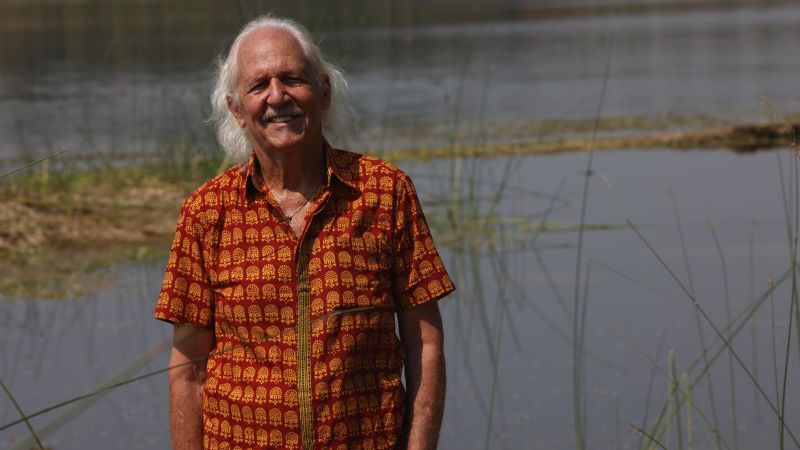
From hunter to guardian: How the ‘Snakeman of India’ found his way into wildlife conservation
CNN
Romulus Whitaker made a name for himself as a snake expert, and later, an advocate to save rainforests. Now he’s leading a campaign about snake bite prevention.
Moving from America to India as a child in the 1950s would likely be a challenging experience for most, but for Romulus Whitaker it was a dream come true — he had arrived in “the land of cobras,” he explained to CNN. Whitaker would go on to earn the nickname “Snakeman of India,” and spend more than six decades dedicated to reptile research and conservation. He’s written several books on snakes, spearheaded a lifesaving anti-venom program, and launched wildlife research stations throughout the country. His field work with snakes and crocodiles ultimately led his conservation efforts to help save India’s rainforests. Today, Whitaker’s focus is on educating Indians on how to protect themselves from snakes — part of a national campaign to reduce the snakebite mortality rate. CNN spoke with Whitaker recently at his home in Mysore, southwestern India, around the release of the first volume of his memoir: “Snakes, Drugs and Rock ‘n’ Roll: My Early Years.” The following interview has been edited for length and clarity.


A consortium of the nation’s top architectural and historic preservation groups is targeting President Donald Trump’s plans to temporarily close and extensively renovate the Kennedy Center, filing a new lawsuit Monday that asks a federal judge to indefinitely halt the project.

ICE agents sent to airports as TSA callouts remain high; separately, two people have died after a plane collided with a fire truck at New York’s second biggest airport. Follow for live updates

Mike Pence used to dream of following two successful Donald Trump terms with his own turn in the White House.

An Air Canada plane was damaged after colliding with a vehicle on a runway at New York’s LaGuardia Airport Monday, according to video from the scene and air traffic control audio.

A statue of Christopher Columbus has been erected outside of an ornate federal office building on the White House grounds — the latest sign of the Trump administration’s efforts to reshape cultural and historical representations across the nation’s capital.

Kentucky Gov. Andy Beshear, speaking in JD Vance’s home state of Ohio on Saturday, tore into the vice president, questioning his Appalachian roots and telling voters they “deserve better.”

President Donald Trump has said ICE agents will head to US airports tomorrow amid a partial government shutdown. Follow for live updates

Cuba is working to restore the electricity supply after another island-wide blackout left more than 10 million people without power.

President Donald Trump said Sunday border czar Tom Homan will be in charge of deploying Immigration and Customs Enforcement agents to airports on Monday, with Homan telling CNN the agents will help with security at entrances and exits to ease the Transportation Security Administration’s workload.

Donald Trump wants us to believe that a deal with Cuba is close at hand. After this past week, I am not so sure.

President Donald Trump has said ICE agents will head to US airports tomorrow amid a partial government shutdown. Follow for live updates

President Donald Trump said Sunday border czar Tom Homan will be in charge of deploying Immigration and Customs Enforcement agents to airports on Monday, with Homan telling CNN the agents will assist with security at entrances and exits to ease TSA workload amid a partial government shutdown.

Janet Mills and her allies are counting on a gender gap to narrow Platner’s wide lead ahead of the June 9 primary to decide who will face incumbent Republican Sen. Susan Collins. They are betting that the unfiltered style that has brought Platner widespread attention as someone who could help Democrats reach young men will backfire with women.