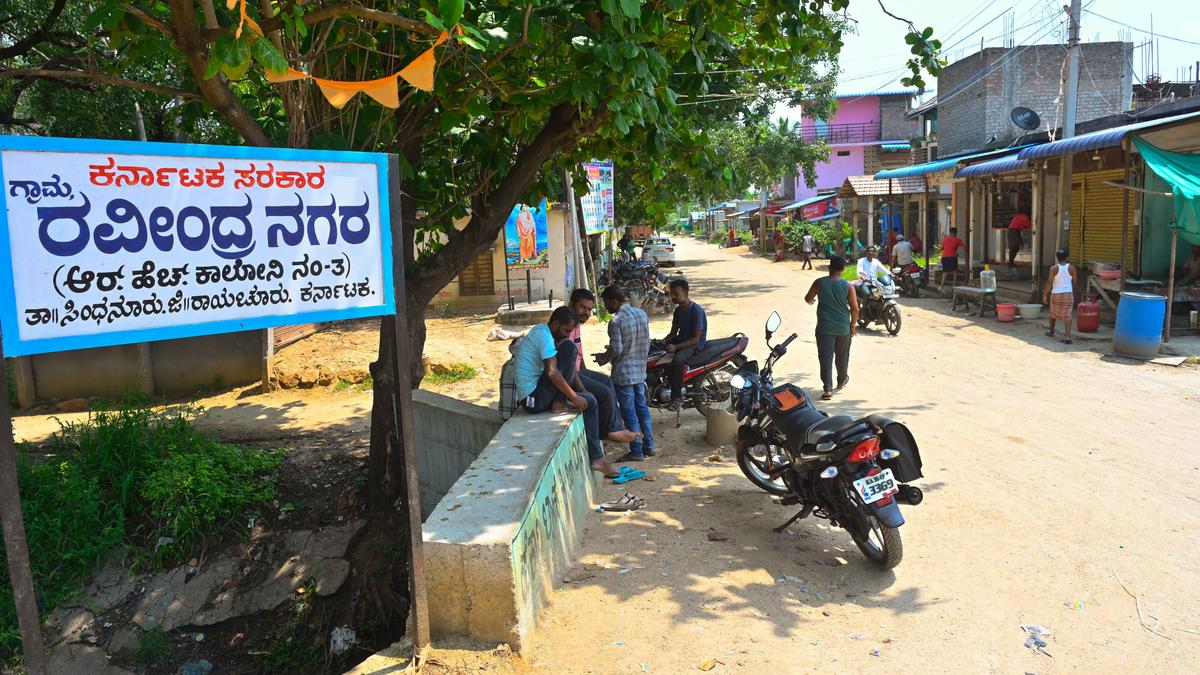
From displacement to resilience: The life of Bangladeshi refugees in Raichur Premium
The Hindu
The struggles and hopes of Bangladeshi immigrants who came to Raichur in Karnataka.
Anil Roy, a resident of a small village near Batiaghata in Khulna district, East Pakistan (now Bangladesh), was just 16 when he fled his homeland in 1971, seeking refuge in India. The country was embroiled in the Liberation War, with communal violence sweeping cities, towns, and the countryside.
A month before his scheduled matriculation exams, Roy packed a few books and notes and, along with his parents, grandparents, and three brothers, prepared to leave their motherland. His parents had arranged an “agent”, a Muslim man who risked his life to help fleeing Hindu families cross into India, for a fee.
Four other Hindu families from their village had also enlisted the same agent’s help. Leaving behind their agricultural lands, homes, and other possessions, they offered all they could to secure their passage across the border. The agent first sheltered the families with relatives and then moved them from one location to another under the cover of night, inching closer to the Indian border.
After several days and nights, they finally crossed the border at a remote location in West Bengal. Upon arrival, each member received a Relief Eligibility Certificate, or “border slip”, from Indian authorities, allowing them to settle in India.
Roy’s family initially stayed in West Bengal before being relocated to a refugee relief camp in Madhya Pradesh. Eventually, they were moved to one of five Rehabilitation Camps (RH Camps) near Sindhanur in Raichur district, Karnataka.
“It’s hard to imagine what it feels like to leave the country where you grew up with relatives, friends, and ancestral memories,” Roy, now 68, told The Hindu outside his home at RH Camp 2 near Sindhanur, tears streaming down his face.
Roy was among the over 10 million people who fled East Pakistan in 1971. At the time, the conflict between the Mukti Bahini, a Bengali nationalist militia fighting for self-determination, and the West Pakistan-controlled armed forces was at its peak.


CM Stalin asserts unity in the DMK-led alliance, dismissing division attempts and emphasizing collaborative efforts for the upcoming elections.

Rahul Gandhi to skip Kerala rally due to Sonia Gandhi’s ill health; Kharge to attend Kozhikode event
Rahul Gandhi will miss the Kerala rally due to Sonia Gandhi's health; Congress president Kharge to attend instead.

Thunderstorms with lightning and gusty winds forecasted for 20 Telangana districts on March 26

TGSRTC reduces Metro AC and Deluxe bus fares by 30% in Hyderabad to encourage public transport amid the fuel crisis.

Supreme Court criticises Haryana Police for mishandling a four-year-old rape case, mandates swift action and oversight with a Special Investigation Team.

On World Theatre Day 2026, artists in Hyderabad call for affordable venues as rising costs and infrastructure gaps challenge the city’s theatre ecosystem.

Madhapur police seize 31 illegally transported commercial gas cylinders, ensuring public safety and compliance with regulatory norms.

Punjab AAP MLA Harmeet Singh Pathanmajra arrested in Gwalior after evading police in a rape case for over six months.

Bose Krishnamachari resigned from the Kochi Biennale Foundation amid sexual harassment allegations, confirmed by the foundation's chairperson.

Apple Maps, an app that comes bundled on hundreds of millions of iPhones and other devices each year, will display paid advertising on top of existing organic search results

From the universe’s many wondorous objects to a fascinating pattern of numbers, and whether AI can possess superhuman strength, Science At The Sabha will have fascinating talks for participants of all ages

A Sikh organisation has lodged a complaint against the makers of the film alleging that the movie’s promotional material has hurt the religious sentiments of the Sikh community

Speculation over Congress' Chief Ministerial candidate in Kerala persists despite party leaders' attempts to quell the discussions ahead of elections.