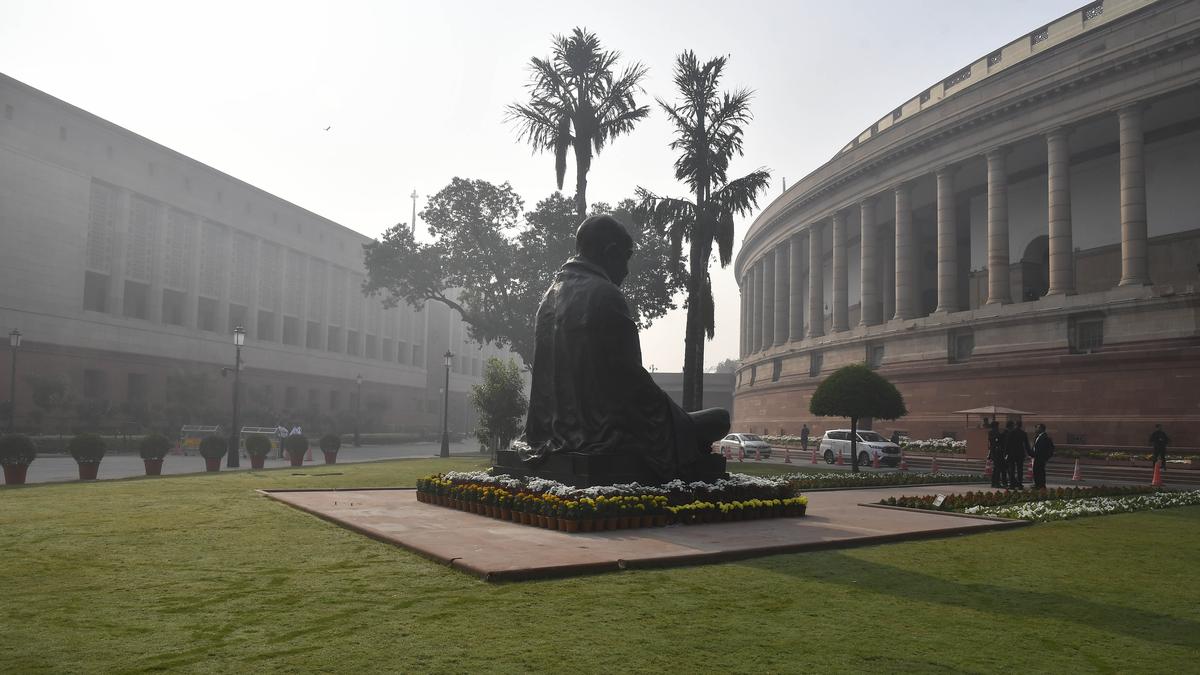
From abolition of Article 370, to a new Parliament building, to the suspension of 146 MPs, the 17th Lok Sabha saw it all
The Hindu
The 17th Lok Sabha session in New Delhi witnessed significant events such as the removal of Article 370, passage of women's reservation law, and controversial farm laws.
The 17th Lok Sabha that took off with the removal of special status for Jammu and Kashmir under Article 370 of the Constitution ended its last session on Saturday with a special discussion on the construction of the Ram Mandir at Ayodhya.
While both these issues define the core of BJP’s vision for the country, there have been several defining moments in a House dominated by the BJP-led NDA.
A long cherished political goal of Jan Sangh ideologue Syama Prasad Mookerjee, the abrogation of the special status to Jammu and Kashmir under Article 370 of the Constitution was among the high points of the Modi government 2.0. Its numbers were never a problem in the Lok Sabha to carry through the constitutional amendment. That is why the government’s political managers first focused on getting the required numbers in the Rajya Sabha first.
Twenty-seven years after the women’s reservation Bill was first introduced in Parliament, the Lok Sabha on September 20 passed a Bill with near unanimity to amend the Constitution and provide one-third reservation to women in the Lok Sabha and State Assemblies. The Bill was passed in a special session but its implementation is linked to a delimitation exercise that is frozen till 2026.
The passage of the landmark women’s reservation law in September 2023 was the first legislative business at the new Parliament building that was inaugurated by Prime Minister Narendra Modi on May 28. Amid Vedic chants by priests from Karnataka’s Sringeri Math, the Prime Minister performed “Ganapati Homam” to invoke Gods to bless the inauguration of the new Parliament building and installed the sacred ‘Sengol’ in the Lok Sabha chamber, right next to the Speaker’s chair, after performing puja. Mr. Modi was handed over the ‘Sengol’ by Adheenams from Tamil Nadu before it was installed in the new Parliament building. The ceremony was boycotted by 19 Opposition parties over what they described as violation of protocol as it should have been presided over by the President.
Among the first laws that the Narendra Modi government brought in its second tenure was the Muslim Women (Protection of Rights on Marriage) Bill, 2019. The law not only banned instant triple talaq but also made it a criminal offence.
The Monsoon session in 2020 was the first session that got delayed due to the corona pandemic and was held amid major changes to follow COVID-19 protocols. Lok Sabha and Rajya Sabha had separate sittings as members were spread across the two chambers to maintain social distancing and all MPs had to come with COVID negative certificates.


U.S.-Israeli war on Iran LIVE: Iran faces deadline of US President Donald Trump warning to open Strait of Hormuz. Follow The Hindu for more LIVE updates on March 23 2026 on Iran-Israel war.

KPCC chief Sunny Joseph emphasizes UDF's focus on Sabarimala and corruption while expressing confidence in winning Kerala's upcoming Assembly elections.

A military plane crash in Colombia leaves 125 aboard, with at least 48 survivors rescued amid ongoing recovery efforts.

‘Symposium’, a new platform to promote lifelong learning and counter misinformation among youth, was launched in Hyderabad.

By using TB as an entry point, integrated healthcare delivery can optimise and improve public health efficiency

Residents of Chettichavadi express concerns over deteriorating groundwater quality due to long-standing garbage dumping issues in Salem West.

Community Health Officers in Vijayawada protest for reduced workload and continued incentives amid growing dissatisfaction over salary changes.

Telangana faces 13,929 healthcare vacancies, primarily in doctors and nurses, as recruitment efforts aim to address the shortage.

For most patients with TB who are severely underweight, nutritional support is an essential and not optional part of treatment

Family of custodial death victims demands harsh punishment for nine convicted policemen to prevent future abuses of power.

Rajinikanth refutes TVK leader's claims about DMK threats preventing his political entry, expressing gratitude to supportive political figures.

CM announces Cabinet Sub-Committee on Musi rejuvenation; rehabilitation for all displaced

Ramanathapuram identifies 145 polling stations as sensitive, ensuring security with paramilitary forces ahead of assembly elections, says DEO.