‘Free bicycles for school students entail extra expenditure’
The Hindu
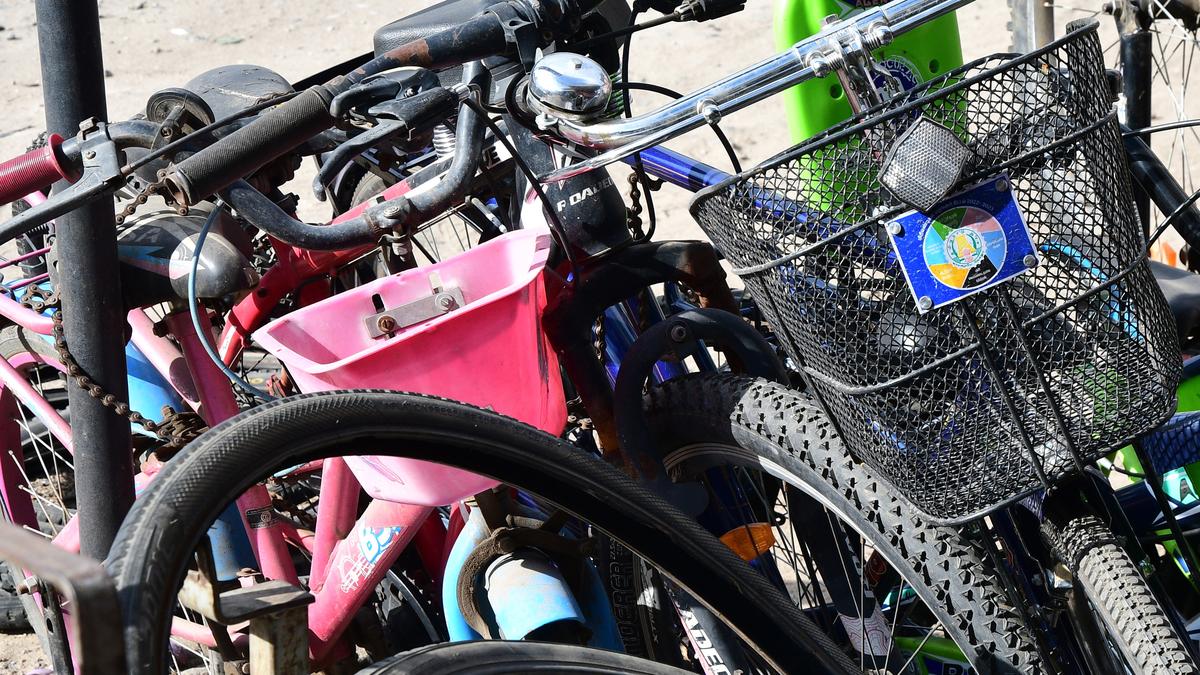
Plus One students from economically backward family background who receive free bicycles incur extra expenditure on additional bearings and wheel alignment for usability. School heads say stipulations like BIS certification for procurement of parts for making of the bicycle would make the tender-holders accountable.
COIMBATORE If Plus One students in government schools are receiving free bicycles under the government’s freebie scheme implemented through the School Education Department with a pinch of salt, the reason is not far to seek.
The bicycles are not fit for use right away due to inadequacy of bearings and deficiency in wheel alignment. The students from economically poor families who are entitled to this scheme find themselves forced to depend on their parents money to get their free bicycles rehauled at private workshops before they start using them, according to a headmaster of a government school.
“The bicycles have to be rehauled with at least five to six additional bearings. More importantly, the bicycles are distributed sans rim tape, in the absence of which the tubes and tyres get worn out rapidly,” Rajavel, a bicycle mechanic in Coimbatore city said.
The free bicycle scheme was first launched during 2001-02 by late Chief Minister J. Jayalalithaa to encourage female students to pursue education. Subsequently, a number of other State governments followed suit.
“The shortcomings would not have arisen in the first place if the government had made BIS certification mandatory for the materials used to assemble the bicycle. For instance, in Karnataka and a few other States, companies winning the bid are required to hold service camps within three-months.
No doubt, the free bicycles have been the reason for better enrolment of students, particularly female students, for Plus Two in government schools.


Sobha Surendran refutes V.D. Satheesan's claims of a BJP-CPI(M) deal, attributing them to fear of electoral defeat.

V.D. Satheesan praises G. Sudhakaran as a just administrator, highlighting respect amid political differences in Kerala Assembly polls.

Kerala court sentences G. Sandeep to life imprisonment for the murder of Dr. Vandana Das, with appeals for a death penalty pending.

Erode (East) voters prioritize pollution control, traffic solutions, and urban infrastructure as key issues ahead of upcoming elections.

Civil supplies department seizes 55 illegal LPG cylinders, booking 19 individuals to prevent domestic supply shortages in Vizianagaram.

Hyderabad police bust illegal samosa unit, seizing 500 stale eggs and used cooking oil, risking public health.

Eid prayers are held in Delhi's Uttam Nagar under heavy police presence amid heightened communal tensions and security measures.

Tensions rise in Mathura as locals protest cow vigilante's death, prompting a strong response from authorities and police.

Join the Met Centre Hyderabad's open house on March 23 to learn about weather forecasting and its real-life applications.

Kerala CM Pinarayi Vijayan blames Congress and BJP for India's cooking gas crisis, citing failures in energy policy and corporate interests.

An 81-year-old businessman loses ₹15.4 crore in a digital arrest scam involving fake CBI and RBI officials.

AP cadre IAS officer A. Vani Prasad is reallocated to Telangana cadre following a Telangana High Court order.

TMMK hosts special Eid prayers in Chennai, emphasizing peace amid ongoing West Asia conflicts and supporting those in need.