Four must-see birds this migration season in Coimbatore
The Hindu
Coimbatore’s wetlands come alive as migratory birds arrive from Siberia and beyond. Meet four birders talking of this seasonal spectacle.
As winter paints Coimbatore’s skies with a softer light, the city’s wetlands stir with the promise of arrivals from distant lands. From Siberian steppes to Himalayan foothills, migratory birds chart ancient routes, guided by instinct and the allure of southern sanctuary. By March’s end, they will leave as quietly as they came, but for now, they fill the air with their calls and the waters with their grace. To celebrate their arrival, we spoke to four birders, each sharing stories of a winged traveller that turns the city into a seasonal sanctuary.
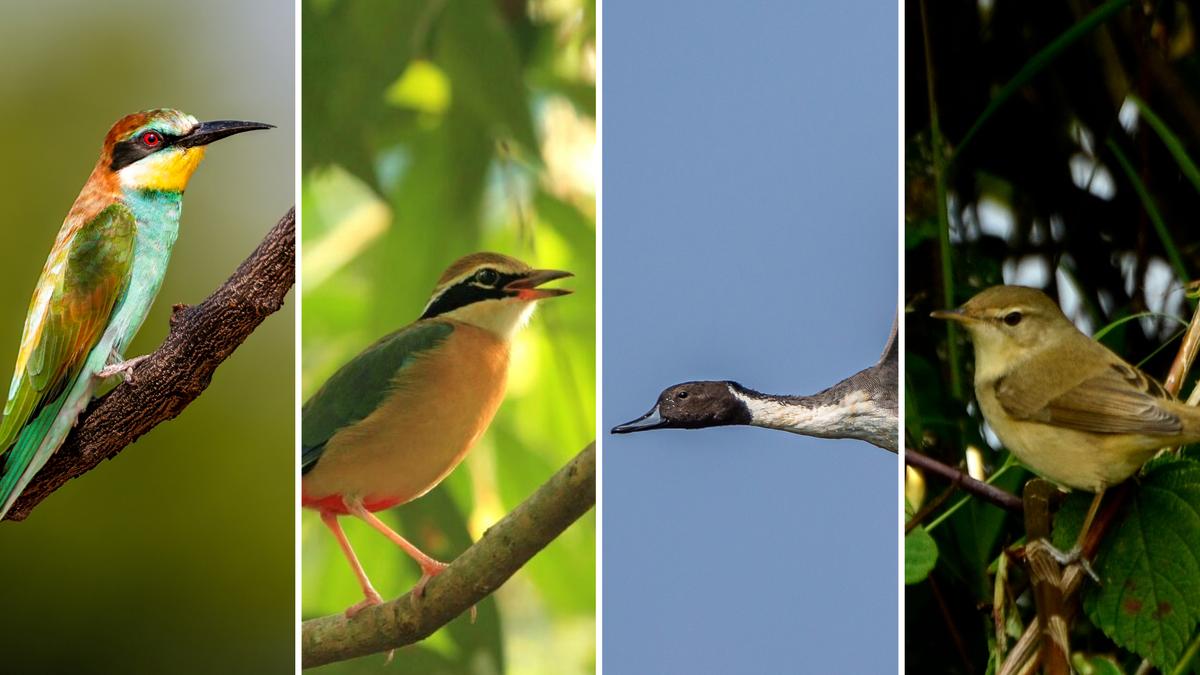
One fascinating migratory bird that visits Coimbatore is the European Bee-eater. This species, a passage migrant, stops here in October on its way south, with some continuing to Sri Lanka. It returns briefly in March and April en route to Europe. The first time I saw one was in 2017 at Ponnuthu Hills, near the Ponnuthu Amman Temple. I spotted it perched on an electrical wire, holding a cicada in its beak—a striking sight given its vibrant colours and size, much larger than the Green Bee-eater. I had been scouting for this bird for a long time.
European Bee-eaters have become more common in Coimbatore over the years, with large flocks occasionally reported. A birder friend once recorded a flock of 500 birds in a single location. Before 2015, sightings were rare, but growing awareness among birders has led to better documentation. Ponnuthu Hills remains a popular spot to see these birds during their migration seasons.
What makes bee-eaters unique is their feeding technique. They primarily hunt bees but cleverly remove the sting by bashing them against a branch before eating. I’ve also seen them prey on cicadas, adding variety to their diet. In the evenings, these birds exhibit communal roosting, gathering in groups of five to ten on a single branch, creating a charming sight.
The European Bee-eater’s migration story is tied to food availability. During harsh European winters, insects hibernate, leaving little sustenance for these birds. They migrate to tropical regions like India, where food is abundant. However, come summer, they return to Europe, drawn by plentiful insects, fewer predators, and ample nesting spaces.
Threats to these birds include widespread pesticide use, which depletes their insect food sources and causes toxins to build up in their systems. This impacts their breeding, leading to thinner eggshells or infertility. Colony Collapse Disorder (CCD), a phenomenon affecting bee populations, could also pose a long-term risk.
(By Balaji PB, senior member, Coimbatore Nature Society (CNS). To go birding with CNS, contact 9842261279)


Explore the SHANTI Act's implications for India's nuclear development, replacing outdated laws and targeting significant capacity growth.

ISRO successfully completed drogue parachute deployment tests for the Gaganyaan mission, advancing safety for human spaceflight.

Discover Ritwik Khanna's innovative repair shop Rkive in Mumbai, merging sustainability, creativity, and youthful urgency in fashion.

ISRO will launch the U.S. BlueBird satellite on December 24, 2025, after postponing from the original December 15 date.

Explore unique Christmas ornaments from Tiffany, Swarovski, and more, blending luxury with festive charm for your holiday decor.

Inside Copenhagen’s Alchemist: Chef Rasmus Munk on food, provocation and his India-inspired dishes

Explore the debate surrounding a potential dark matter discovery, highlighting skepticism and the need for rigorous validation in astronomy.

Discover how ice cores from the Pamir Mountains could unlock secrets to protect the world's glaciers from climate change.

Discover why spicy food causes a runny nose and how capsaicin triggers a protective response in our bodies.

In October this year, India announced its intention to build Maitri II, the country’s newest research station in Antarctica and India’s fourth, about 40 forty-odd years after the first permanent research station in Antarctica, Dakshin Gangotri, was established. The Hindu talks to Dr Harsh K Gupta, who led the team that established it

Study reveals rising artemisinin resistance in Africa, echoing Asia's past, urging urgent action to prevent widespread crisis.

Michelin launches The Grappe, a new wine distinction, recognizing excellence with one to three grapes, starting with the Burgundy and Bordeaux regions

A groundbreaking experiment transforms skin cells into egg-like cells, offering hope for infertility treatments amidst ethical considerations.