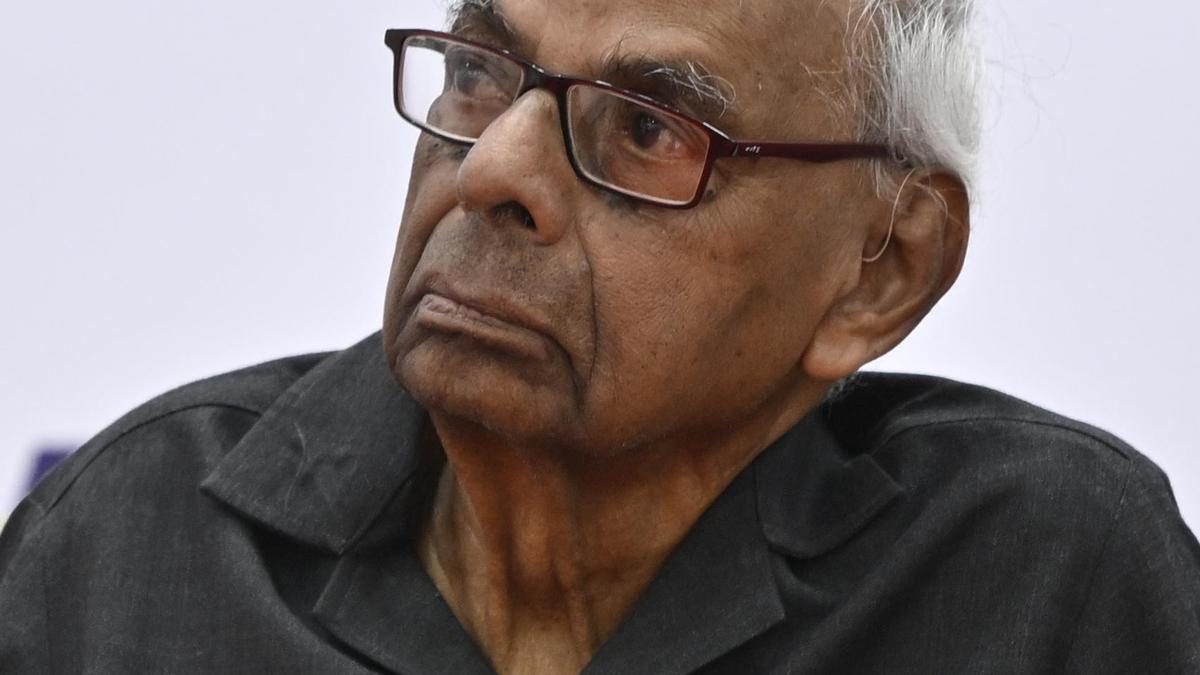
Former RBI Governor Rangarajan critiques 16th Finance Commission report
The Hindu
Former RBI Governor Rangarajan critiques the Sixteenth Finance Commission report, highlighting concerns over cesses and resource distribution.
The Sixteenth Finance Commission retains the share of States in the divisible pool at 41%, but it makes no recommendation on non-shareable cess and surcharge, which has been a concern for all States, C. Rangarajan, Former Chairman, Economic Advisory Council to the Prime Minister & Former Governor, RBI, and Chairman, Madras School of Economics, said.
Speaking at a one-day conference on the report of the Sixteenth Finance Commission that was organised by the Madras Institute of Development Studies (MIDS) in association with the Madras School of Economics (MSE), Mr. Rangarajan said: “This is unfortunate. The Sixteenth Finance Commission recommended a ‘grand bargain’ between the Centre and States, so that States would agree to a smaller share provided the Centre agreed to merge a large part of the cesses and surcharges in the regular taxes.”
“It would have been better if the commission at least pointed out to the Centre that the steep increases in cesses and surcharges is not warranted and is not in the spirit of the Constitution,” he added.
Mr. Rangarajan then pointed out that the Sixteenth Finance Commission discontinued revenue deficit grants and sector specific grants and this will reduce the flow of resources from the centre to the States. “In the horizontal distribution, a new variable contribution to GDP has been added. This is not the variable contribution to total taxes of the Centre as demanded by several rich States. Using square root of States share in GDP reduces the impact of this variable,” he added.
“There are difficulties in estimating revenue deficit grant but the Sixteenth Finance Commission took the short cut to dropping it altogether. Normatively determined revenue gap grants and appropriate equalisation grants have a place in federal structure,” Mr. Rangarajan explained.
N.R. Bhanumurthy, director of MSE, said that there are some downside risks. “Increasing share of cesses and surcharges – Finance Commission could have set some limits on extent and use,” he said. He also said that under population criteria, missing the migration trends could go against some States.


The Clamorous reed warbler is as loud as they come, but in the urban environment, it is outshouted. Weed clearing in urban habitats brings down its home, the bulrushes. Bulrushes in wetlands are not encroachments, but ‘legal homes’ to birds in the crake and rail family and warblers, so government line agencies ought to tread on them thoughtfully

Uttar Pradesh ATS arrests a dental student for alleged connections to an ISIS online module, probing extremist recruitment activities.

Rajinikanth refutes TVK leader's claims about DMK threats preventing his political entry, expressing gratitude to supportive political figures.

Tamil Nadu CM Stalin celebrates the Union government's approval for archaeological excavations, crediting DMK's persistent advocacy for the win.

Dilip Ghosh will contest Kharagpur Sadar in the 2026 West Bengal polls, aiming for increased BJP votes.

A hotel fire in Pahalgam leads to one death from a reversing fire tender; multiple LPG blasts hinder firefighting efforts.

The Clamorous reed warbler is as loud as they come, but in the urban environment, it is outshouted. Weed clearing in urban habitats brings down its home, the bulrushes. Bulrushes in wetlands are not encroachments, but ‘legal homes’ to birds in the crake and rail family and warblers, so government line agencies ought to tread on them thoughtfully

The people of at least one State will heave a sigh of relief now that the schedule for five Assembly elections — all in April — has been announced.

Four charred bodies discovered in a car near Tirunelveli; police investigate potential murder or suicide.

Five insurgents linked to PREPAK and KYKL arrested near India-Myanmar border; explosives and arms recovered in separate operation.

A.P. DGP pays tribute to Potti Sriramulu on his 125th birth anniversary, honouring his sacrifice for a separate Andhra Pradesh.

Discover the cultural and health significance of neem and jaggery during Ugadi, explained by author Ratna Rajaiah.

A minor fire at Thiruvananthapuram government hospital led to patient evacuations; no casualties reported, situation now under control.