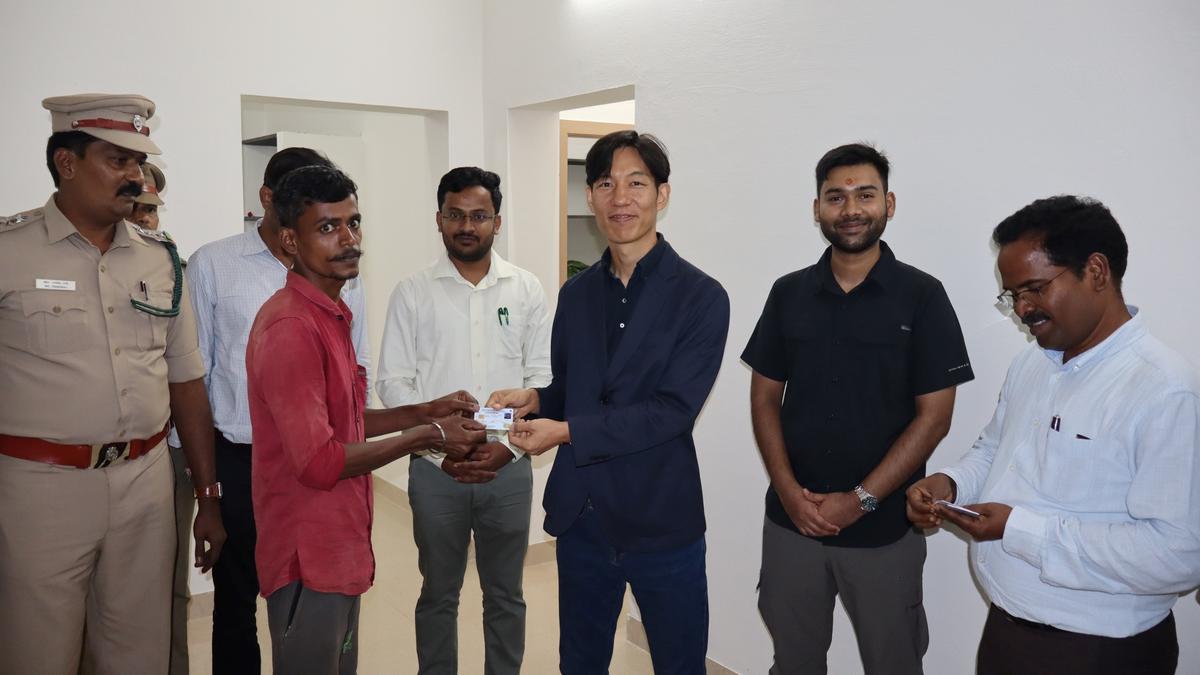
Forest Department initiative transforms lives of tribal youths in Sathyamangalam Tiger Reserve
The Hindu
Forest Department empowers tribal youths in Sathyamangalam Tiger Reserve, enhancing livelihoods through training and employment opportunities.
An initiative by the Forest Department has empowered 27 tribal youths from remote settlements in the Sathyamangalam Tiger Reserve (STR) to increase their earning potential and secure sustainable livelihoods, significantly enhancing their families’ well-being.
The youths, aged between 18 and 25, are school dropouts, although a few had completed Class X. They faced numerous challenges, including limited job opportunities, lack of guidance, economic hardships and limited access to technology. Largely confined to their settlements, they often go for jobs such as that of daily-wage workers.
Under the second phase of the Tamil Nadu Biodiversity Conservation and Greening Project for Climate Change Response (TBGPCCR), 12 Eco Development Committees were formed in villages across the division. The Forest Department implemented livelihood improvement activities targeting the youth.
During the initiative, K. Sudhakar, Deputy Director of STR and District Forest Officer for the Hasanur Division, visited remote habitations such as Bangalow Dhoddi, K.K. Dhoddi, Balapadugai and Kottamalam accompanied by his team. The team observed that while the youth were mostly idle, they showed keen interest in driving. A driving school was roped in to offer training, which was funded through the project. In 2023, these youths successfully obtained their driving licenses.
A review conducted by the department a year later highlighted significant achievements. While 25 youths were employed as drivers of pickup trucks and other vehicles, one is working at a ration shop and another as an anti-poaching watcher. For many, this marks their first opportunity to earn a steady income. J. Karthick, 24, of Hasanur, who had completed Class 10, now regularly drives a vegetable-laden vehicle from Talavadi to the plains. “My income has improved now and my earnings are consistent,” he said. Many of these youths now work in Tiruppur and Coimbatore, while others transport vegetables to Kerala on a regular basis. Some have plans to purchase their own vehicles through loans from the Tamil Nadu Adi Dravidar Housing and Development Corporation (TAHDCO).
Mr. Sudhakar emphasised the crucial link between education, employment, and forest conservation. He told The Hindu that by reducing dependence on forest resources and integrating tribal communities into mainstream economic activities, the department aims to foster both community development and wildlife protection. “With proper guidance and support, we ignited these youths’ potential, giving them a clear path to a sustainable livelihood and brighter future,” he said.


Eight TSPC Maoists arrested in Hazaribag, Jharkhand, with weapons and ammunition seized during a police operation.

Four ambulances of a Jewish community service in London were set ablaze in a suspected antisemitic hate crime.

Gautham Manohar hopes his photographs serve as reminders of the Earth’s delicate beauty

Thousand Lights faces parking chaos and traffic congestion despite its political significance and ongoing development efforts.

Generic semaglutide increases accessibility, but doctors caution against misuse and quality concerns

Haryana Police removes 857 links to Badshah's 'Tateeree' for objectionable content, ensuring a safer digital environment.

Congress criticises Modi for not leveraging the upcoming BRICS+ Summit to address the West Asia crisis amid U.S. tensions.

Nagapattinam faces underdevelopment and resource challenges, impacting its rich heritage and the livelihoods of its fishing community.

One of the best games of 2025 makes it over to the PC, with a harder mode and bristling with new graphic tech

Air Force employee arrested for espionage, allegedly sharing sensitive information with Pakistani handlers since 2023 for money.

Four killed and several injured in a Bengaluru–Mysuru Expressway crash; driver arrested for alleged negligence.

Four injured in SUV collision with a stranded goods carrier on Narsingi ORR, causing significant traffic congestion.

Parliament Budget Session LIVE: Follow The Hindu's latest updates on the Parliament Budget Session on March 23, 2026.