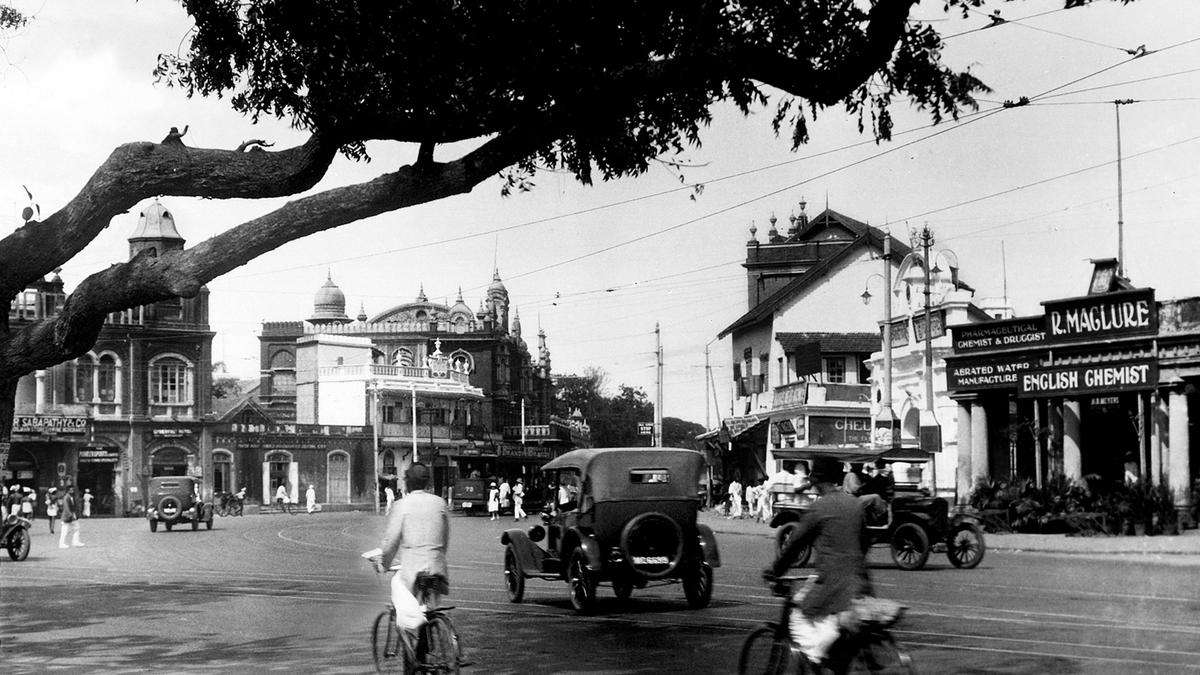
For Madras Day we fall in love with dating in the Sixties
The Hindu
Take a walk down memory lane and look back on dating in Madras in the sixties, from the romance of deserted railway stations to trysts by the beach, and secret rendezvous in Ambassador cars
Love happens on railway platforms. It could be the long, lonely hoot from a train as it chugs out of a darkened railway platform that sets the tone. Or, the final whistle of the station master waving a green flag. The frantic scramble to jump off, or leap onto a slowly moving train echoes the heart-beats of lovers.
It is a critical moment of decision. We are not even talking Anna Karenina meeting Vronsky here. It is a sequence that has been immortalised in films as far apart in time and place as Casablanca and more recently in Laapataa Ladies. Or to recall the chorus of a famous train song in the late 1950s by Johnny (Skiffles) Duncan that echoed the railway platform romance. ”Last train to San Fernando, last train to San Fernando, If you miss this one, you’ll never get another one, Bee-dee-dee-dee-bom-bom to San Fernando.”
The stations at Chennai Central and Egmore were no different. Change the names of the destination from San Fernando to Tharangambadi, or Machilipatnam and the jingle will still sing along with the clatter of the wheels.
Railway stations were certainly less crowded in the late Sixties. Jasmine sellers, tea-boys carrying ribbed glasses of hot tea in metal trays, or sooda-pal (hot milk); the last-minute rendezvous at the first-floor restaurant, or a stop at Higginbothams book stall, were ways in which you challenged the authority of the final whistle.
Let us confirm that we are talking of forbidden fruit. Like the ripening of mangoes that have to be wrapped in newspaper and stored in a dark room, or home-made wine, fermented in specially blown glass jars with cork stoppers and pipettes to allow the wine to breathe, great love stories have to be nurtured in secret. In the Sixties there were no cell-phones, no readily available transport, families lived in clusters and elderly members kept a close eye on any deviant behaviour. The only place you could meet in private was at the Woodland’s Drive-In. Even here the well-bred Udupi waiters would clamp down the steel trays with an officious rattle at the open car window and give you the eye.
You had a choice of three cars to make a secret rendezvous in. The Ambassador was a family car and so hopelessly unromantic. The Fiat’s Premier Padmini was favoured by women as it was easy to drive and park. The seats however were designed so that you sat propped up for everyone to notice who sat beside you. This left the superb alternative provided by the two-door Herald that came in wonderful hot colours with reclining seats in the front. It had one big defect — the gear stick was placed like a huge deterrent in between the seats. You had to place pillows and padded quilts in between the seats if you wanted to recline with your beloved, talking about Sartre and the crisis of Existentialism, as people in love did in those times. There was the constant pressure of the Herald’s gear stick suddenly shifting positions as it were.
Since it was a time when the beach front was totally free of any habitation, save for the occasional fishing hamlets, the choices of where to doss down were splendid. You could always try the main Marina sands to look at the rising sun if you were a lark. Or equally make a dash for the seedy charm of the Marina Buharis for late night reconnoitres.


BJP Puducherry president V. P Ramalingam files nomination for Raj Bhavan, joined by Union Minister Mandaviya and Khushbu Sundar.

History-sheeter 'Thoppai' Ganesh shot dead by police in Chennai after attacking officers during attempted escape.

The government plans to amend the FCRA, introducing new regulations for NGO asset management and accountability for key functionaries.

The draft policy for “Responsible Digital Use Among Students”, released on Monday by the Department of Health and Family Welfare, has recommended that parents set structured routines with clear screen-time rules and prioritise privacy, safety, and open conversation with children on digital well-being.

Police Observer Sushant Kumar Saxena conducts surprise inspection at Shencottai police station, reviewing warrants and security arrangements ahead of elections.

Andhra Pradesh government to launch key projects in April, focusing on industrial growth and infrastructure development, says Nara Lokesh.

Lok Sabha refers the Corporate Laws (Amendment) Bill to a JPC amid opposition concerns over CSR provisions dilution.

SHG members in Kanniyakumari use snakes and ladders to raise election awareness and boost voter turnout.

Government accelerates consultations for early implementation of the Women’s Reservation Act to ensure women’s representation in 2029 elections.

CM A. Revanth Reddy distributes ₹1 crore insurance cheques to families of deceased Electricity department employees, enhancing financial security for workers.

The Bengaluru Traffic Police (BTP) registered 634 cases of drunk driving during a week-long special enforcement drive conducted across the city between March 16 and March 22.

GHMC intensifies action against property tax defaulters, seizing properties and offering a One Time Settlement scheme for payments.

CCB arrests three drug peddlers in Mangaluru, seizing ₹2.5 lakh worth of MDMA and other valuables.