Food prices are on the rise again. What’s behind the increase
CNN
On the Sunday before Thanksgiving, a grocery store here was plumb out of eggs.
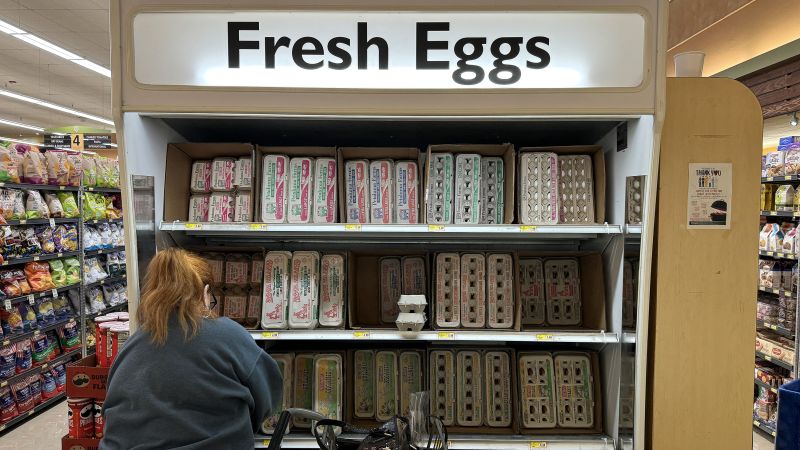
On the Sunday before Thanksgiving, a grocery store here was plumb out of eggs. An hour and a half north in Richfield, some eggs could be had, but they weren’t cheap. That dozen cost $1.70 more — a good 40% higher — than it did just four months ago. In November, egg prices shot up by 8.2% nationwide, logging one of the highest monthly spikes in the past two decades, according to Consumer Price Index data released last week. And it’s not just eggs — shoppers have seen jumps in beef, coffee and non-alcoholic beverages, driving up overall grocery prices to their largest monthly gain since January 2023. And more increases appear to be coming down the pike for the pulped-paper-packed protein: Wholesale prices for chicken eggs soared by nearly 55% last month, and wholesale food prices rose by 3.1% (their highest monthly increase in two years). Economists say not to panic. The “egg-flation” and sudden price hikes in some major food categories are reflections of isolated incidents rather than something systemic and indicative of a reacceleration of inflation. That doesn’t make it any easier to stomach, however, for Americans worn down by years of prices rising much faster than they typically do.


The first of the month can create anxiety for millions of renters across America.

US economic growth was even weaker than previously reported at the end of last year heading into President Donald Trump’s war with Iran.

Part of the pitch for using AI at work goes like this: It’s like having a team of people to delegate your grunt work to, freeing you up to think strategically and maybe, just maybe, take a long lunch or head home early. Or maybe even be more productive, to make more money. It’s a nice idea!

The war with Iran is complex, but the reason why the Middle East conflict matters to your financial well-being comes down to three simple facts.

The efforts to mitigate an global oil shortage did little to dampen the rise in crude prices

Buzzfeed, the digital media company that took the mid-2010s by storm, said on Thursday it has “substantial doubt” about its ability to continue as a business.

A bipartisan group of senators passed a bill Thursday aimed at improving housing affordability.

Stocks fell and oil prices surged Thursday as the war with Iran continued to stoke fears of higher energy costs and disruptions to the global economy.

Ever since the US and Israel struck Iran, the jump in oil and gas prices has become a major focus for markets and consumers alike. But that’s only the top of a long list of goods that stand to get more expensive.

Stocks have climbed, bond yields have fallen and the US dollar has weakened across President Donald Trump’s second term so far — market movements the president has welcomed.

Meta, the company that changed its entire brand identity five years ago on the promise of a technology it turned out no one wanted, just spent an undisclosed sum to acquire Moltbook, a “social network” built for “AI agents.”

Dozens of countries have done the unprecedented, releasing an historic amount of crude from emergency reserves to prevent high oil prices from crippling the economy. If that doesn’t work, there’s only one serious option left: ending the war and opening the Strait of Hormuz.

In an era marked by President Donald Trump’s wars and trade turbulence, Chinese leader Xi Jinping is counting on a plan to shield his country from the storm and win its race with the US: driving innovation to transform China into a global tech superpower.