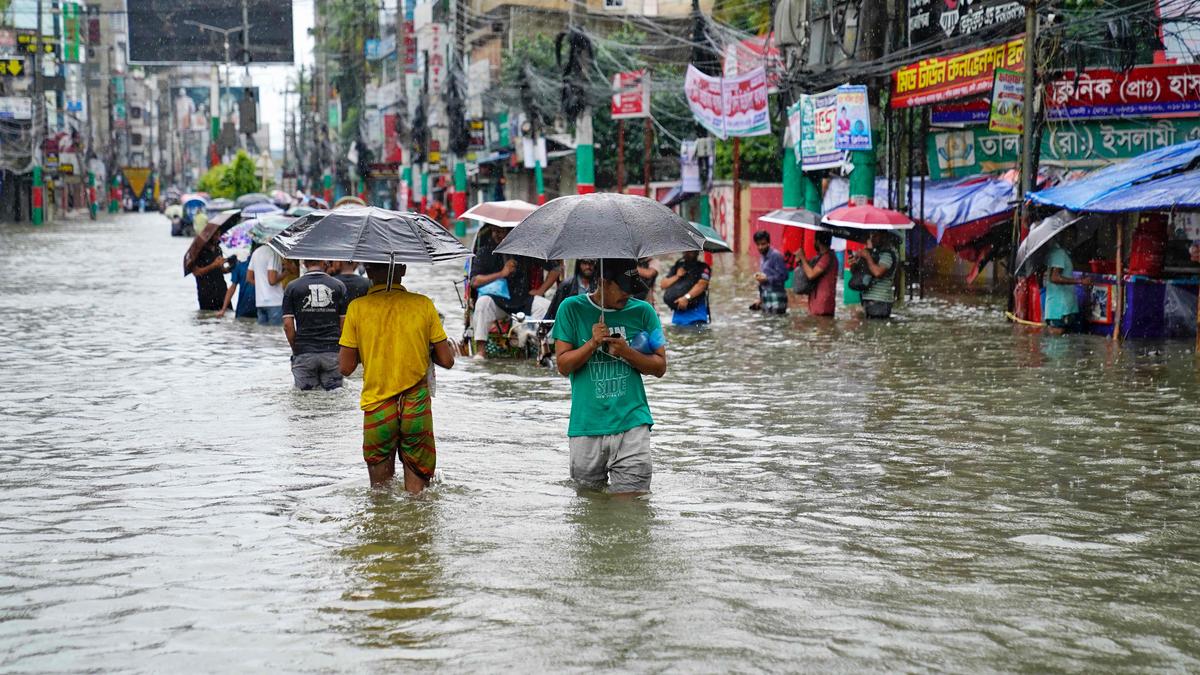
Flooding in Bangladesh not due to release of waters from Tripura dam: MEA
The Hindu
MEA denies Dumbur dam caused Bangladesh floods, emphasizing heavy rainfall as the primary cause of flooding in both countries.
The Ministry of External Affairs on Thursday (August 22, 2024) denied reports of floods in the eastern districts of Bangladesh were caused due to the opening of the Dumbur dam in Tripura.
“We have seen concerns being expressed in Bangladesh that the current situation of flood in districts on the eastern borders of Bangladesh has been caused by opening of the Dumbur dam upstream of the Gumti River in Tripura. This is factually not correct,” the agency said in a statement.
Western Tripura and parts of Bangladesh have been inundated with rain in the last few days and this was largely responsible for the flooding in downstream Bangladesh. The Dumbur dam, a hydropower project, had been “auto releasing” water as a consequence of the rainfall, their statement noted.
The Dumbnur dam is a hydroelectric project and is built upon the Gumti river which flows through India and Bangladesh.
Tripura has witnessed heavy rainfall, with ‘extremely heavy’ rainfall being reported over southern and western Tripura from 19th-22nd this month, the India Meteorological Department (IMD) said on Thursday.
“We would like to point out that the catchment areas of Gumti river that flows through India and Bangladesh have witnessed heaviest rains of this year over the last few days. The flood in Bangladesh is primarily due to waters from these large catchments downstream of the dam,” the MEA statement emphasised, “The Dumbur dam is located quite far from the border — over 120 Km upstream of Bangladesh. It is a low-height dam (about 30m) that generates power, which feeds into a grid and from which Bangladesh draws 40MW power from Tripura.”
Through the 120 Km course of the river there were three water-level observation sites at Amarpur, Sonamura and Sonamura 2 in Tripura.


GHMC intensifies action against property tax defaulters, seizing properties and offering a One Time Settlement scheme for payments.

CCB arrests three drug peddlers in Mangaluru, seizing ₹2.5 lakh worth of MDMA and other valuables.

TVK's 28 candidates in Puducherry include former BJP MLAs, a sitting Independent, and a retired police IG.

BRS submits notice on private member bill to Speaker

CPI-M accepts DMK's five-seat offer for Tamil Nadu Assembly elections, prioritizing INDIA bloc unity over seat demands.

Ricky Rai, son of former underworld operative Muthappa Rai, on Monday appeared before the Bengaluru Traffic Police for questioning in connection with a case involving a Lamborghini performing dangerous stunts at Anil Kumble Circle on March 21.

The Dispur election heats up as 'CongBJP' defections shape a high-stakes contest between veteran candidates from BJP and Congress.

Bengaluru's M. Chinnaswamy Stadium conducts readiness drill ahead of IPL 2026, ensuring upgrades and technical preparations are complete.

First-level randomisation of EVMs completed in Nagapattinam for upcoming elections, ensuring transparency and security.

A district-level committee in Krishnagiri has been formed to assess and verify seizure claims of goods and cash.

Minister Anam Ramanarayana Reddy pledges government support for local fishermen and farmers facing challenges in Andhra Pradesh.

MP M. Sribharat urges collective efforts to revive Visakhapatnam Steel Plant, highlighting key reforms for crucial recovery and growth.

141 candidates have filed nominations for Kozhikode's Assembly elections, with scrutiny on March 24 and campaigning intensifying.