Financial assistance scheme for the poorest among BCs marred by teething troubles
The Hindu
Officials were directed by the Chief Minister to identify the beneficiaries from the poorest of poor sections with consent from district in-charge ministers.
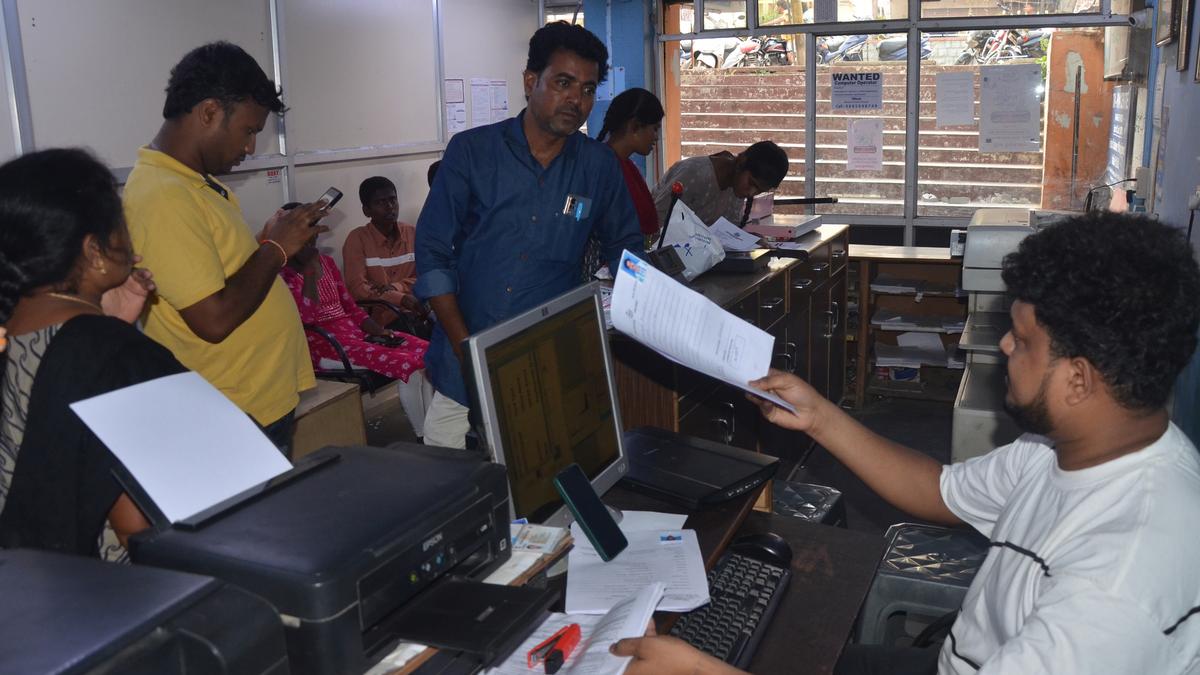
The ambitious scheme of the government to provide financial assistance of ₹ 1 lakh to the most Backward Classes is going through the initial hiccups with people finding it difficult to obtain caste and income certificates in rural areas.
Long queues and several rounds of visits to the MeeSeva centres and the Mandal Revenue Offices is leaving the people exhausted. The summer heat is adding to their woes. While submitting the application is one aspect, the inordinate delay in providing the certificates by the officials is another aspect.
The scheme has received tremendous response with over 2.78 lakh applications submitted so far and several thousands are doing rounds of the offices to obtain the certificates. Officials attribute the delay to technical glitches in the server due to the sudden demand and also officials lacking preparedness to meet such demand.
Continuing its spree of welfare measures for different sections, the State government has launched the scheme aimed at extending financial assistance to families of artisans hailing from backward class communities.
The assistance will be extended to BC caste-based professionals like washermen, Viswabrahmanas, potters and nayee brahmins without bank linkages. Chief Minister K. Chandrasekhar Rao formally launched the scheme at Mancherial on June 9, celebrated as welfare day as part of the 10th year of State formation.
The government has identified 15 castes among the 136 Backward Classes apart from 38 Most Backward Castes. The income limit for rural areas is ₹1.50 lakh while it is ₹2 lakh for urban areas to be eligible for the scheme. The government has allocated ₹300 crore for the scheme and already released ₹100 crore.
Officials were directed by the Chief Minister to identify the beneficiaries from the poorest of poor sections with consent from district in-charge ministers. Public representatives have been asked to take an active part in the effective implementation of the scheme.


Explore the behind-the-scenes of political strategy with "Inside the War Room," a must-read for aspiring politicians and managers.

Villivakkam faces civic challenges despite infrastructure improvements, with residents demanding better healthcare, transport, and green spaces ahead of elections.

District Collector launches e-dip lottery for Settipalle land plots, benefiting 2,111 beneficiaries with planned infrastructure development.

Chengalpattu's horticulture farm launches herbal tea, Idhazh, made from sun-dried hibiscus and organic herbs.

Hyderabad is set to become a global film hub, says CM Revanth Reddy at TGFA 2025, highlighting its cinematic potential.

Sivananda Damodara Pai appointed head of RMC Chennai, known for advancing seasonal rainfall and temperature forecasting models.

Madurai Collector chairs meeting with Election Observers

CBI interrogates Anil Ambani in a ₹2,929-crore cheating case involving alleged loan fund irregularities from State Bank of India.

Tamil Nadu's 2026 election features intense competition among established parties and a new disruptor, promising unique voter choices.

Explore the contrasting management styles of England and India cricket teams, highlighting player support and development challenges faced by Liam Livingstone and Sanju Samson.

Modi and Jaishankar advocate for dialogue as India and France collaborate to de-escalate tensions amid escalating strikes on energy infrastructure.

The star-studded event was held in Mumbai and was attended by rithik Roshan, Alia Bhatt, Bobby Deol, Shahid Kapoor, Vijay Varma, Sonakshi Sinha, Jyotika, Ali Fazal, Sonali Bendre, Preity Zinta, Ravi Kishan and others

Shorts News:We are working on securing LPG, petroleum to meet our energy security needs: MEA