Finance Ministry says economy likely to grow closer to 7% in 2024-25
The Hindu
Ahead of the Interim Union Budget, a Finance Ministry report on Monday pegged India’s real GDP growth at closer to 7% in 2024-25 with ‘considerable scope’ to outpace 7% by 2030, adding that the economy will hit $5 trillion in the next three years, making it the third largest in the world.
Ahead of the Interim Union Budget, the Finance Ministry in a report on January 29 pegged India’s real GDP growth at closer to 7% in 2024-25 with ‘considerable scope’ to outpace 7% by 2030, adding that the economy will hit $5 trillion in the next three years, making it the third largest in the world.
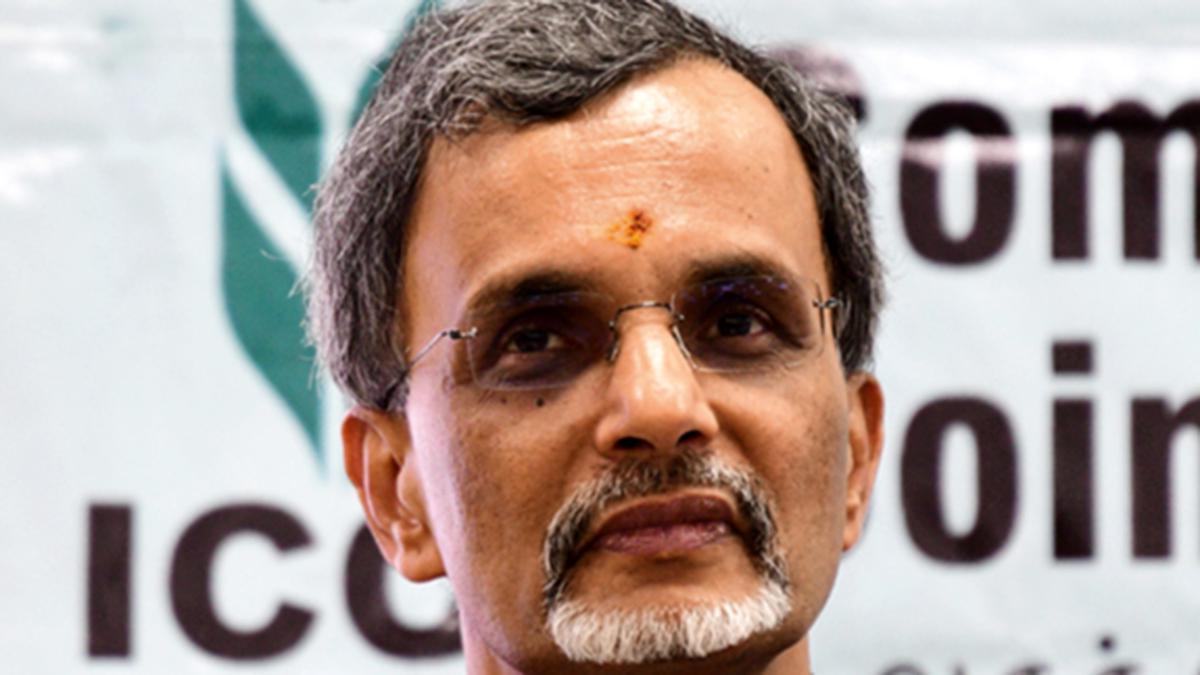
Prefacing a picture-perfect review of the economy’s “journey in the last ten years”, Chief Economic Advisor V Anantha Nageswaran stressed “not all growth is equal” and the marginal utility of 7% growth when the world is struggling to grow 2% is “much higher” than 8-9% growth achieved with the global economy rising 4%.
“One unit of growth in the latter circumstance is qualitatively superior to the former,” the CEA wrote in a report titled ‘The Indian Economy: A Review’ released by the Department of Economic Affairs, which also offered a “brief sketch of the outlook for the economy in the coming years”.
The prognosis of 7% growth in the coming year, if actualised, would mean 7% or higher growth for four years in a row, the CEA terming it “an impressive achievement, testifying to the resilience and potential of the Indian economy, which augurs well for the future. Mr. Nageswaran emphasised that this review was not ‘the Economic Survey of India which will come before the full Budget and after the general elections’.
The review split India’s growth story into two phases—1950 to 2014 and ‘2014-2024: Decade of transformative growth’—and noted that despite some positive developments, the state of the Indian economy was far from encouraging when Prime Minister Narendra Modi ‘assumed power in his first term in office’.
The economy had clocked lower than 5% growth of GDP at factor cost at constant prices for two consecutive years, 2012-13 and 2013-14, food inflation was high, and structural constraints such as difficulties in quick decisions on projects, ill-targeted subsidies cramping fiscal space for public investment, and a large informal sector, were denting growth, the Finance Ministry said.
“Since then, the Indian economy has undergone many structural reforms that have strengthened its macroeconomic fundamentals. These reforms have led to India emerging as the fastest-growing economy among G20 economies,” the ministry said, noting that the economy is generating jobs and an impressive post-pandemic recovery has seen urban unemployment rate decline to 6.6%. The CEA termed this a journey “from fragility to stability and strength.”


Nvidia will be part of OpenAI’s new funding round with an agreement that could be concluded as early as this weekend, according to the Times

Ekki Homa launches German technology sewage pumps in India, aiming for a 3% market share and expanded production capacity.

Novartis sells 70.68% stake in its Indian unit for $159 million to a consortium including WaveRise Investments and ChrysCapital.

Volkswagen India has announced the introduction of Tayron R-Line, a luxury SUV at the introductory price of ₹46.99 lakh (ex-showroom).

Sensex drops 1,236 points amid geopolitical tensions, led by declines in RIL and HDFC Bank, fueling market volatility.

India to start rare-earth permanent magnet production this year, with plans for critical mineral processing parks in multiple states.

The companies claim it to be the first-of-its-kind innovation for India, where audiences can now discover, engage, and immerse in their favourite stories simply by speaking

Mukesh Ambani announces ₹10 lakh crore investment in AI at India AI Summit 2026, promising a transformative tech revolution.

French President Emmanuel Macron told a global artificial intelligence summit in India on Thursday he was determined to ensure safe oversight of the fast-evolving technology.

President Trump’s son, Donald Trump Jr., has invested in Polymarket through his venture capital firm and is a strategic advisor for Kalshi.

Markets became volatile after a strong start, with selling in services and consumer durables stocks dragging indices down.

TATA Group and OpenAI partner to enhance AI education and infrastructure in India, driving global innovation and youth empowerment.

Explore the challenges and considerations for Indian firms eyeing Venezuelan oil imports amidst political and logistical hurdles.