Finance Ministry looking into how to enhance dividends from RBI
The Hindu
Ministry of Finance closely monitors RBI's review of capital buffers affecting dividend transfers, potentially impacting government finances.
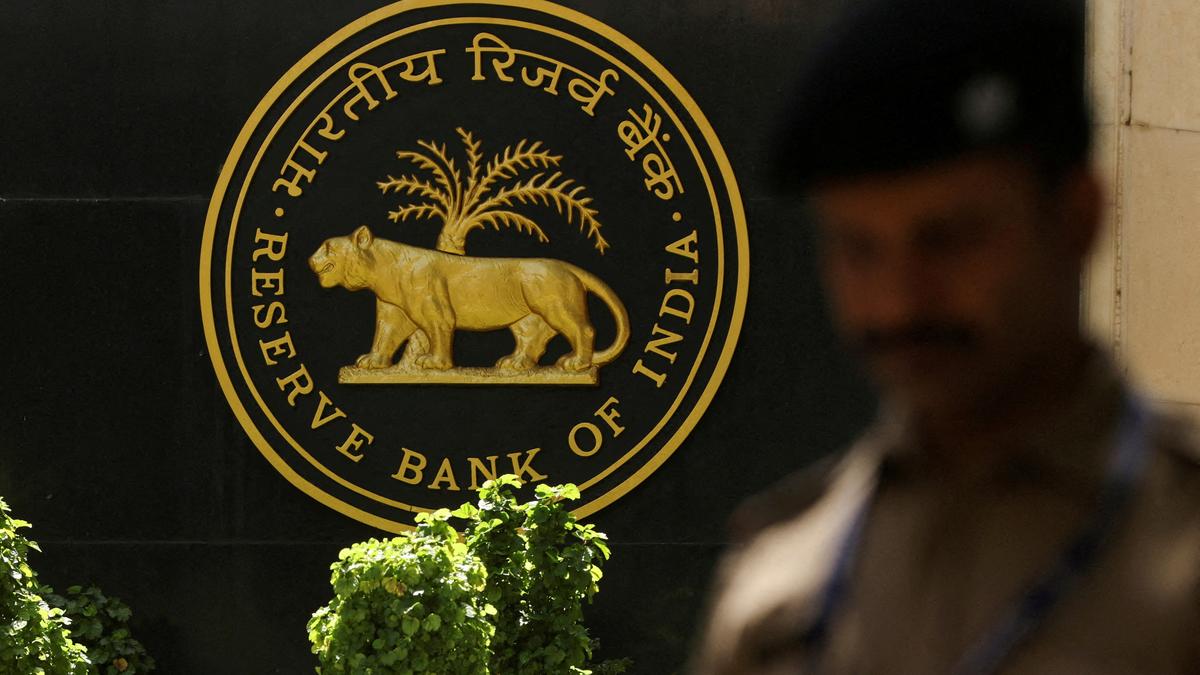
The Ministry of Finance is taking a direct interest in the Reserve Bank of India’s review of its rules relating to capital buffers, which affect how much dividend it can send to the government, The Hindu has learnt.
The RBI’s officers have been since January this year reviewing the central bank’s Economic Capital Framework (ECF), which was last reviewed in 2018 by a committee headed by former RBI Governor Bimal Jalan. The recommendations of the committee were adopted in 2019.
On Thursday, the RBI further announced that its central board had held its 615th meeting and that it had reviewed the ECF. The Ministry of Finance is conducting a “parallel” review process to arrive at its own findings.
“The RBI’s review process is parallel and our review process is running parallel,” a government official aware of the developments told The Hindu. “There is a perception that the Jalan committee recommendations on the kind of buffers the RBI must maintain were too conservative, and that there might be scope to lower these. Let us see what the RBI decides, but government will also form its view.”
The Jalan committee had recommended that the RBI’s Contingency Risk Buffer (CRB) — which is basically a precautionary fund against a crisis that could hurt financial stability — should be 5.5-6.5% of the RBI’s balance sheet. Once these levels are met, the rest is to be transferred to the government as surplus or dividend.
A lower CRB would mean higher transfers to the government, which is reportedly seeking to hike its defence expenditure this year due to the ongoing tensions with Pakistan.
“The government is not worried about its finances, even if defence expenditure is hiked,” the official asserted. “But, if the RBI can send a higher surplus while also maintaining adequate safety buffers as per its own assessment, then this higher surplus would certainly give us [the Government] greater fiscal flexibility.”


L&T confirms 95% of its West Asia project sites are safe, while addressing logistics challenges amid ongoing regional conflicts.

Mines Ministry to auction 19 critical mineral blocks on March 23, expanding strategic resources for clean energy and technology sectors.

Mines Ministry to auction 19 critical mineral blocks on March 23, expanding strategic resources for clean energy and technology sectors.

Five top firms lose ₹1 lakh crore in market value, with HDFC Bank experiencing the largest decline of ₹56,124.48 crore.

HDFC Bank terminates three senior officials over client onboarding issues at its DIFC branch amid ethical concerns following chairman's resignation.

Air India CEO warns of potential flight cuts and reduced travel demand due to rising fuel costs amid ongoing Gulf conflict.

Options are widely used by retail traders to speculate on the value of the stock for immediate gains and such behaviour in large scale can distort the market

India achieves 1 billion tonne coal production for the second consecutive year, ensuring stable energy supply and economic growth.

Generic drugmakers in India launch affordable Semaglutide versions, targeting a $1 billion diabetes and weight loss market.

Indian and Asian refiners eye Iranian oil purchases as U.S. waives sanctions amid energy crisis linked to the Iran-Israel war.

Iran war impacts pesticide prices, warning of a 20-25% rise and increased risk of counterfeit products during the kharif season.

India's forex reserves fell by $7 billion to $709.76 billion, according to RBI data for the week ending March 13.

Natco Pharma will launch its Semaglutide injection (multi dose vials) in the domestic market on Saturday.