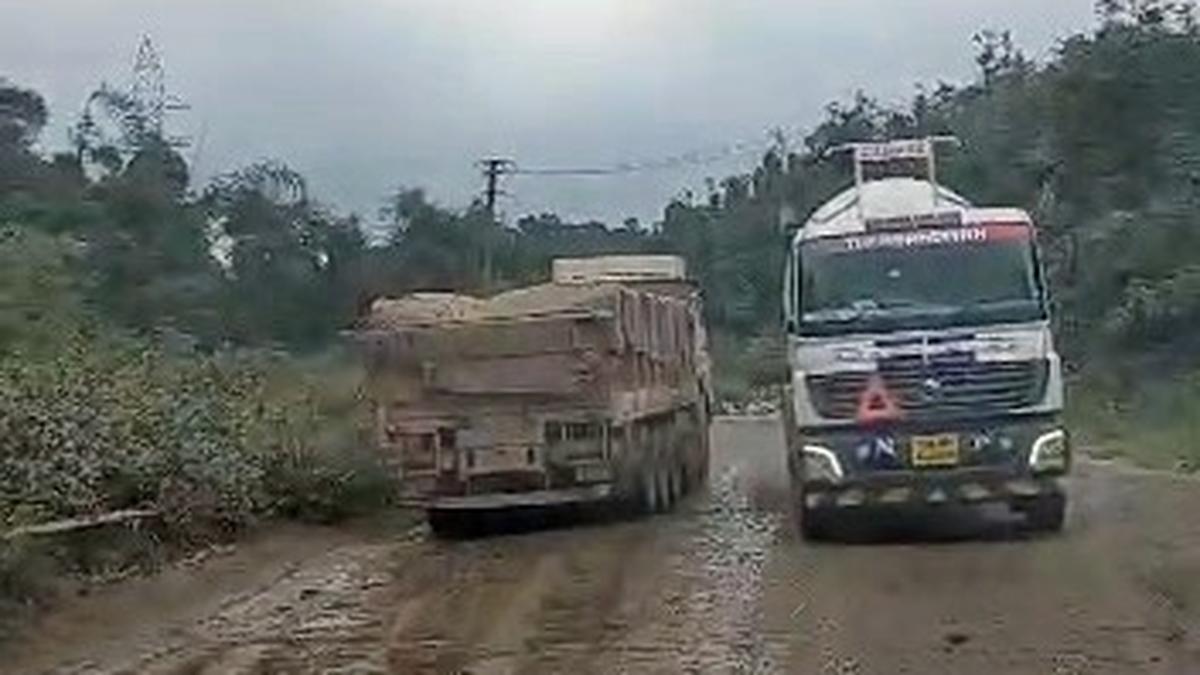
Finally, NHAI to restore battered Sakleshpur-Maranahalli stretch
The Hindu
The authority invites bids for the maintenance of the 10-km highway stretch at a cost of ₹12.2 crore
The National Highways Authority of India (NHAI) has finally responded to the public outcry against the completely battered 10 km stretch of Bengaluru-Mangaluru NH 75 between Sakleshpur and Maranahalli in Hassan district and decided to repair and maintain the existing highway.
NHAI’s Chief General Manager (Technical) in Bengaluru Regional Office invited bids on December 16 for “maintenance of existing NH of Hassan-Maranahalli section from Sakleshpur Design Km 220 to Maranahalli Design Km 230.06 km of NH 75” at an estimated cost of ₹12.2 crore.
The scope of work includes laying of Dense Bitumen Macadam (DBM) and the Bitumen Concrete on the project highway within a period of four months, that is, before the onset of the South West Monsoon. While December 29 is the last date to submit online bids, NHAI would open the bids the next day. The 10-km stretch is part of Hassan-Maranahalli four-lane road widening project being executed by the authority since 2017 on engineering, procurement and construction mode.
Hue and cry
While the NHAI was yet to make any progress of the four-lane project in the affected sector, the stretch had become non-motorable ever since the 2018 torrential rains that resulted in landslips and floods in the Western Ghat and coastal regions. The authority, however, did not bother to restore the road despite road users, including Chambers of Commerce and others seeking immediate action.
Recently, Rajya Sabha members D. Veerendra Heggade and Jaggesh made strong appeals to Union Minister for Road Transport and Highways Nitin Gadkari to ensure the stretch was restored to facilitate normal life in the coastal region. The Kanara Chamber of Commerce and Industry, that had been warning about the disaster since two years, was upset with the declining trade and commerce activities between the State capital and the coast, including the EXIM trade.
Fleet owners, both passenger and goods, have been suffering losses to the tunes of crores of rupees every year as trucks and buses suffered huge wear and tear losses while private vehicle users had almost stopped plying through the stretch.


CPI-M accepts DMK's five-seat offer for Tamil Nadu Assembly elections, prioritizing INDIA bloc unity over seat demands.

Ricky Rai, son of former underworld operative Muthappa Rai, on Monday appeared before the Bengaluru Traffic Police for questioning in connection with a case involving a Lamborghini performing dangerous stunts at Anil Kumble Circle on March 21.

The Dispur election heats up as 'CongBJP' defections shape a high-stakes contest between veteran candidates from BJP and Congress.

Bengaluru's M. Chinnaswamy Stadium conducts readiness drill ahead of IPL 2026, ensuring upgrades and technical preparations are complete.

First-level randomisation of EVMs completed in Nagapattinam for upcoming elections, ensuring transparency and security.

A district-level committee in Krishnagiri has been formed to assess and verify seizure claims of goods and cash.

Minister Anam Ramanarayana Reddy pledges government support for local fishermen and farmers facing challenges in Andhra Pradesh.

MP M. Sribharat urges collective efforts to revive Visakhapatnam Steel Plant, highlighting key reforms for crucial recovery and growth.

141 candidates have filed nominations for Kozhikode's Assembly elections, with scrutiny on March 24 and campaigning intensifying.

BJP's Vijayendra accuses Congress of using money to influence Bagalkot bypolls, urging voters to reject their tactics.

First randomization of electronic voting machines completed in Tirunelveli and Tenkasi districts for upcoming Assembly elections.

RPF seizes 10.12 kg of unclaimed cannabis worth ₹5.06 lakh from a train in Mangaluru.

Kolar's groundwater levels rise to 50-100 ft due to the K.C. Valley project, ensuring clean water and improved health outcomes.