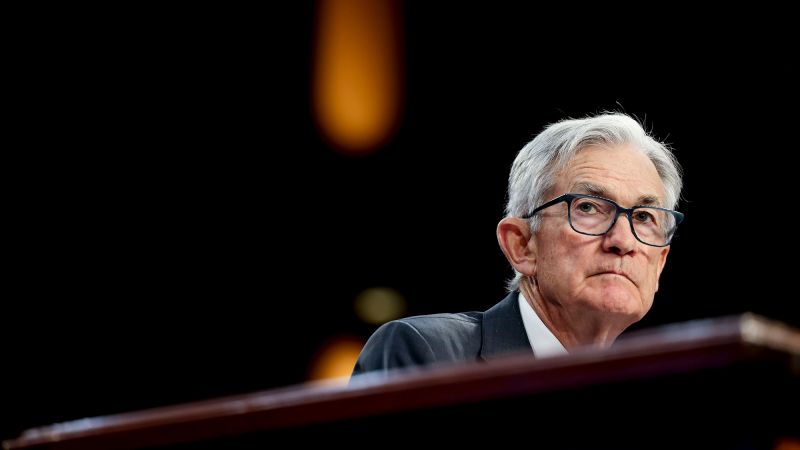
Fed Chair Powell says he’s not worried about the economy amid Trump’s tariff chaos
CNN
America is feeling uneasy about the Trump administration’s rapid-fire trade policy changes, but Federal Reserve Chair Jerome Powell said Friday he’s not worried.
America is feeling uneasy about the Trump administration’s rapid-fire trade policy changes, but Federal Reserve Chair Jerome Powell said Friday he’s not worried. “Despite elevated levels of uncertainty, the US economy continues to be in a good place,” Powell said at an event hosted by the University of Chicago. “Sentiment readings have not been a good predictor of consumption growth in recent years.” “We do not need to be in a hurry, and are well positioned to wait for greater clarity,” he said. The Trump administration’s whipsawing on trade policy has sowed uncertainty for America’s decision makers, with some businesses noting that it is “impacting their ability to operate with confidence and take risks,” according to a recent Fed survey of firms across the country. It’s also weighed on major stock indexes: The S&P 500 lost all of its post-election gains this week and the Nasdaq fell into correction territory. Consumers aren’t taking the uncertainty too well, either. The Conference Board’s Consumer Confidence Index plunged in February over fears of Trump’s tariffs, as expectations of higher inflation climbed. America’s souring economic mood comes at a time when the US economy has shown early signs of slowing, but also of stubbornly elevated inflation — a toxic combination sometimes referred to as stagflation. Fed officials are now waiting to see if that twin threat materializes and some have already started to lay out how the central bank should respond if it does.


Last month, Washington Post reporter Hannah Natanson penned a first-person piece about her long year as “the federal government whisperer,” receiving tips from hundreds of federal workers. On Wednesday, the FBI searched her home, a source familiar with the situation told CNN.

Price hikes picked up speed for US-based businesses toward the end of last year, a potential signal that inflation has yet to peak and prices could soon rise faster for consumers.

Trump is threatening to take “strong action” against Iran just after capturing the leader of Venezuela. His administration is criminally investigating the chair of the Federal Reserve and is taking a scorched-earth approach on affordability by threatening key profit drivers for banks and institutional investors.

Perhaps no data point better encapsulates the American economy right now than this nugget from Delta’s quarterly earnings:

China recorded the world’s biggest ever trade surplus in 2025, as well as a 20% jump from 2024, capping off a year in which the world’s largest manufacturer defied US trade pressure by ramping up exports to other global markets.

Saks Global, the parent company of luxury retailer Saks Fifth Avenue, filed for bankruptcy protection late Tuesday, according to court documents filed in US Bankruptcy Court in Houston, Texas.

China on Wednesday reported a strong export run in 2025 with a record surplus of nearly $1.2 trillion, as producers braced for three more years of a Trump administration set on slowing the production powerhouse by shifting US orders to other markets.

Microsoft says it will ask to pay higher electricity bills in areas where it’s building data centers, in an effort to prevent electricity prices for local residents from rising in those areas. The move is part of a broader plan to address rising prices and other concerns sparked by the tech industry’s massive buildout of artificial intelligence infrastructure across the United States.

US consumer prices rose 2.7% annually in December, closing out a year that saw slight progress on inflation but continued affordability concerns for many Americans.

The BBC is taking steps to have Donald Trump’s defamation lawsuit against it dismissed, a court document showed.

Amazon executives laid out their vision for Alexa’s future in an interview with CNN at the CES tech convention, where the company launched a new Alexa website and updates to other Amazon products.

After cutting interest rates three times in a row last year, the Federal Reserve indicated last month it probably won’t lower interest rates again for a while. A months-long pause, cemented by key economic data released Friday, may indeed be the best-case scenario for the world’s largest economy.

What is Corporate America so afraid of?