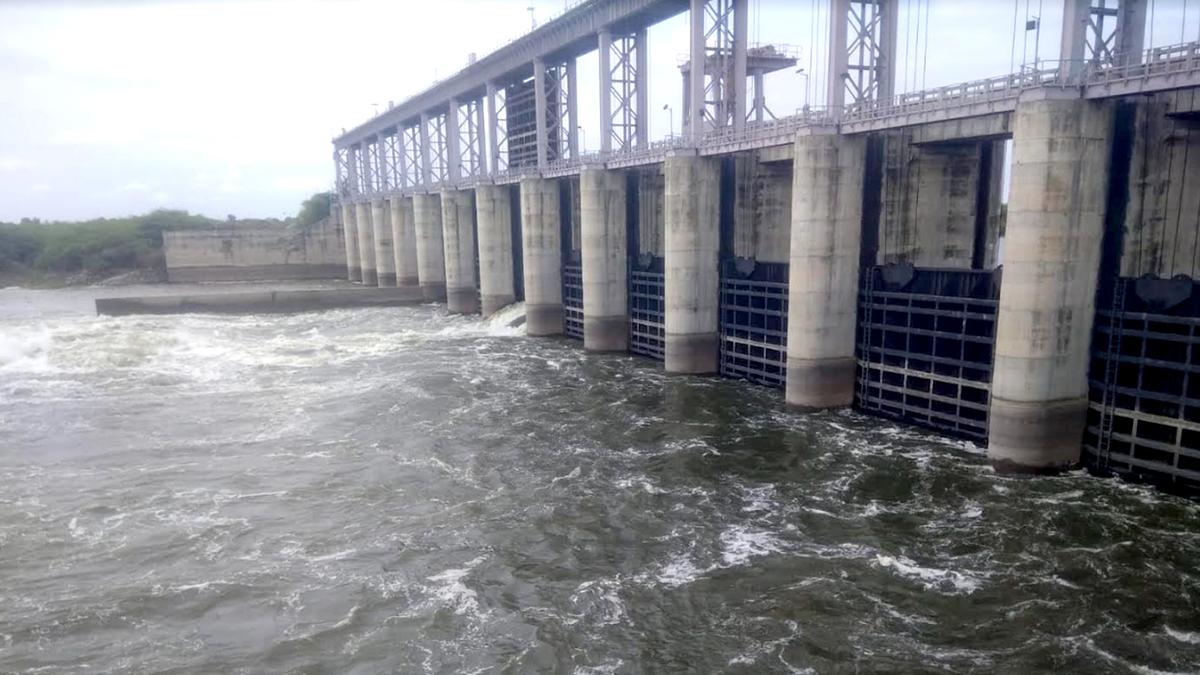
Farmers’ body cries foul over inter-State water projects in Krishna and Godavari basins
The Hindu
Farmers’ body cries foul over inter-State water projects in Krishna and Godavari basins. Farmers in the tail-end areas of Krishna and Godavari in Andhra Pradesh are bearing the brunt of construction of projects by the upper riparian States in blatant violation of the Interstate Water Disputes Act of 1956, alleges Kisan Service Organization A.P. president Akkineni Bhavani Prasad.
Kisan Service Organization A.P. president Akkineni Bhavani Prasad wrote a letter to Water Resources Minister Nimmala Rama Naidu requesting him to take steps that would do justice to farmers in the tail-end areas of Krishna and Godavari rivers, who bore the brunt of construction of projects by the upper riparian States of both the rivers in “blatant violation” of the Interstate Water Disputes Act of 1956.
Mr. Prasad mentioned that the said projects were being constructed by those States to utilise water beyond their allocations. One such example was the Babli project constructed by the Maharashtra Government on the Godavari river to the detriment of the lower riparian States.
Besides, Telangana had, since its formation in 2014, taken up several projects in the Krishna basin, including Kalwakurthy-II, Dindi, Palamuru-Rangareddy, Kodangal lift scheme, etc. for utilising more than 150 tmc ft.
Telangana was not entitled to even Bhima, Kalwakurthy -I, Srisailam left bank canal and Nettempadu lift scheme as per the Tribunal Awards, he argued.
These projects should be reviewed scrupulously on their quantum and elevations of drawl of water from the main Krishna river and its tributaries, and their entitlement as per the Krishna Water Disputes Tribunal (KWDT)-I and II Awards, and necessary action initiated, he demanded.
Further, Mr. Prasad said Justice R.S. Bachawat had made it amply clear that the catchment area was not the criterion for allocation of water.
As the upper States increase the utilisation and resort to rainwater harvesting on a large scale, farmers in the tail-end State of Andhra Pradesh were suffering with a drastic reduction in the base flow of the river and facing severe drought conditions during the rainy season, he observed.


Indian vessels can freely sail through the Strait of Hormuz without needing permission, confirms a senior government official.

The Hindu Morning Digest gives a select list of stories to start the day. Read the top news today on March 25, 2026

An IndiGo flight at Vijayawada airport was grounded due to a tyre burst, but all 79 occupants are safe.

Tamil Nadu Assembly election 2026: TMC(M) gets five seats in NDA, to contest on BJP's 'Lotus' symbol
TMC(M) secures five NDA seats, to contest Assembly elections using BJP's 'Lotus' symbol in Tamil Nadu.

The Karnataka government will discuss with officials the possibility of creating a portal for unemployed youth to share their details and access job opportunities in micro, small and medium enterprises (MSMEs), Minister for Small Industries and Public Enterprises Sharanabasappa Darshanapur said in the Legislative Council on Tuesday.

AIADMK's 2026 manifesto promises free rations, women's benefits, education reforms, and economic growth initiatives for Tamil Nadu.

U.S.-Israel war on Iran LIVE: Follow The Hindu for updates on the West Asia conflict on March 24, 2026

Join the 'Click & Commit' campaign on World TB Day, uniting Chennai's community to pledge against tuberculosis.

Brahmin candidates join Naam Tamilar Katchi, marking a significant shift in Tamil Nadu's political landscape and inclusivity.

Over 750 wheelchairs are prepared in Thoothukudi for accessible voting, ensuring convenience for differently abled and elderly voters.

Madras HC dismisses S.P. Velumani's petition challenging I-T assessment of ₹7 crore as unexplained election expenses from 2016.

The Lok Sabha passes a contentious Transgender Bill, sparking praise from the government and criticism from opposition parties.

Kamal Haasan announces support for DMK in 2026 elections, emphasizing the need for 'Dravidian Model 2.0' for Tamil Nadu's welfare.