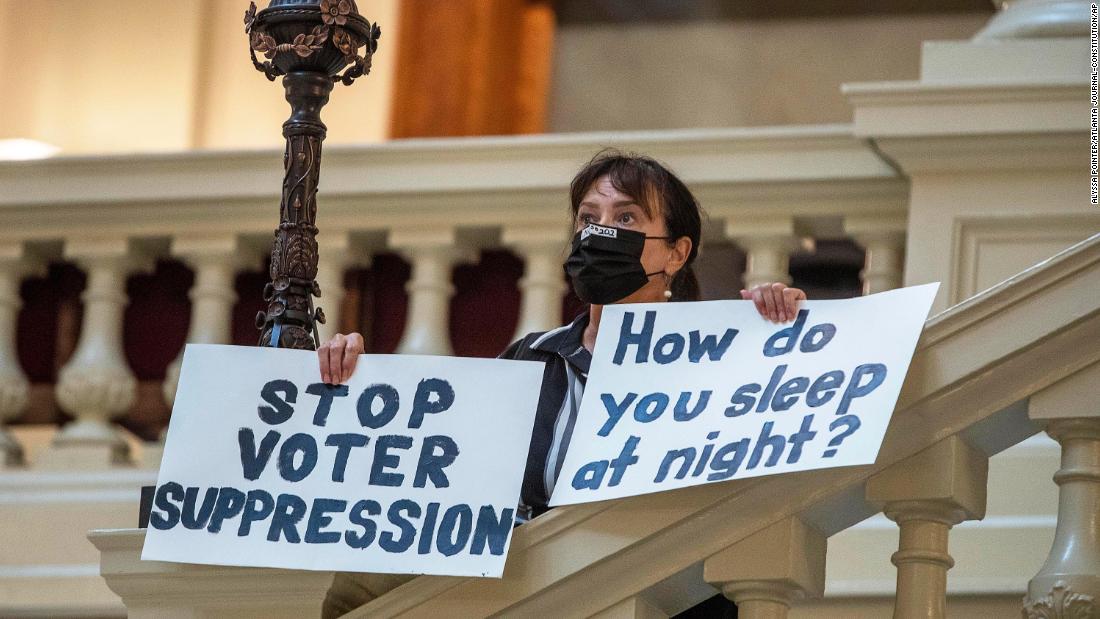
Fact check: What the new Georgia elections law actually does
CNN
The new Georgia elections law signed by Republican Gov. Brian Kemp last week has prompted lawsuits from civil rights groups, a sharp denunciation from President Joe Biden, and calls for businesses to take action against the state.
Republican proponents of the law say the critics who accuse them of "voter suppression" are mischaracterizing both their intentions and key provisions of the law. They claim the law not only makes Georgia's elections more secure but that it expands access to voting. That's highly misleading at best. As critics have correctly said, the law imposes significant new obstacles to voting. It also gives the Republican-controlled state government new power to assert control over the conduct of elections in Democratic counties.

5 things to know for March 16: War with Iran, Oscar winners, Travel chaos, Severe weather, US airmen
CNN’s 5 Things AM brings you the news you need to know every morning.

The retirement of Illinois Sen. Dick Durbin after nearly 30 years in office sparked an expensive three-way Democratic primary that has showcased the party’s divisions over how to confront President Donald Trump’s immigration crackdown and introduced pro-crypto forces as an influence seeking to shape the midterm elections. The contest is also setting up a test of Gov. JB Pritzker’s political clout in the state as he eyes a potential 2028 presidential bid.

One month into the partial government shutdown, hundreds of Transportation Security Adminstration workers going without full pay have quit, prompting more travel headaches amid ongoing staffing shortages, a winter storm in the Midwest and spring break travel.

Moves to create massive new immigration detention facilities are catching local officials by surprise, leaving them and their communities scrambling for answers.

The Israeli military said the brother of the man who drove a vehicle laden with explosives into a Michigan synagogue Thursday was a Hezbollah commander killed in a strike last week.

A Rhode Island community had their own “Miracle on Ice” last night when Colin Dorgan whose mother, father and grandfather were killed in a devastating shooting last month, scored the game winning goal in double overtime to lead the Blackstone Valley Schools’ hockey team to the championship game.

As the politics around Israel shift in the US, many Democratic lawmakers and candidates are seeking distance from the American Israel Political Affairs Committee. It comes as the group is spending big to shape the outcome of primaries across the country.

Louisiana Sen. Bill Cassidy in February weighed possible political peril against a long career in medicine, ultimately casting the critical vote to confirm known vaccine skeptic Robert F. Kennedy as the president’s Health and Human Services secretary.

As CENTCOM commander, it’s up to Adm. Brad Cooper to keep the military campaign on track until a political decision is made to end it — however long that may take.

As the war with Iran continues, oil prices are soaring and airlines will see higher fuel costs – which could hit travelers around the world in their wallets.

Raúl Guillermo Rodríguez Castro, grandson of former Cuban President Raúl Castro, appeared for the first time alongside Cuban President Miguel Díaz-Canel at two public events on Friday, raising questions, according to analysts, about his role in Cuba’s leadership as the island faces calls for regime change from the United States.

Federal prosecutors charged a lobbyist with trying to extort a former client and his son to recover half a million dollars in debt, according to court filings.

A slew of documents related to President Donald Trump’s plans to close and extensively renovate the Kennedy Center must be turned over to a Democratic congresswoman who sits on the center’s board ahead of a Monday vote on the president’s plan, a federal judge has ruled.