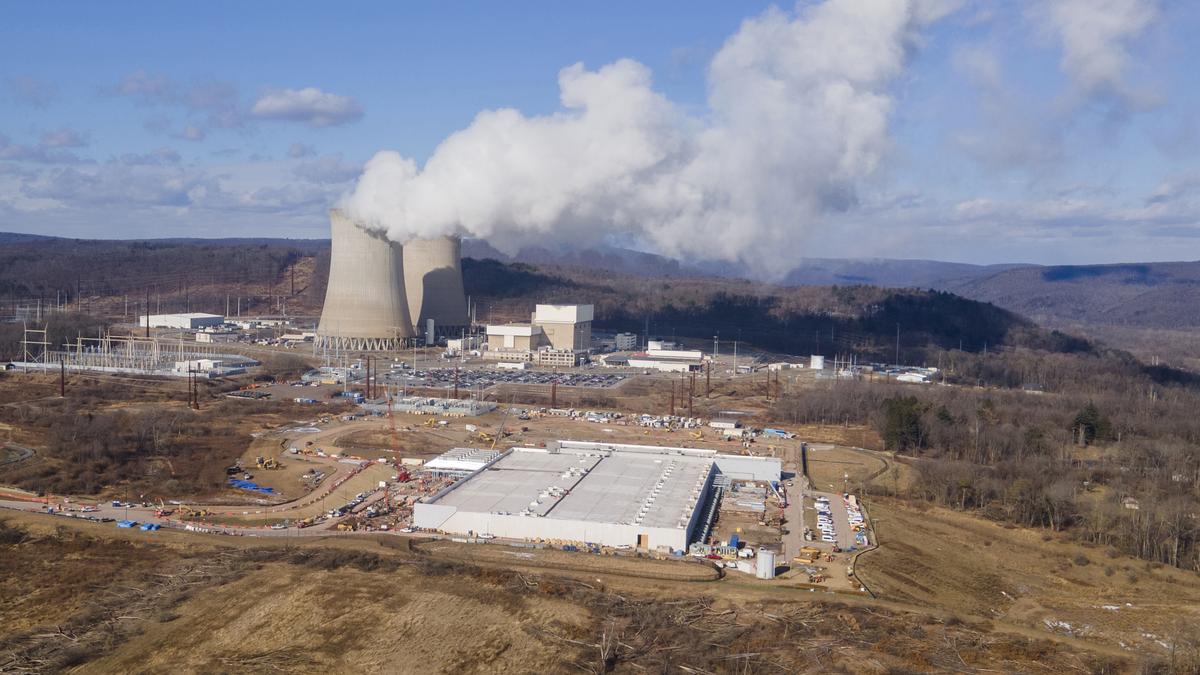
Facing competition from Big Tech, states dangle incentives and loosen laws to attract power plants
The Hindu
Facing projections of spiking energy demand, U.S. states are pressing for ways to build new power plants faster.
Facing projections of spiking energy demand, U.S. states are pressing for ways to build new power plants faster as policymakers increasingly worry about protecting their residents and economies from rising electric bills, power outages and other consequences of falling behind Big Tech in a race for electricity.
Some states are dangling financial incentives. Others are undoing decades of regulatory structures in what they frame as a race to serve the basic needs of residents, avoid a catastrophe and keep their economies on track in a fast-electrifying society.
“I don’t think we’ve seen anything quite like this,” said Todd Snitchler, president and CEO of the Electric Power Supply Association, which represents independent power plant owners.
The spike in demand for electricity is being driven, in large part, by the artificial intelligence race as tech companies are snapping up real estate and seeking power to feed their energy-hungry data centers. Federal incentives to rebuild the manufacturing sector also are helping drive demand.
In some cases, Big Tech is arranging its own power projects.
But energy companies also are searching for ways to capitalize on opportunities afforded by the first big increase in electricity consumption in a couple of decades, and that is pitting state political leaders against each other for the new jobs and investment that come with new power plants.
Moves by states come as a fossil fuel - friendly President Donald Trump and Republican-controlled Congress take power in Washington, D.C., slashing regulations around oil and gas, boosting drilling opportunities and encouraging the construction of pipelines and refineries that can export liquefied natural gas.


Erran Berger, the Vice President of Product Engineering at LinkedIn, thinks the former type of division of labour is rapidly disappearing

India mandates oil and gas firms to share import and export data to mitigate consumer shortages amid rising global prices.

HDFC Bank's chairman Atanu Chakraborty resigns over ethical concerns; Keki Mistry appointed interim chairman for three months.

Stock markets continue to rise for the third day as Sensex and Nifty gain nearly 1%, fueled by IT stocks.

Indian-flagged vessels in the Strait of Hormuz carry 2 lakh MT LNG and 16.7 lakh MT crude, amidst geopolitical tensions.

Equity analysts downgrade earnings forecasts for oil marketing companies, citing rising costs and market pressures for fiscal 2027.

Plastic product prices may surge by 50-60% in April due to rising polymer costs amid ongoing geopolitical tensions.

Centre offers 10% more LPG to States that accelerate piped gas rollout amid ongoing supply challenges and increased consumer demand.

Indian-flagged vessels in the Strait of Hormuz carry 2 lakh MT LNG and 16.7 lakh MT crude, amidst geopolitical tensions.

Stock markets continue to rise for the third day as Sensex and Nifty gain nearly 1%, fueled by IT stocks.

Rising oil prices and LPG shortages are driving India's shift to electric cooking, offering cost-effective and energy-efficient alternatives.

The rupee fell to a record low of 92.63 against the dollar, while equities surged with Sensex up 633.29 points.

Alibaba is sharpening its artificial intelligence strategy by focusing on agents that connect the many businesses under its sprawling corporate umbrella.