Facebook is still thriving 20 years later. Here’s how
CNN
Twenty years after its launch, social media giant Facebook continues to show unprecedented staying power after burying early competitors like MySpace and Friendster and establishing a distinct foothold in the burgeoning social media landscape.
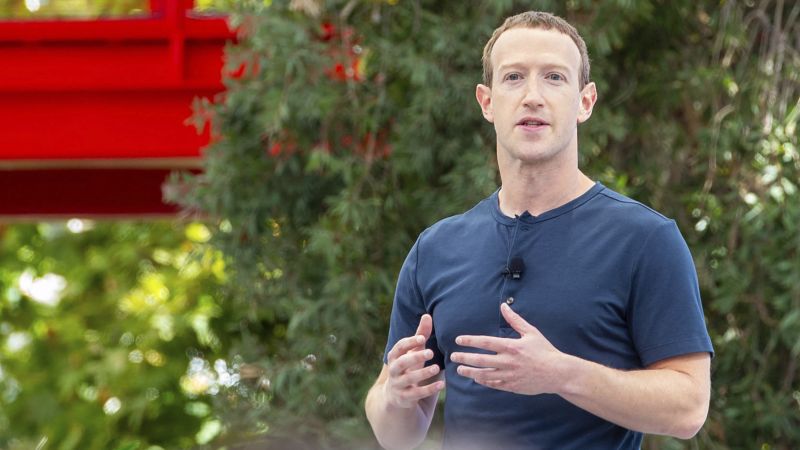
On February 4, 2004, a Harvard University undergrad named Mark Zuckerberg introduced TheFacebook.com, a social networking site for his fellow students. Twenty years after its launch, social media giant Facebook continues to show unprecedented staying power after burying early competitors like MySpace and Friendster and establishing a distinct foothold in the burgeoning social media landscape. Facebook has more than 2 billion active daily users and has maintained significant relevancy, often taking center stage in many of our cultural and political debates. Facebook set itself apart from other early social platforms with its initial exclusivity and its emphasis on gamifying social relationships through “likes,” comments, shares, and friend counts, helped along by a news feed updating users on the lives of their friends and acquaintances. “From a cultural standpoint, there has been a very clear trend towards the gamification of social relations,” said Pablo Boczkowski, a professor at the department of Communication Studies at Northwestern University who studies digital culture. “Facebook tapped into that and intensified that in society through its success. You can check what others in your peer group have and compare yourself to them, in a way you really can’t do in your personal life.” In 2004, Facebook was a Harvard-only site. Over the next few months and years, the site expanded, first permitting students from other colleges and universities to sign up, then high schoolers and professionals with corporate email addresses. By 2006, many of its original users had aged out of their initial demographics, prompting Facebook to cast a wider membership net. “We have two years of alums already, and more than one-third of the people using the site are not in college any more,” Zuckerberg told the New York Times in 2006, right before the site opened its doors to anyone over the age of 13. “If we make it so other young people can use the site, it strengthens the experience for everybody.”


Oil prices rose Monday after the United States and Iran threatened fresh attacks on energy facilities in the Middle East, including power plants, signaling that the conflict may yet escalate.

The war in Iran is pushing up prices for already-strained farmers, with higher costs for fertilizer and energy on top of last year’s tariffs. And the increasing pressure on American agriculture could lead to even bigger price tags at the grocery store.

If you only watched Fox News over the weekend, you didn’t hear about President Donald Trump’s widely condemned reaction to Robert Mueller’s death.

Oil prices rose Sunday after President Donald Trump threatened to “obliterate” Iran’s power plants if the Strait of Hormuz is not reopened by Monday evening.

Defense Secretary Pete Hegseth has been taking steps to thwart news coverage of the Pentagon for more than a year. Now he has finally met some resistance.

Defense Secretary Pete Hegseth has been taking steps to thwart news coverage of the Pentagon for more than a year. Now he has finally met some resistance.

Gerald Rodriguez, the general manager of an NPR affiliate in rural Colorado, expected federal funding for public media to shrink. He didn’t expect it to disappear almost overnight.

The much-touted new tax breaks for tips, overtime, seniors and car loan interest have a lot of income tax filers expecting a big bump in their refunds this year – or a big cut in their tax bill.

Looking out his shop window, across the street, just to the right, Paloma Clothing co-owner Mike Roach sees one of Portland, Oregon’s, most expensive gas stations.

Oil and liquefied natural gas tankers moving through the Strait of Hormuz carry around 20% of the world’s supply. But for countries on the Persian Gulf, the waterway is more than just an energy route – it’s a lifeline for more than 100 million people.

A California jury has largely sided with Twitter shareholders who accused billionaire Elon Musk of defrauding them by intentionally driving down the social media company’s stock ahead of his $44 billion acquisition in 2022.

The war with Iran is disrupting global oil flows, damaging energy infrastructure and raising fears of prolonged conflict. But gold, usually considered a safe haven during periods of economic uncertainty, has slumped.

US stocks and bonds fell, oil prices rose and gold had its worst week in four decades as the Iran war continues to ripple through financial markets.