Expressive arts therapy gains support in Hyderabad
The Hindu
Expressive arts therapy sessions in Hyderabad offers creative healing through various art forms. These sessions being conducted by certified therapists offer emotional well-being and self-expression to the participants .
There are days in life when we struggle to process intense emotions. While expressing these feelings can offer some relief, the emotional weight often lingers, affecting both our mental and physical well-being. For those who find it difficult to articulate their thoughts, expressive arts therapy offers a powerful alternative. This therapeutic approach helps individuals connect with their inner selves and process their experiences through creative expression.
Expressive arts therapy is gradually gaining ground in Hyderabad. This multimodal practice combines various artistic forms — visual art, reflective writing, poetry, drama, movement, dance, journaling, and music — to support emotional healing across all age groups.
Experts in the field conduct solo and group sessions that range between one and three hours to offer a non-verbal outlet for self-expression. Can one navigate life’s complexities through creativity? Yes, says Hyderabad-based Pallavi Banothu. A certified expressive arts practitioner (she did Foundation in Expressive and Creative Arts Therapies (FECAT) and Expressive Body courses from SMArT, Bengaluru), she takes solo sessions online and collaborates with centres aligned with arts in Hyderabad for group workshops.
Her solo sessions typically begin with a ‘discovery call’ — a conversation designed to understand the participant’s current needs, what they hope to achieve, and why they are seeking therapy at this point in time. “It helps me understand how they see their life, their expectations from the space, and gradually we work to build a sense of safety and invite their stories and experiences,” says Pallavi. The practitioner also gauges which art form the individual is drawn to on that particular day. “I use movement therapy, visual art, painting, journaling, elements of psychodrama, mask and puppet work, and even playback theatre. I’m not big on music, but it still has a place,” she adds.
The integration of these art forms unfolds over multiple sessions. The aim is to encourage internal dialogue and help individuals build emotional resources so they can eventually navigate their feelings independently, even without professional assistance.
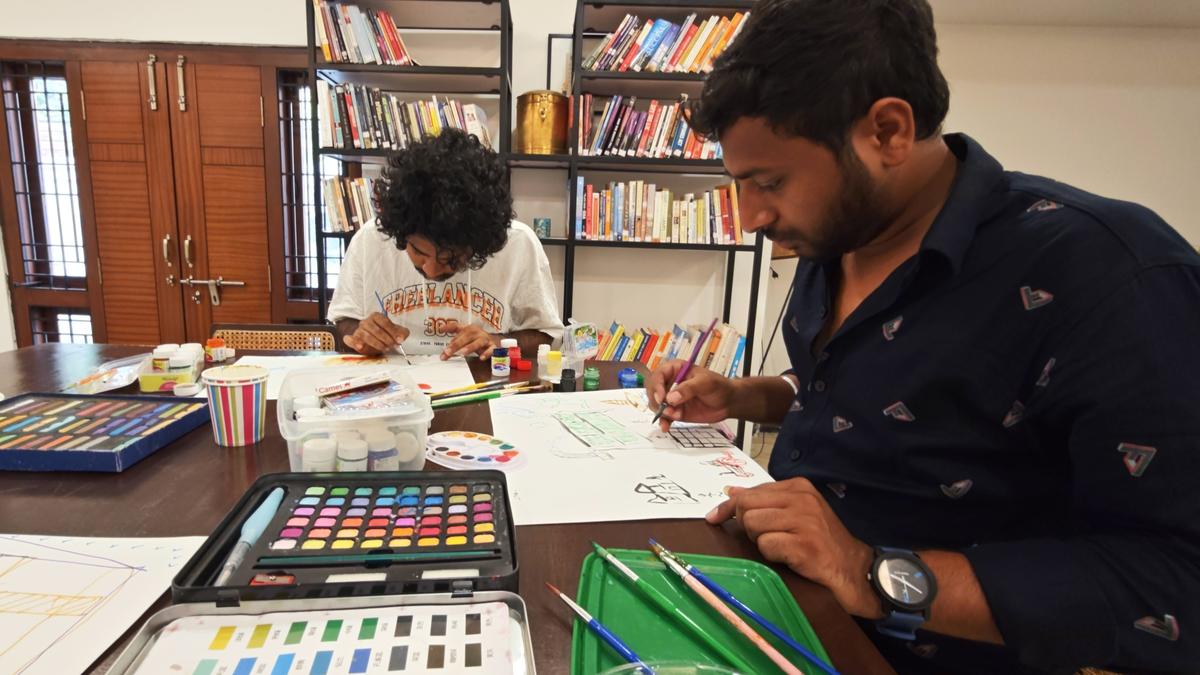
Group sessions — typically with up to 10 participants — are designed as safe spaces to explore ‘curiosity, compassion and courage’. Pallavi arrives armed with an eclectic mix of materials: drawing sheets, various types of paints, crayons, sketch pens, brushes, clay dough, printed nature images from magazines, pebbles, kinetic sand, and even soap for blowing bubbles. Dupattas or scarves are used to form safe circles, support dramatherapy, or even craft puppets.
These sessions begin with introductions and interactive exercises to help participants get familiar with the facilitator, each other, and the space. “We explore how to be present for someone and how to witness artwork created by others during the session,” Pallavi explains. The focus then shifts to the main activity, which enables deeper emotional processing.


AI tool for sparrow conservation

BTS’s comeback with ‘Arirang’ marks a major global music event. When does the album release, and where can you watch their concert live stream? We have all the details

The 2026 U.S. cholesterol guidelines urge starting screening and treatment at 30 to prevent cardiovascular disease effectively.

Olam Festival 2026 in Thiruvananthapuram returns March 27-29 with 120+ vendors, music, art, and cultural zones.

A few storytellers in Thiruvananthapuram share their journeys, challenges, and evolving methods on World Storytelling Day, inspiring young minds.

76-year-old Kurian Jacob from Kerala triumphs with seven medals, including five golds, at the Open Masters Games in Abu Dhabi.

Explore the nature of the human mind as an emergent property of brain activity and complex neural interactions.

CERN's Large Hadron Collider discovers the Xi-cc-plus particle, enhancing understanding of quantum mechanics and baryon behavior.

Vibha Batra’s latest book, Spotless (Hachette India) is a novel in verse for young adults

In its first edition, the Madras Art Salon spotlights the works of journalist and artist Narayan Lakshman at The Botanical Club, a social space in the British Deputy High Commission, Chennai

Cholesterol enhances melanoma cell invasion by making nuclei squishier, revealing a potential treatment target in cancer progression.

The designers reinterpret the Swedish artist’s symbolic forms and colour energy through contemporary resortwear silhouettes

Discover the inspiring legacy of Bibha Chowdhuri, a pioneering woman in physics and a trailblazer in STEM history.