Explore chintz, Chennai, and climate change through a Kalamkari lens at DakshinaChitra
The Hindu
Experience four artists' interpretations of kalamkari, from fabric to graphic design, at DakshinaChitra's Varija Gallery until Jan 21.
The walls of DakshinaChitra’s Varija Gallery are vibrant with different iterations of kalamkari, from fabric to graphic design. What emerged as a form of dyeing fabrics in Masulipatnam has been rebirthed by four artists whose work has come together to create the exhibition, Travelling Patterns.
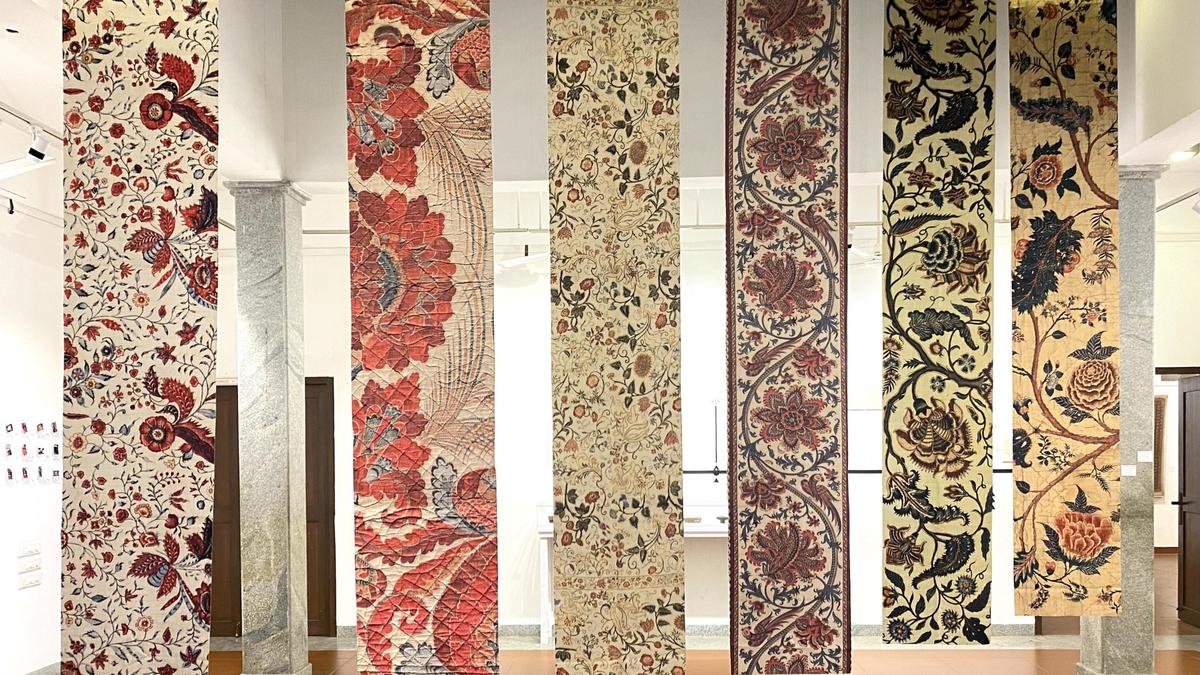
Walking in, the first thing to catch your eye is the giant chintz prints displayed in the centre, the result of a collaborative design by the artists who have displayed at the exhibit.
“In November of last year, four artists — Aditi Jain, Henning Wagenbreth, Ruchi Shah and Verena Gerlach —had several workshops, discussions, and presentations in Chennai, and were introduced to the Masulipatnam style of kalamkari. This inspired them to create their designs,” says curator Prarthana Kartikeyan.
The work displayed puts into perspective the influence of kalamkari not just on the global landscape, but also across different mediums of art. The chintz prints, Kartikeyan says, were ordered from Rijksmuseum in Amsterdam and have been displayed in the central courtyard.
On either side of the chintz display, is a modern interpretation of kalamkari with Chennai-based artist Aditi Jain’s multimedia work on the left and Berlin-based Henning Wagenbreth’s graphic design pieces on the right. Aditi depicts the sari weaving process using photographs on different postcards, while Henning uses bold colours and focusses on the theme of travelling.
Further into the gallery, Ruchi Shah and Verena Gerlach’s work is displayed. “The contrasting colours of Mumbai-based Ruchi’s work, inspired by climate change, brings you in to experience how a city would look if it was completely green or completely grey,” says the curator.
Next to her images is Berlin artist Verena Gerlach’s interpretation of the Chennai coast incorporating different hues of blue with the traditional block printing style. To immerse the viewer, a sandbox has been placed in front of the work, encouraging the viewer to step inside and experience Verena’s work, as though on a beach.


The Hindu Morning Digest gives a select list of stories to start the day. Read the top news today on March 21, 2026

Manjeswaram gears up for a tightly contested Kerala Assembly election in 2026, featuring key candidates from UDF, NDA, and LDF.

Thirty-three detained Bangladeshi nationals from Tamil Nadu are being deported to Bangladesh via West Bengal with police escort.

Tree felling for a flyover and underpass on the Manikonda-Hitech City stretch sparks outrage as Hyderabad’s road expansion drives another green loss.

Residents of Velachery express concerns over flooding and development issues, while welcoming the MRTS extension.

Seeman advocates for a benevolent authoritarianism and an agriculture-centered economy to ensure discipline and self-sufficiency in Tamil Nadu.

Residents of Velachery express concerns over flooding and development issues, while welcoming the MRTS extension.

Delhi Police allegedly manhandled UNI staff while enforcing a court order to vacate the agency's office, now sealed.

Supreme Court affirms the public's right to critique its judgments while addressing concerns over an NCERT textbook's content.

Amit Shah reviews Manipur's security, urging the CM to tackle drug cartels and aid displaced communities after ethnic violence.

Kerala's fisherfolk urge political parties to address livelihood concerns, demanding fair pricing, rule enforcement, and better support during elections.

Moderate rainfall in Visakhapatnam brings relief but causes traffic disruptions and power outages across the city.

Shubman Gill’s Gujarat Titans banks on its tried-and-tested formula