Explained | Why has the European Parliament called Hungary a hybrid ‘electoral autocracy’?
The Hindu
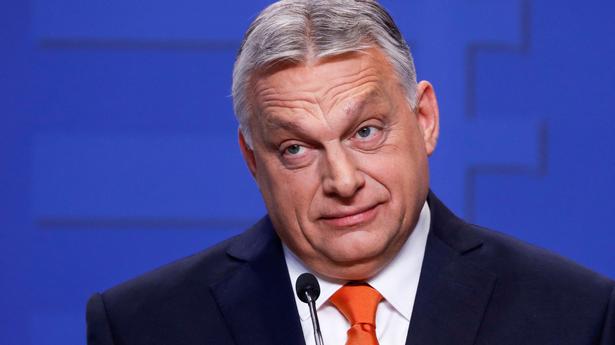
Hungarian Prime Minister Viktor Orban dismissed the European Parliament’s resolution as “a joke”.
The story so far: Hungary can no longer be called a democracy but is now an electoral autocracy, the European Parliament (EP) concluded in a symbolic vote on Thursday. The adopted resolution, with 433 votes in favour, said that Hungary has emerged as a “hybrid regime of electoral autocracy”. According to EP, an electoral autocracy is a form of government where elections are conducted but “respect for democratic norms and standards is absent”.
One hundred and twenty-three votes were counted against the resolution, and 28 abstentions were recorded.
This is not the first time that democracy in Hungary under the rule of populist Prime Minister Viktor Orban has been questioned.
In 2018, a majority of EP members voted to determine that Hungary was at the risk of breaching the European Union’s (EU) founding values enshrined in Article 2 of the Treaty of the European Union. These values include respect for human dignity, freedom, democracy, equality, and the rule of law.
Prime Minister Orban is an ally of Russian President Vladimir Putin and registered his fourth victory in Hungary by a landslide margin in April 2022.
The 2018 resolution, approved by 448 votes in favour to 197 against, was the first time the EP had asked the EU Council to act against a member State to “prevent a systemic threat to the Union’s founding values”.
Members of the European Parliament wanted EU countries to initiate the procedure laid down in Article 7(1) of the EU treaty, which states that the Council, after receiving the Parliament’s consent and a majority of four fifths of its members, can determine that a member State is at the “risk of a serious breach” of values outlined in Article 2. The Council is also obliged to hear out the member State in question before making such a determination.


The U.S. is deploying 1,000 elite troops to West Asia amid escalating tensions and military actions involving Iran and Israel.

Russia claims to have shot down nearly 400 Ukrainian drones amid escalating aerial attacks, highlighting intensified conflict between Moscow and Kyiv.

Kim Jong Un reaffirms North Korea's unwavering support for Russia amid strengthened ties and military cooperation against Western adversaries.

Rights group warns of a "dystopian" Hong Kong after police arrest bookstore staff for selling allegedly seditious publications.

Iran rejects a U.S. ceasefire proposal, outlining five conditions for peace amid ongoing conflict with Israel.

Gulf states warn the UN of an existential threat from Iran's strikes, calling for condemnation and monitoring of the situation.

Matt Brittin, ex-Google executive, appointed as BBC's new director general amid ongoing $10 billion lawsuit from Trump.

Pakistan's PM Sharif briefs Saudi Crown Prince on mediating U.S.-Iran talks and reaffirms support amid regional tensions.

Iranian military ridicules Trump's ceasefire claims, asserting U.S. negotiations are merely self-deceptions amid strategic failures.

Denmark's recent election results leave Prime Minister Mette Frederiksen's future uncertain amid a fragmented parliamentary landscape.

An explosion at Valero's Port Arthur refinery caused a temporary shutdown but resulted in no reported injuries.

Anduril and Palantir Technologies are working together to develop software for U.S. President Donald Trump’s Golden Dome antimissile shield initiative, a source familiar with the matter said

A federal judge weighing the merits of the Pentagon’s designation of rising Silicon Valley star Anthropic as a security threat repeatedly questioned the government’s reasons for vilifying the company