Explained | When does RBI step in to monitor a bank?
The Hindu
Why has the Reserve Bank of India increased its oversight on Dhanlaxmi Bank? What are the reasons for the Thrissur-based private bank’s assets to be under stress? According to Basel-III norms, what is the capital to risk ratio a bank is required to maintain? What lies ahead?
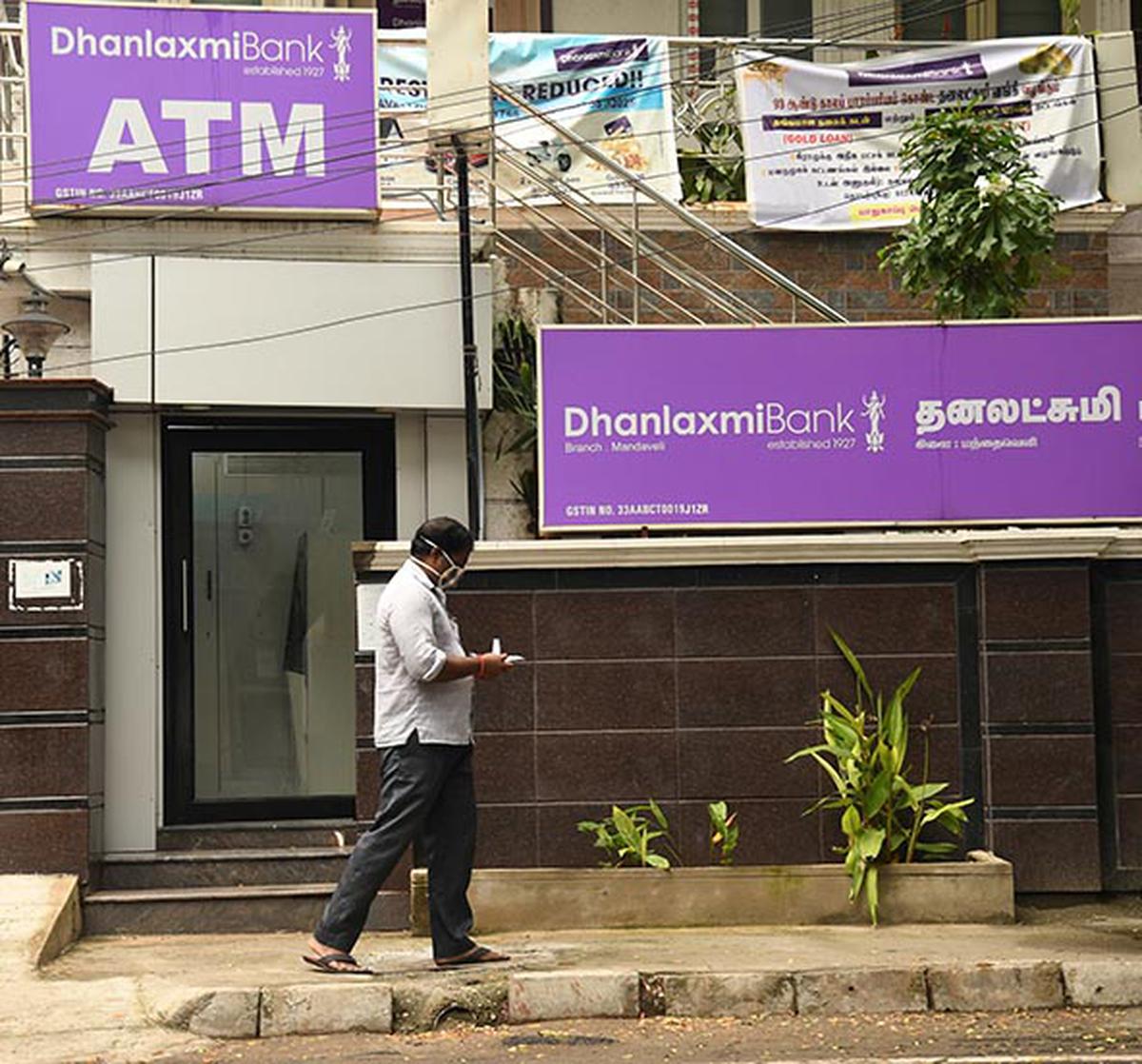
The story so far: The Reserve Bank of India (RBI) has placed Dhanlaxmi Bank under tight monitoring with the Thrissur-based private bank’s financial position coming under greater public scrutiny. The RBI’s move comes in the wake of the intense court battle waged by a group of minority shareholders against the bank’s management team over inadequate financial disclosures, rising expenses, and general mismanagement of the business. On Thursday, the bank noted that minority shareholders have called for an extraordinary general meeting next month to decide on restricting the spending powers of the current chief executive officer owing to the deteriorating capital adequacy situation of the bank.
Dhanlaxmi Bank’s capital to risk weighted assets ratio (CRAR) dropped to around 13% at the end of March this year from 14.5% a year ago, prompting the RBI to take stock of the financial health of the bank. Under Basel-III norms, which were adopted by financial regulators across the globe in the aftermath of the financial crisis of 2007-08 that involved major failures in the banking system, banks are supposed to maintain their CRAR at 9% or above. The RBI’s move to increase its oversight on Dhanlaxmi Bank is seen as a response to the deterioration in the bank’s capital adequacy. It should be noted that Dhanlaxmi Bank’s capital adequacy has dropped below the stipulated standards in the past and it has even been placed under the prompt corrective action framework (PCA) by the RBI to deal with serious deteriorations in its financial position.
Under the PCA, the RBI places restrictions on lending by troubled banks and keeps a close eye on them until their financial position improves sufficiently. Dhanlaxmi Bank has been accused by its minority shareholders of mismanagement in the wake of the decision of the management to expand the bank to new geographies amid an unexpected rise in expenses. The management has also been accused of inadequate disclosure of information to explain the rise in costs.
Capital adequacy ratio is an indicator of the ability of a bank to survive as a going business entity in case it suffers significant losses on its loan book. A bank cannot continue to operate if the total value of its assets drops below the total value of its liabilities as it would wipe out its capital (or net worth) and render the bank insolvent. So, banking regulations such as the Basel-III norms try to closely monitor changes in the capital adequacy of banks in order to prevent major bank failures which could have a severe impact on the wider economy. The capital position of a bank should not be confused with cash held by a bank in its vaults to make good on its commitment to depositors.
The CRAR, which is a ratio that compares the value of a bank’s capital (or net worth) against the value of its various assets weighted according to how risky each asset is, is used to gauge the risk of insolvency faced by a bank. The riskier a type of asset held in a bank’s balance sheet, the higher the weightage given to the value of the asset while calculating the bank’s capital adequacy ratio. This causes the capital adequacy ratio of the bank to drop, thus signalling a higher risk of insolvency during crises. In other words, the CRAR tries to gauge the risk posed to the solvency of the bank by the quality or riskiness of the assets on the bank’s balance sheet. In the case of Dhanlaxmi Bank, the write-down and reclassification of tier-2 bonds, which are considered effectively to be equivalent to equity capital since they are unsecured, in the next few months is expected to adversely affect the bank’s capital adequacy ratio.
Dhanlaxmi Bank has been trying to issue additional shares in the open market through a rights issue in order to deal with its capital adequacy woes. Through a rights issue, the bank will be able to raise more equity capital from existing shareholders. This is in contrast to an initial public offering where shares are issued to new shareholders. The additional capital could help in raising the bank’s capital adequacy ratio which is necessary to comply with regulations and serve as a buffer that absorbs any losses incurred by the bank on its loan book in the case of any crisis in the future.
The rights issue, however, has been delayed by the ongoing court battle with minority shareholders and the bank’s non-compliance with rules regarding the composition and strength of the management board. This delay could compromise the bank’s ability to meet the RBI’s stipulated norms on capital adequacy anytime soon.


India monitors U.S.-Iran tensions as Trump pauses attacks, leading to a significant drop in oil prices.

Union Minister Ashwini Vaishnaw launches three initiatives to enhance India's creative economy through AI training, citizen platforms, and advanced tech access.

Two Indian-flagged LPG tankers approach the Strait of Hormuz, navigating safely amidst regional tensions to reach Indian ports.

Gold and silver prices plummet over 7% due to West Asia tensions, inflation fears, and a stronger dollar.

Asian shares fall as rising oil prices and escalating Iran conflict diminish hopes for U.S. interest rate cuts.

Japan's SoftBank Group said Saturday it plans to build a huge new gas-fired power plant in the US state of Ohio

Silver prices plunge 9% to ₹2.06 lakh per kg in futures trade amid weak global cues and rising macroeconomic pressures.

OpenAI plans to nearly double its workforce to 8,000 from 4,500 by the end of 2026, the Financial Times reported on Saturday, citing two people with knowledge

Global equity markets plummet as West Asia tensions rise and oil prices surge, triggering significant investor anxiety.

The rupee hits a record low of 93.94 against the dollar amid foreign fund outflows and a crashing equity market.

The Thane police have arrested two co-founders of cryptocurrency exchange platform CoinDCX in connection with an alleged fraud of Rs 71.6 lakh, officials said

Meta Chief Executive Mark Zuckerberg is building a CEO agent to help him do his job, the Wall Street Journal reported

Insurance penetration and density are often misunderstood and do not reveal how many families are insured or whether they would be financially secure if the main earning member were to die. The real issue is not reach but adequacy, as households may have life insurance but not enough cover to replace lost income, leaving them financially vulnerable.