Explained | What does the ‘Suisse secrets’ investigation reveal?
The Hindu
What does the recent journalistic investigation reveal about Switzerland’s second largest lender Credit Suisse? Who were the controversial entities that held offshore accounts in the bank? What does it tell about the banking secrecy law of the country?
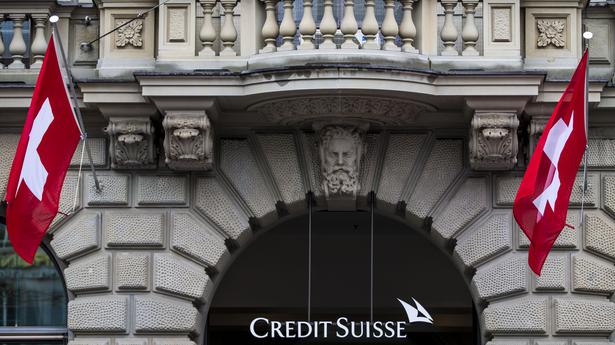
A global media investigation revealed on February 20, that dozens of international entities, including heads of state, intelligence officials, drug lords and sanctioned businessmen, publicly known for their involvement in human rights abuses, drug trafficking, corruption, money laundering and other serious crimes, stashed away millions of dollars in dubious wealth in one of the world’s biggest banks, Credit Suisse, headquartered in Zurich, Switzerland.
Switzerland has often found itself associated with hidden fortunes of some of the wealthiest individuals in the world, who hold accounts in the nation’s banks that function under a rigid banking secrecy law.
The law, introduced in 1934, prohibits banks, their employees or insiders from revealing client banking information to foreign countries. The law was recently bolstered to virtually include any individual who “reveals” or “exploits” confidential information of a Swiss bank. The violators of the law could face imprisonment up to five years. Observers say that the arbitrary language of the statute has Swiss journalists fearing repercussions if they involve themselves in investigative reportage.
The workings of Swiss financial institutions were expected to become more transparent after 2018, when the country’s tax agency signed an agreement to exchange bank account details with tax authorities of foreign countries. However, many developing countries were left out of the information exchange system.
‘Suisse secrets’ is an investigation conducted by 163 journalists, working with 48 media outlets across 36 countries, who united under the investigative consortium Organized Crime and Corruption Reporting Project (OCCRP) to analyse data leaked more than a year ago to German newspaper Süddeutsche Zeitung.
The data leaked by a self-described whistleblower had the details of 18,000 bank accounts linked to 30,000 clients of Credit Suisse, together holding more than $100 billion at one point. OCCRP described the information as the “only known leak of a major Swiss bank’s client data to journalists”.
The leak comes after the Panama paper leaks of 2016, followed by the Paradise Papers in 2017 and the Pandora Papers leaks last year, revealing secretly held offshore wealth of prominent figures, including Indians.


Saudi Arabia expels Iranian military staff amid escalating tensions and ongoing missile attacks during the U.S.-Israeli war on Iran.

Russia claims control of Potapivka village in Ukraine's Sumy region amid ongoing military efforts to establish a buffer zone.

Iranian missile strikes on Israeli towns cause widespread damage and injuries, marking a significant escalation in the ongoing conflict.

As Gor makes first trip as U.S. Special envoy to South Asia, Delhi watches strategic signals closely
Sergio Gor's inaugural trip as U.S. Special Envoy to South Asia signals strategic U.S. engagement amid regional tensions.

Slovenians vote in a tight election between liberal and populist candidates, impacting the country's future domestic and foreign policies.

Netanyahu asserts U.S.-Israel alliance fights Iranian threats, emphasizing global security after missile strikes on Israeli and European targets.

Israeli settlers attack Palestinian villages in the West Bank, causing injuries and destruction amid ongoing settlement expansion.

Britain asserts no evidence of Iran planning missile strikes on Europe, despite Israeli claims of missile capabilities.

UNESCO reports over half of countries have banned phones in schools due to concerns about attention, cyberbullying, and social media impact.

Analysis reveals a U.S.-operated Patriot missile likely caused a pre-dawn explosion in Bahrain, injuring numerous civilians.

Sri Lanka raises fuel prices by 25% amid ongoing West Asia conflict, impacting petrol and diesel costs significantly.

Iran strikes near Israeli nuclear research center as Trump threatens attacks on Iranian power plants
Iran's missile strikes near Israel's nuclear site escalate tensions as Trump threatens retaliation against Iranian power plants.

Saudi Arabia intercepts one of three ballistic missiles targeting Riyadh amid ongoing regional tensions and threats from Iran.