Explained: light’s ability to travel vast cosmic distances without losing energy
The Hindu
How can light travel across the universe and not slowly lose energy? An astrophysicist explains.
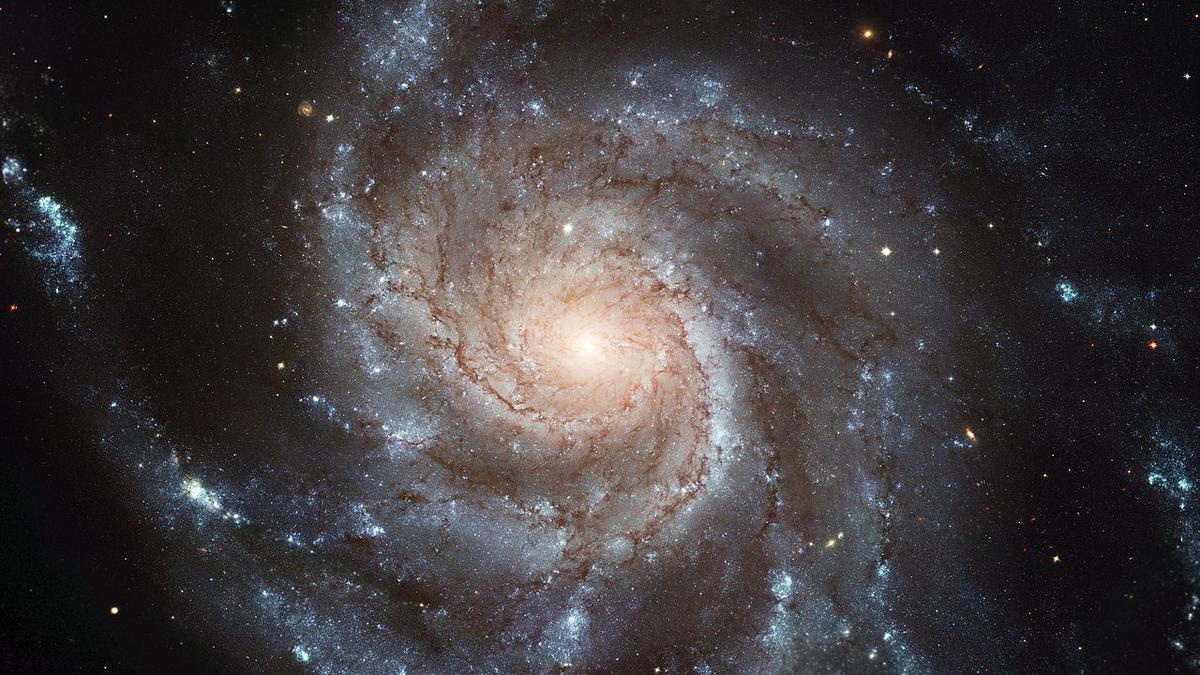
My telescope, set up for astrophotography in my light-polluted San Diego backyard, was pointed at a galaxy unfathomably far from Earth. My wife, Cristina, walked up just as the first space photo streamed to my tablet. It sparkled on the screen in front of us.
“That’s the Pinwheel galaxy,” I said. The name is derived from its shape – albeit this pinwheel contains about a trillion stars. The light from the Pinwheel travelled for 25 million years across the universe to get to my telescope.
My wife wondered: “Doesn’t light get tired during such a long journey?”
Her curiosity triggered a thought-provoking conversation about light. Ultimately, why doesn’t light wear out and lose energy over time?
I am an astrophysicist, and one of the first things I learned in my studies is how light often behaves in ways that defy our intuitions.
Light is electromagnetic radiation: basically, an electric wave and a magnetic wave coupled together and traveling through space-time. It has no mass. That point is critical because the mass of an object, whether a speck of dust or a spaceship, limits the top speed it can travel through space.
But because light is massless, it’s able to reach the maximum speed limit in a vacuum – about 300,000 km per second, or almost 9.6 trillion km per year. Nothing traveling through space is faster. To put that into perspective: In the time it takes you to blink your eyes, a particle of light travels around the circumference of the earth more than twice.


Explore 2026's wallpaper trends in India, highlighting botanicals and handmade designs that enhance modern homes with nature-inspired aesthetics.

Mercedes-Benz CLA 250+ with EQ Technology review: design, performance, range and features explained. Discover how the new electric CLA combines advanced AI, long range, fast charging and futuristic styling for the next generation of luxury EVs.

AI tool for sparrow conservation

BTS’s comeback with ‘Arirang’ marks a major global music event. When does the album release, and where can you watch their concert live stream? We have all the details

The 2026 U.S. cholesterol guidelines urge starting screening and treatment at 30 to prevent cardiovascular disease effectively.

Olam Festival 2026 in Thiruvananthapuram returns March 27-29 with 120+ vendors, music, art, and cultural zones.

A few storytellers in Thiruvananthapuram share their journeys, challenges, and evolving methods on World Storytelling Day, inspiring young minds.

76-year-old Kurian Jacob from Kerala triumphs with seven medals, including five golds, at the Open Masters Games in Abu Dhabi.

Explore the nature of the human mind as an emergent property of brain activity and complex neural interactions.

CERN's Large Hadron Collider discovers the Xi-cc-plus particle, enhancing understanding of quantum mechanics and baryon behavior.

Vibha Batra’s latest book, Spotless (Hachette India) is a novel in verse for young adults

In its first edition, the Madras Art Salon spotlights the works of journalist and artist Narayan Lakshman at The Botanical Club, a social space in the British Deputy High Commission, Chennai

Cholesterol enhances melanoma cell invasion by making nuclei squishier, revealing a potential treatment target in cancer progression.