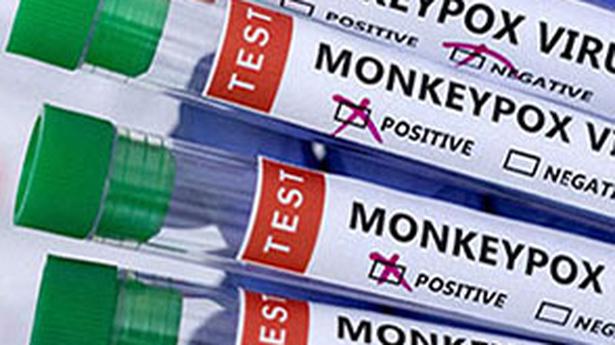
Explained | A recap of the monkeypox outbreak
The Hindu
By declaring monkeypox a public health emergency of international concern, how does the WHO plan to tackle and contain its spread?
The story so far: Monkeypox, an uncommon viral infection which was primarily restricted to some countries in western and central Africa as well as travellers to these countries has now spilled over driven by zoonotic events. The disease made headlines with its international spread with over 16,000 cases in over 75 countries to date, primarily driven by human to human contact, spreading predominantly among, but not exclusively in gay, bisexual and MSM (men who have sex with men) communities. On July 23, 2022, amid a rapid rise in monkeypox cases across the globe, Dr. Tedros Adhanom, Director General of World Health Organization (WHO) declared the disease outbreak a Public Health Emergency of International Concern (PHEIC).
First discovered in 1958, in monkeys at the Statens Serum Institute in Denmark, monkeypox is a zoonotic virus that can infect humans as well as other animals, including rodents and other primate species. Ever since the first case in humans was identified in 1970, in the present Democratic Republic of the Congo, the virus has become endemic in parts of Central and West Africa primarily driven by zoonotic spillovers. Despite being denoted as ‘monkeypox’, the actual origin and source of the disease are unknown and therefore a misnomer in many ways. The virus belongs to the same family of viruses as variola — the virus that causes smallpox. The disease presents with symptoms that are similar to those previously seen in smallpox patients, although it is less contagious and less severe.
Symptoms of monkeypox include fever, headache, muscle pain, and lethargy along with rashes and blisters commonly on the face, palms, feet, mouth, eyes or genitalia. These symptoms generally appear within two weeks since infection but can last for two to four weeks, with severe cases occurring mostly among children. In most cases, monkeypox is a self-limited disease that resolves spontaneously without any specific treatment. However, newborns, young children and people with underlying immune deficiencies may be at a higher risk of developing more severe symptoms.
The virus can be transmitted from both animals to humans and between humans. Animal-to-human transmission of the virus can result from close contact with blood, fluids or skin lesions of infected animals. Human-to-human transmission could happen through close contact, and through body secretions, skin lesions or contaminated articles of individuals infected with monkeypox.
Close human contact during sexual activities is believed to be a driver of the current spread of the disease, as evidenced by its predominant spread in gay, bisexual and MSM communities.
Since its initial detection in humans in 1970 in Africa, the first outbreak of monkeypox outside of Africa was reported in 2003 in the U.S. where multiple cases were found to be linked to close contact with infected imported animals. Recently, in May 2022, several cases of the disease were reported from regions where monkeypox was not endemic, and most cases had a history of travel to Europe or North America and not Africa. Before the current outbreak, monkeypox was predominantly reported from Africa while all cases reported in patients from other countries were linked to travel to regions where the disease was commonly found or because of contact with imported animals. As of now, no links between these new cases of contact with infected animals have been established. The number of confirmed monkeypox cases increased more than 70% from late June through early July 2022, with a majority of the case burden being in Europe. There is, however, limited knowledge about the source and transmission routes of the 2022 outbreak as well as the changes in the virus that helped it infect humans more than before, making monkeypox a disease of global public health importance.
The WHO defines a PHEIC as a disease outbreak that “constitutes a public health risk through the international spread of disease” which may require an immediate and coordinated international response. Since 2009, the WHO has made seven PHEIC declarations including the ongoing COVID-19 pandemic. This designation entails accelerating international efforts to contain the spread of the disease before it escalates into a pandemic. This would mean promoting countries to devise efforts to control transmission and coordinate sharing of key resources such as vaccines and therapeutics apart from heightened contact tracing, diagnosis and vaccination. While studies are underway to understand the epidemiology, transmission routes, and clinical presentations of the disease, the WHO will offer support to affected nations for developing an effective outbreak response and surveillance as well as prevention and therapeutic strategies against monkeypox.


Opposition parties criticize Delhi's budget as inflated and misleading, questioning transparency and funding for key initiatives.

Srirangam residents seek improved infrastructure and amenities to support rapid urbanization and growing tourism demands in the constituency.

Alandur faces unresolved civic infrastructure issues, including lack of water and drainage, despite recent development efforts ahead of TN Election 2026.

Delhi's fiscal deficit surged by 62% in 2025-26, reflecting revenue declines and raising concerns about the city's economic health.

Kerala Assembly Elections 2026: Anvar and Firos face multiple namesake rivals in their constituencies amid a crowded candidate field.

Kamal Haasan announces support for DMK in 2026 elections, emphasizing the need for 'Dravidian Model 2.0' for Tamil Nadu's welfare.

DMK finalises seat-sharing for the 2026 Tamil Nadu Assembly elections, contesting 175 seats with allies DMDK and VCK.

Parliament may adjourn early for Assembly elections, allowing MPs to campaign in key election-bound states.

Indian vessels can freely sail through the Strait of Hormuz without needing permission, confirms a senior government official.

The Hindu Morning Digest gives a select list of stories to start the day. Read the top news today on March 25, 2026

An IndiGo flight at Vijayawada airport was grounded due to a tyre burst, but all 79 occupants are safe.

Tamil Nadu Assembly election 2026: TMC(M) gets five seats in NDA, to contest on BJP's 'Lotus' symbol
TMC(M) secures five NDA seats, to contest Assembly elections using BJP's 'Lotus' symbol in Tamil Nadu.

The Karnataka government will discuss with officials the possibility of creating a portal for unemployed youth to share their details and access job opportunities in micro, small and medium enterprises (MSMEs), Minister for Small Industries and Public Enterprises Sharanabasappa Darshanapur said in the Legislative Council on Tuesday.