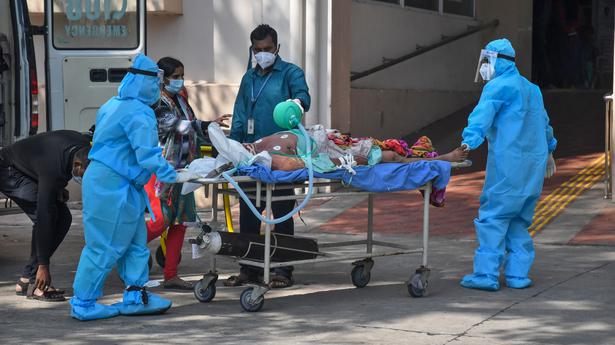
Every reinfection increases the risk to health
The Hindu
The study highlights the importance of preventing reinfection with SARS-CoV-2
A recent study has turned on its head the notion that getting naturally infected with SARS-CoV-2 virus would provide more protection from future infections. The study has found the complete opposite — a previous infection makes the next infection(s) worse. The study has been posted as a preprint in Research Square, which is yet to be peer-reviewed.
Compared with vaccination, first infection with SARS-CoV-2 virus is associated with increased risk of adverse health outcomes in pulmonary and extrapulmonary organ systems, hospitalisation and even death. And reinfection contributes to additional risk of deaths and adverse health outcomes in the pulmonary and several extrapulmonary organ systems, the study found.
“The risks were evident in those who were unvaccinated, had one shot, or two or more shots prior to the second infection; the risks were most pronounced in the acute phase, but persisted in the post-acute phase of reinfection, and most were still evident at six months after reinfection,” a three-member team led by Dr. Ziyad Al-Aly from the Washington University School of Medicine, U.S., says in the preprint.
The study was based on national health care databases of the United States Department of Veterans Affairs that included people with no infection (53,96,855), with one infection (2,57,427), and two or more reinfections (38,926). Among those with reinfection, 36,417 (12.29%) people had two infections, 2,263 (0.76%) people had three infections, and 246 (0.08%) people had four or more infections.
The study found that compared with those with first infection, people with reinfection had an elevated risk (hazard ratio or HR 2.14) of all-cause mortality. There was also increased risk of hospitalisation (HR 2.98) and at least one sequela of SARS-CoV-2 infection (HR 1.82) among people with a reinfection.
Compared to those with first infection, those with reinfection exhibited increased risk of sequelae — cardiovascular disorders (HR 2.36), hematologic disorders (HR 2.22), fatigue (HR 2.4), gastrointestinal disorders (HR 1.69), kidney disorders (HR 1.70), diabetes (HR 1.62), musculoskeletal disorders (HR 1.29), and neurologic disorders (HR 1.39).
“The risks were most pronounced in the acute phase, but persisted in the post-acute phase of reinfection, and risks for most sequelae were still evident at six months,” they write. “Compared to non-infected controls, assessment of the cumulative risks of repeated infection showed that the risk and burden of all-cause mortality and the prespecified health outcomes increased in a graded fashion according to the number of infections.”


Discover the Minor Planet Centre, the key hub for tracking and verifying observations of small solar system bodies.

Discover the Minor Planet Centre, the key hub for tracking and verifying observations of small solar system bodies.

In this week's Science for All newsletter, XX explains

Test your knowledge with the quiz on Science films at the Oscars through history

Set between the Siwalik hills and the plains, Butwal offers travellers a mix of regional cuisine, pilgrimage trails to Lumbini and the comfort of Hyatt’s new hospitality landmark

Explore 2026's wallpaper trends in India, highlighting botanicals and handmade designs that enhance modern homes with nature-inspired aesthetics.

Mercedes-Benz CLA 250+ with EQ Technology review: design, performance, range and features explained. Discover how the new electric CLA combines advanced AI, long range, fast charging and futuristic styling for the next generation of luxury EVs.

AI tool for sparrow conservation

BTS’s comeback with ‘Arirang’ marks a major global music event. When does the album release, and where can you watch their concert live stream? We have all the details

The 2026 U.S. cholesterol guidelines urge starting screening and treatment at 30 to prevent cardiovascular disease effectively.

Olam Festival 2026 in Thiruvananthapuram returns March 27-29 with 120+ vendors, music, art, and cultural zones.

A few storytellers in Thiruvananthapuram share their journeys, challenges, and evolving methods on World Storytelling Day, inspiring young minds.

76-year-old Kurian Jacob from Kerala triumphs with seven medals, including five golds, at the Open Masters Games in Abu Dhabi.