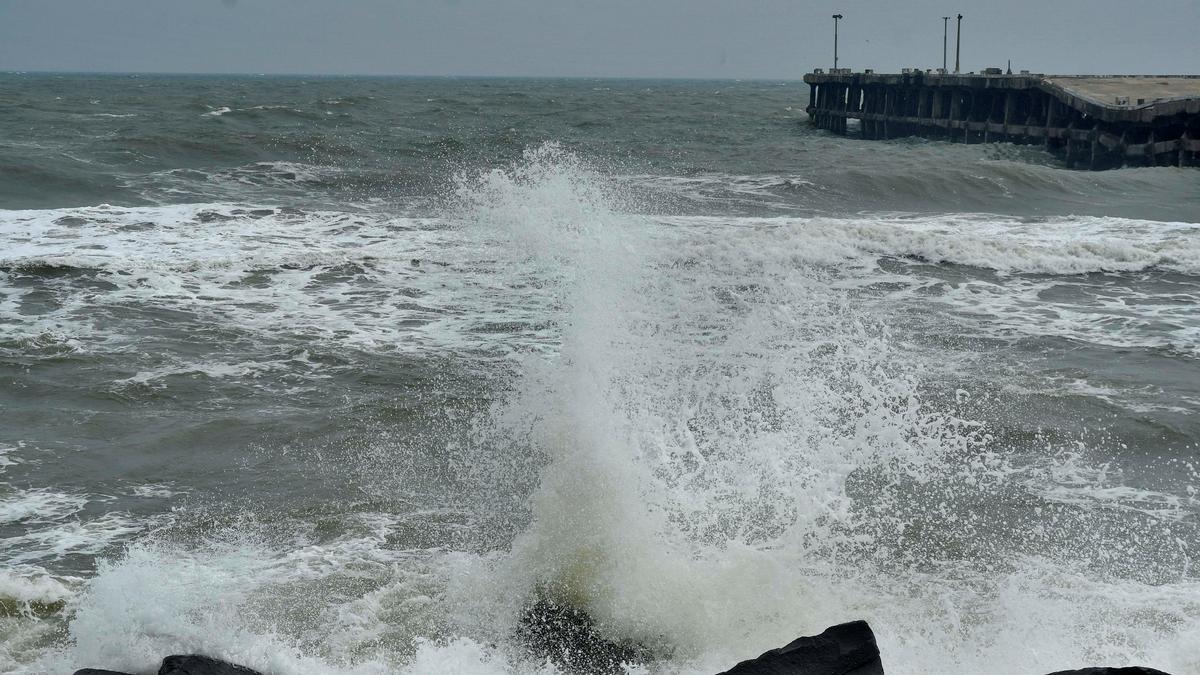
Environmentalists call for inclusion of ecologically sensitive areas in draft Coastal Zone Management Plan of Puducherry
The Hindu
Environmentalists raise concerns over missing ecologically sensitive areas in Puducherry's Coastal Zone Management Plans, impacting fisherfolk and conservation efforts.
Environmentalists have raised concerns over the lack of delineation of ecologically sensitive areas (ESA) in the draft Coastal Zone Management Plans (CZMP) published by the Puducherry Pollution Control Committee (PPCC) in April.
The revised CZMP will have an effect on how coastal areas used by fisherfolk are managed. The map in its present form is incomplete and not in tune with the amended Coastal Regulation Zone (CRZ) notification of 2019 since it had left out key land use spaces of fishermen, they contended.
The Coastal People’s Right to Life Movement (CPRM), an organisation for coastal communities roped in ecologists, botanists and remote sensing researchers and recently conducted a GIS mapping of Puducherry’s coastline including all ecologically sensitive areas to highlight the missed out regions by the PPCC. The report with mapping of the ESAs was released by CPRM on Saturday, August 10, 2024.
According to A.S. Arun Kumar, convenor of Puducherry unit of CPRM, “From February 2023, when the PPCC announced a public consultation on the draft CZMP, the fisher panchayats in Puducherry and Karaikal, Tamil Meenavar Viduthalai Vengaikal, Karaikal Fisher Women Federation and CPRM have been campaigning for the proper implementation of the CRZ Notification, 2019. The draft maps released by PPCC did not show even a single fishing village.”
The CRZ notification has listed eleven ESAs under the category of CRZ-1 A such as mangroves, corals and coral reefs, sand dunes, sand marshes, mudflats, sea grass beds and turtle nesting grounds. Mangroves play a major role and function as natural barriers to storm surges, cyclones and tsunamis, absorbing waves and wind energy mitigating their impact on coastal areas.
They also contribute greatly to fish variety by providing secure nursery environments, abundant food supplies and perfect breeding sites. Similarly, salt marshes serve as natural filters, trapping and dissolving contaminants such as heavy metals, nutrients and sediments from agricultural and urban runoff.
“The National Centre for Sustainable Coastal Management (NCSCM) responsible for mapping the ESAs for Puducherry had marked only 82.64 acres of mangroves in Puducherry and Karaikal districts. An additional 228 acres of mangroves are missing in the draft CZMP excluding the buffer zone.”


CPI-M accepts DMK's five-seat offer for Tamil Nadu Assembly elections, prioritizing INDIA bloc unity over seat demands.

Ricky Rai, son of former underworld operative Muthappa Rai, on Monday appeared before the Bengaluru Traffic Police for questioning in connection with a case involving a Lamborghini performing dangerous stunts at Anil Kumble Circle on March 21.

The Dispur election heats up as 'CongBJP' defections shape a high-stakes contest between veteran candidates from BJP and Congress.

Bengaluru's M. Chinnaswamy Stadium conducts readiness drill ahead of IPL 2026, ensuring upgrades and technical preparations are complete.

First-level randomisation of EVMs completed in Nagapattinam for upcoming elections, ensuring transparency and security.

A district-level committee in Krishnagiri has been formed to assess and verify seizure claims of goods and cash.

Minister Anam Ramanarayana Reddy pledges government support for local fishermen and farmers facing challenges in Andhra Pradesh.

MP M. Sribharat urges collective efforts to revive Visakhapatnam Steel Plant, highlighting key reforms for crucial recovery and growth.

141 candidates have filed nominations for Kozhikode's Assembly elections, with scrutiny on March 24 and campaigning intensifying.

BJP's Vijayendra accuses Congress of using money to influence Bagalkot bypolls, urging voters to reject their tactics.

First randomization of electronic voting machines completed in Tirunelveli and Tenkasi districts for upcoming Assembly elections.

RPF seizes 10.12 kg of unclaimed cannabis worth ₹5.06 lakh from a train in Mangaluru.

Kolar's groundwater levels rise to 50-100 ft due to the K.C. Valley project, ensuring clean water and improved health outcomes.