Energy minister hints at support for carbon capture in climate strategy, no mention of emissions cap
CBC
Ahead of the release of Prime Minister Mark Carney’s climate competitiveness strategy, his energy minister offered some hints of what will be included when it's introduced in Tuesday’s budget.
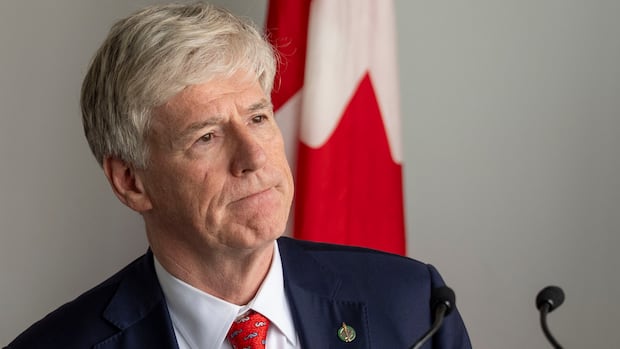
Energy and Natural Resources Minister Tim Hodgson spoke Wednesday ahead of meetings with officials and fellow G7 environment and energy ministers.
Stakeholders in the environment and clean tech space had expected Ottawa to release the strategy ahead of the two-day G7 meeting, which officially begins Thursday in Toronto.
But without mentioning the climate strategy specifically, Hodgson spoke about three levers guiding the government's work.
One involves "tactically using" public funding and tax credits to lessen risk and spur investment in "first-of-a-kind projects," Hodgson said.
The goal, the minister said, is ensuring the Canadian economy "stays competitive and Canadian products compete — and win — in a low-carbon world."
The minister suggested Canada's burgeoning carbon capture, storage and removal sector could be de-risked and scaled with government funding.
He cited Arca, a Canadian company that on Wednesday announced it had signed a deal with Microsoft to remove carbon dioxide from the atmosphere. The company has received funding from NorthX Climate Tech — a Canadian organization supported by Natural Resources Canada.
Hodgson said Ottawa is also focused on creating an environment of regulatory certainty which requires predictable policies, faster timelines and reliable permitting. The federal government is already in the process of implementing its law to fast-track major resource projects.
The minister said the final lever is the use of artificial intelligence to make energy systems "smarter, faster and more resilient."
"AI is already reshaping how we produce, move and consume energy," Hodgson said. "It is helping operators predict grid demand in real time, accelerating materials discovery for better batteries and optimizing renewable energy like wind farms."
A senior federal government source not authorized to speak publicly says the first two levers —incentivizing more investment in clean tech innovation and providing certainty to industry — are "relevant" to the climate competitiveness strategy.
Hodgson's remarks made no mention of the future of the proposal to cap industrial emissions. The budget date, Nov. 4, marks a year since the federal government released its proposed regulations to impose a hard cap on emissions from the oil and gas sector — the largest share of Canada's emissions.
A former federal government adviser on climate policy, Louise Comeau, said Hodgson is signalling that the Carney government favours carbon capture and storage over an emissions cap.


Oil prices fell Monday morning after President Donald Trump said the U.S. would hold off on striking Iran’s energy infrastructure amid productive talks between the two countries.

While spring technically started late last week, Newfoundland and Labrador isn't free from winter weather just yet.

The Sudbury School Bus Consortium is suspending all school buses in Greater Sudbury as the community continues to clean up following a major storm.

Two large corporate landlords owning a combined 9,008 rental units in Halifax are reporting smaller annual increases in their average rents for 2025 than the previous year.

The Holt government has reached a deal with Ottawa on compensation for tens of millions of dollars in lost sales tax revenue from the Christmas season in 2024.

The government of Saskatchewan has announced plans to reduce the length of non-resident game bird hunting licences to combat illegal guiding.

An 87-year-old Alberta man is fighting extradition to the United Kingdom to stand trial for historical allegations of physical and sexual assault involving minors.

Eight casinos across southwest B.C. have been sold to First Nations in the last two years, with the province's gambling scene set to be reshaped as a result.

Hamilton hosts the Junos Sunday, and the musical awards show is bringing tourists, musicians, concerts and a ton of themed events to the city this week.

The multi-million-dollar deal at the heart of a high-profile fight between the Canadian government and one of the world’s biggest carmakers contains multiple clauses about the company’s footprint in Ontario, according to a copy obtained by CBC Windsor.

In recent months, Calgary police have carried out three day-long safety blitzes, parading out dozens of officers to flood an area with their increased presence — at least, temporarily.

A national organization is seeking people with experience in Canada's forestry sector as they put together a working group that will examine ways to improve forest recovery following wildfires.

Ella Heyder is bracing for a breakup, even though she already moved out decades ago.