Emergency, then and now: the long reach of unbridled power Premium
The Hindu
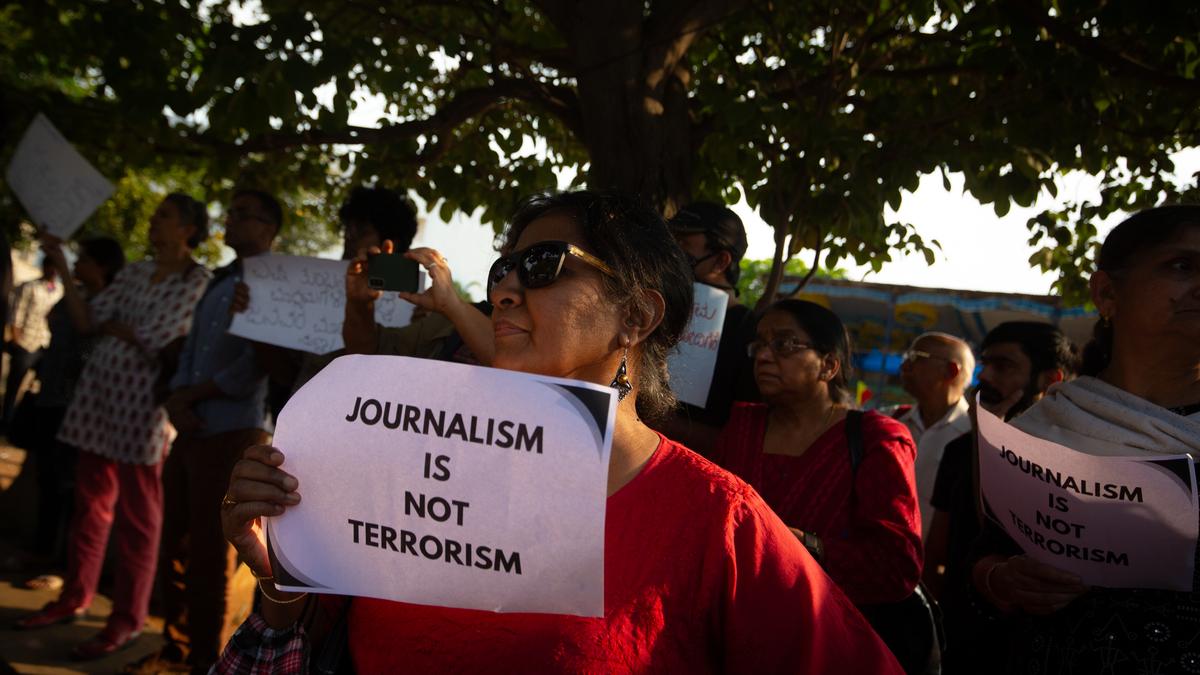
The persecution of dissenters in India under draconian laws.
It has been more than 126 years since the famous “open letter” titled, “J’Accuse” by journalist and writer Emile Zola was published in the newspaper L’Aurore on its front page which pointed to the unlawful arrest of French Army General Staff officer Alfred Dreyfus over trumped up charges of espionage. Zola was later prosecuted for libel and had to flee to England to avoid being arrested.
The letter, the article and Zola still serve as inspiration to those committed to question the all-powerful state in its demonising of dissent and its use of power to browbeat and punish those who are critical of it.
Just last Tuesday, a telling statistic was released by the government. As many as 5,023 cases of sedition were filed between 2018 and 2022 under the Unlawful Activities (Prevention) Act. If trends from 2018 to 2020 are considered — of the 4,690 people arrested, only 149 were convicted — a case can be made that this was less for prosecution for the said crime and more persecution and this trend extended to the next two years. We use the term “persecution” because getting bail for cases filed under the UAPA is enormously difficult.
Take the example of Fahad Shah, editor of the website ‘Kashmir Walla’, who was not only granted bail but cases against whom were set aside by the Jammu and Kashmir High Court in November 2023. He was in custody after charges were framed under many offences including the UAPA. Shah and another scholar, Aala Fazili, were booked under the UAPA in a “narrative terrorism” case which alleged that a write-up they came up with in 2011 was aimed at “spreading terrorism and creating a false narrative”.
The J&K High Court tore the case apart, observing that there was no material to suggest that “the article has any content that provokes people to take arms and resort to violence”. It also made observations on how UAPA was being applied and made remarks on the need for circumspection by agencies of the state when enforcing this provision.
It was not uncommon for the British colonial state to arrest dissidents, even members of the press, who were critical of it in India. That several prominent Indian public figures who were subject to this harassment were also connected to the freedom movement, led to the reasonable “freedom of expression” being guaranteed in India’s constitution and also undergirded press and media freedoms. But these came under the severest threat during the Emergency.
Quite a few books have been written about the Emergency, but a fairly recent one deserves mention. Gyan Prakash’s Emergency Chronicles: Indira Gandhi and Democracy’s Turning Point, published in 2019, drew from archival records, published material, films and interviews to capture the political crisis in Indian democracy that led to the Emergency. The book sets itself apart by not looking at Emergency as an anomaly in India’s post-Independence democratic history, but links it to the dynamics of India’s popular democracy as it played itself out since Independence. It makes the case that the Emergency marked a turning point in India’s political history, eventually paving the way for caste politics and the rise of Hindutva.


Indian vessels can freely sail through the Strait of Hormuz without needing permission, confirms a senior government official.

The Hindu Morning Digest gives a select list of stories to start the day. Read the top news today on March 25, 2026

An IndiGo flight at Vijayawada airport was grounded due to a tyre burst, but all 79 occupants are safe.

Tamil Nadu Assembly election 2026: TMC(M) gets five seats in NDA, to contest on BJP's 'Lotus' symbol
TMC(M) secures five NDA seats, to contest Assembly elections using BJP's 'Lotus' symbol in Tamil Nadu.

The Karnataka government will discuss with officials the possibility of creating a portal for unemployed youth to share their details and access job opportunities in micro, small and medium enterprises (MSMEs), Minister for Small Industries and Public Enterprises Sharanabasappa Darshanapur said in the Legislative Council on Tuesday.

AIADMK's 2026 manifesto promises free rations, women's benefits, education reforms, and economic growth initiatives for Tamil Nadu.

U.S.-Israel war on Iran LIVE: Follow The Hindu for updates on the West Asia conflict on March 24, 2026

Join the 'Click & Commit' campaign on World TB Day, uniting Chennai's community to pledge against tuberculosis.

Brahmin candidates join Naam Tamilar Katchi, marking a significant shift in Tamil Nadu's political landscape and inclusivity.

Over 750 wheelchairs are prepared in Thoothukudi for accessible voting, ensuring convenience for differently abled and elderly voters.

Madras HC dismisses S.P. Velumani's petition challenging I-T assessment of ₹7 crore as unexplained election expenses from 2016.

The Lok Sabha passes a contentious Transgender Bill, sparking praise from the government and criticism from opposition parties.

Kamal Haasan announces support for DMK in 2026 elections, emphasizing the need for 'Dravidian Model 2.0' for Tamil Nadu's welfare.