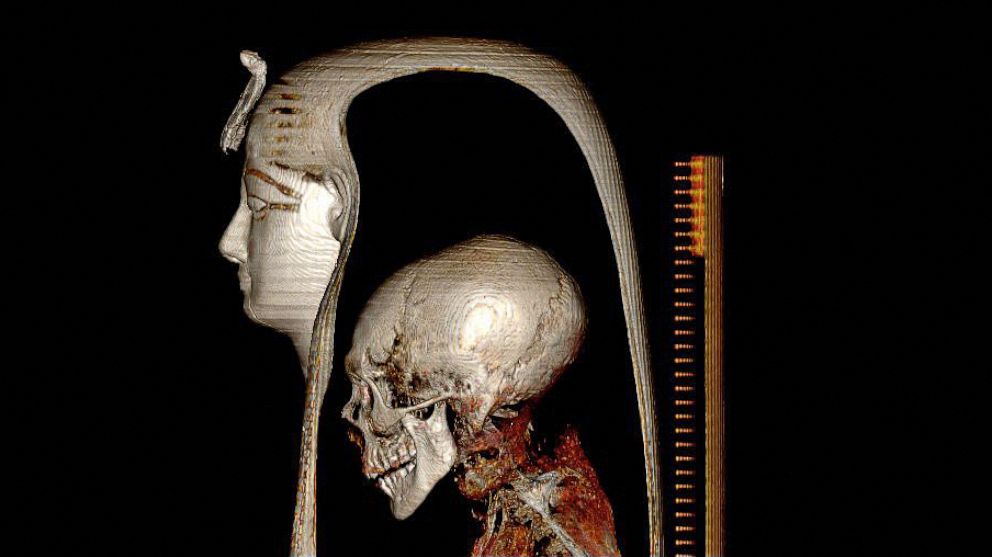
Egypt digitally unwraps mummy of King Amenhotep in 'important milestone'
ABC News
LONDON - CAIRO -- Modern technology helped scientists to unwrap the mystery of the 3,500-year-old Egyptian mummy in what a renowned Egyptologist called an “important milestone.”
The mummy from Amenhotep I, the ruler of Egypt from 1525 to 1504 B.C., was discovered in 1881 in the ancient city of Thebes -- modern-day Luxor — located on the east bank of the Nile River in southern Egypt. During the 16th–11th centuries B.C. the city served as the pharaohs’ capital at the height of their power.
The mummy had remained untouched since it was discovered though, simply because archaeologists believed it was too perfectly preserved to risk causing any damage to it. The remains are covered with a funerary mask and garlands of colorful flowers.
But Egyptian scientists were able to use non-invasive, three-dimensional computerized tomography (CT) scanning to reveal the secrets of Amenhotep I.


Macao’s lawmakers on Thursday unanimously passed a law that could allow closed-door court proceedings if the authorities deemed public hearings would harm national security

Lawyers for the Norwegian crown princess’s eldest son have called for his acquittal on charges of rape as six weeks of high-profile court proceedings that have cast a shadow over the royal family drew to a close

Three men who allege that actor Kevin Spacey sexually assaulted them have settled their civil claims in London

Pope Leo XIV is signaling strong endorsement of one of Pope Francis’ most controversial policies on marriage and divorce

Congolese and Rwandan officials have agreed on coordinated steps to de-escalate tensions in eastern Congo where Congo is fighting rebels backed by the neighboring Rwanda

Authoritarian President Alexander Lukashenko on Thursday hosted a U.S. envoy for talks in the Belarus capital of Minsk, the latest step in the isolated leader’s effort to improve ties with the West

British police have charged two men with spying on the UK’s Jewish community for Iran

Venezuelans pour into the streets in a rare, loud release of joy after their team wins the World Baseball Classic

The Bank of England is expected to keep its main interest rate unchanged at 3.75% in the wake of the oil and gas price hikes following the start of the Iran war

Thailand’s Parliament has convened to pick a new prime minister

Dozens of dogs and cats have arrived in Athens with their owners aboard a special evacuation flight for Greeks with pets who were trapped by the current war in the Middle East

Mexican authorities have arrested an Ecuadorian fugitive accused of helping organize the 2023 assassination of presidential candidate Fernando Villavicencio

President Emmanuel Macron has named France’s next nuclear-powered aircraft carrier France Libre, or Free France, framing it as a symbol of independence and military power