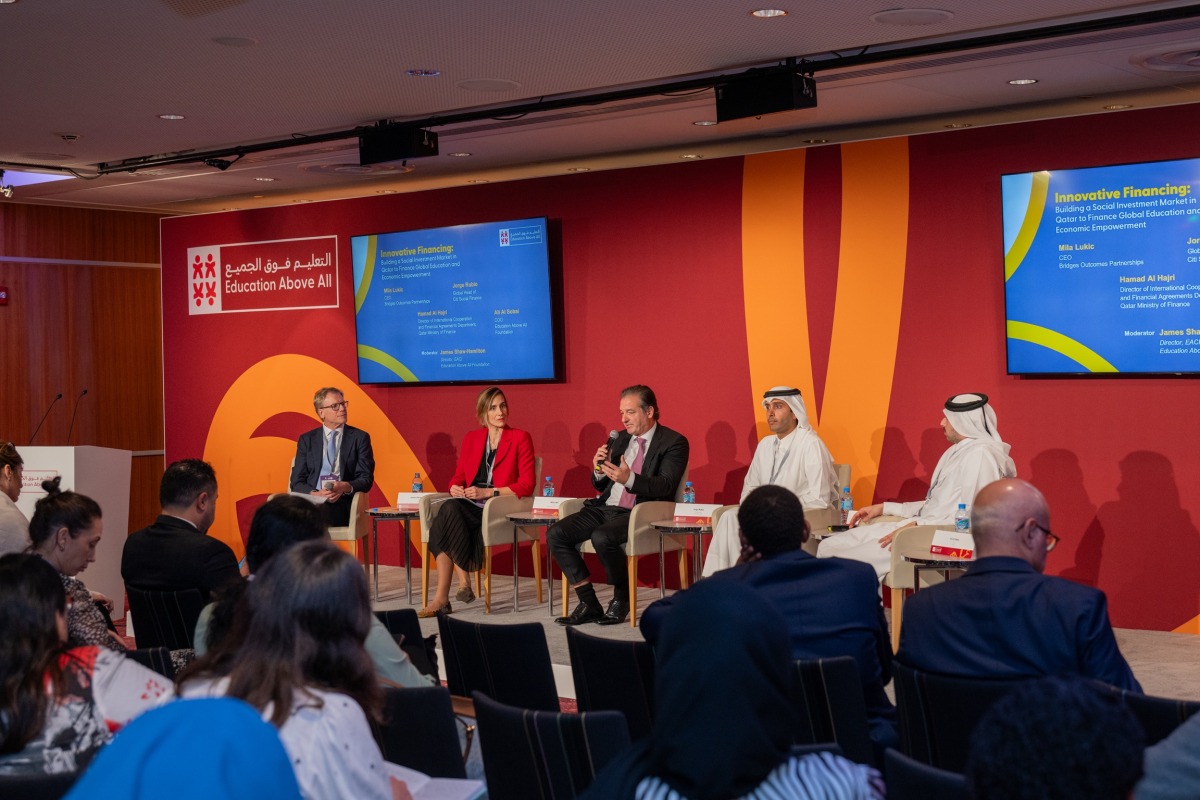
Education Above All Foundation advances digital rights, education access, and green entrepreneurship
The Peninsula
Doha, Qatar: The Education Above All (EAA) Foundation, a global education and development organisation, continued its participation at the 12th editio...
Doha, Qatar: The Education Above All (EAA) Foundation, a global education and development organisation, continued its participation at the 12th edition of the World Innovation Summit for Education (WISE 12) with three sessions on digital dignity, higher education access for displaced youth, and the future of green entrepreneurship. Through these sessions, EAA Foundation reinforced its commitment to ensuring equitable, innovative, and human-centred learning environments that empower young people and strengthen community resilience.
The day opened with the session “From Data to Dignity: Technology and the Right to Education,” jointly led by the Educate A Child (EAC) and Protect Education in Insecurity and Conflict (PEIC) programmes, alongside the Innovation Development. The discussion explored how digital technologies, AI-driven tools, and ethical data systems can protect learners’ rights, monitor attacks on education, and expand access to inclusive and secure learning environments. The session highlighted EAA’s growing partnerships with UNICEF and UNDP, aimed at advancing data-driven approaches that uphold dignity, privacy, and equity in education.
The session featured Frank Van Cappelle, Head of the UNICEF Global Learning Innovation Hub, Biplove Choudhary, UNDP Technical Representative and Head of Office in Doha, and Christina Wille, Founder and Director of Insecurity Insight, and originator of the Aid in Danger Project and SiND Database. The discussion was moderated by Noor Muhammad, EAC Monitoring & Evaluation Director.
EAA Foundation Strategy, Policy, and Research Directorate and Al Fakhoora Programme jointly led “From Camps to Campuses: Policy, Partnerships and Pathways for Higher Education Access,” a session that examined global models enabling displaced and refugee youth, especially women, to access higher education and transition from crisis to university learning. Drawing on insights from IIE, NAFSA, IAFOR, and EAA’s Public Policy Observatory, the discussion underscored the role of higher education in restoring dignity, expanding opportunity, and building long-term resilience for communities affected by forced migration.


Doha, Qatar: Qatar s fintech sector is entering a new phase where real financial infrastructure is being deployed, moving beyond pilot projects and po...

Doha, Qatar: As the Qatar Meteorology Department forecasts rain accompanied by thunder and wind in the country, various government bodies have issued...

Doha, Qatar: As the Qatar Meteorology Department forecasts rain accompanied by thunder and wind in the country, various government bodies have issued...

Doha, Qatar: The Qatar Meteorology Department shared the total amount of rain recorded across the country on March 23, 2026. It reported that Al Wa...

Doha, Qatar: The Qatar Meteorology Department shared the total amount of rain recorded across the country on March 23, 2026. It reported that Al Wa...

Doha: As offices nationwide returned to regular working hours today, industry experts and employees have commended the authorities for the seamless an...

Doha: As offices nationwide returned to regular working hours today, industry experts and employees have commended the authorities for the seamless an...

Doha, Qatar: The Ministry of Commerce and Industry (MOCI) has intensified its market monitoring and inspection efforts in response to ongoing regional...

Doha, Qatar: The Ministry of Commerce and Industry (MOCI) has intensified its market monitoring and inspection efforts in response to ongoing regional...

Doha, Qatar: Weather inshore until 6pm on Tuesday will be hazy and partly cloudy to cloudy at times with scattered rain may be thundery at times, the...

Doha, Qatar: Weather inshore until 6pm on Tuesday will be hazy and partly cloudy to cloudy at times with scattered rain may be thundery at times, the...

Doha, Qatar: Qatar s Public Works Authority (Ashghal) said on Monday its teams are working 24/7 to monitor drainage networks and ensure highways and t...

Doha, Qatar: Qatar s Public Works Authority (Ashghal) said on Monday its teams are working 24/7 to monitor drainage networks and ensure highways and t...