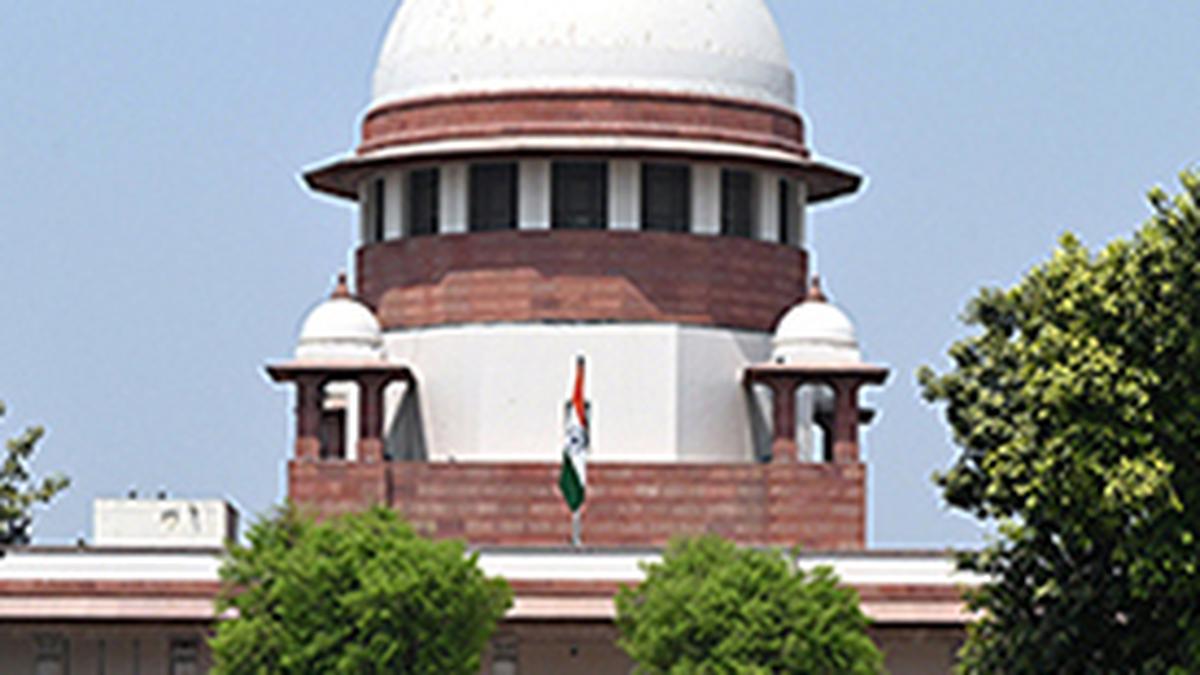
ED cannot breach the right against self-incrimination of PMLA accused in custody: SC
The Hindu
Supreme Court rules ED cannot force self-incriminatory statements from accused in separate cases, protecting fundamental rights.
The Supreme Court on Wednesday (August 28, 2024) held that the Enforcement Directorate (ED) cannot violate the fundamental right to silence an accused, already in judicial custody, by forcing him to make a self-incriminatory statement in another money laundering case probed by the same Central agency.
“The ban on self-accusation and the right to silence, while one investigation or trial is underway, goes beyond that case and protects the accused in regard to other offences pending or imminent…” the apex court noted in a 44-page judgment.
The judgment by a Bench of Justices B.R. Gavai and K.V. Viswanathan answered the question whether a person, already arrested by the ED and currently in judicial custody, can be compelled by the ED to make a statement containing self-accusatory material in a separate Prevention of Money Laundering Act (PMLA) case.
The question focussed on the ED’s power under Section 50 to summon persons and demand them to produce documents and give evidence. Section 50(3) mandates that “all the persons so summoned shall be bound to attend in person or through authorised agents… and shall be bound to state the truth upon any subject respecting which they are examined or make statements, and produce such documents as may be required”. The provision armed the ED with the wide-ranging powers of a civil court.
However, the court held that the ED’s power under Section 50 cannot breach the fundamental right against self-incrimination enshrined in Article 20(3).
Justice Viswanathan reasoned that a person in custody cannot ideally be described as a “free person”. A self-incriminatory statement provided by him in another case, also investigated by the ED, while in custody in a PMLA case would be inadmissible as evidence, Justice Viswanathan spoke for the Bench.
“The reason being that the person in custody pursuant to the proceeding investigated by the same investigating agency is not a person who can be considered as one operating with a free mind. It will be extremely unsafe to render such statements admissible against the maker, as such a course of action would be contrary to all canons of fair play and justice,” Justice Viswanathan wrote.


BJP Puducherry president V. P Ramalingam files nomination for Raj Bhavan, joined by Union Minister Mandaviya and Khushbu Sundar.

History-sheeter 'Thoppai' Ganesh shot dead by police in Chennai after attacking officers during attempted escape.

The government plans to amend the FCRA, introducing new regulations for NGO asset management and accountability for key functionaries.

The draft policy for “Responsible Digital Use Among Students”, released on Monday by the Department of Health and Family Welfare, has recommended that parents set structured routines with clear screen-time rules and prioritise privacy, safety, and open conversation with children on digital well-being.

Police Observer Sushant Kumar Saxena conducts surprise inspection at Shencottai police station, reviewing warrants and security arrangements ahead of elections.

Andhra Pradesh government to launch key projects in April, focusing on industrial growth and infrastructure development, says Nara Lokesh.

Lok Sabha refers the Corporate Laws (Amendment) Bill to a JPC amid opposition concerns over CSR provisions dilution.

SHG members in Kanniyakumari use snakes and ladders to raise election awareness and boost voter turnout.

Government accelerates consultations for early implementation of the Women’s Reservation Act to ensure women’s representation in 2029 elections.

CM A. Revanth Reddy distributes ₹1 crore insurance cheques to families of deceased Electricity department employees, enhancing financial security for workers.

The Bengaluru Traffic Police (BTP) registered 634 cases of drunk driving during a week-long special enforcement drive conducted across the city between March 16 and March 22.

GHMC intensifies action against property tax defaulters, seizing properties and offering a One Time Settlement scheme for payments.

CCB arrests three drug peddlers in Mangaluru, seizing ₹2.5 lakh worth of MDMA and other valuables.